
Carlton Past Player Interviews on Harf Time’s ‘Jesaulenko you Beauty!’

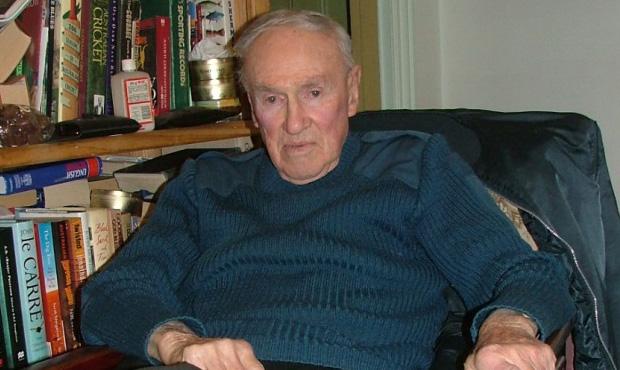
Daniel Harford’s ‘Harf Time’ shift on SEN has been running a wonderful segment where he chats with past players in football and other sports titled ‘Jesaulenko you beauty!’ Over time quite a few Carlton past players have appeared. We have linked to all the podcasts here on one page for your listening pleasure. Enjoy.

Mark Maclure

Ang Christou and Mil Hanna

Geoff Southby

Glenn Manton

Vin Catoggio

Barry Mitchell

Michael Mansfield


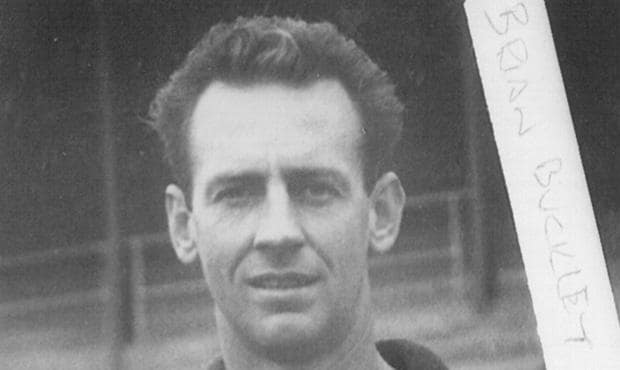
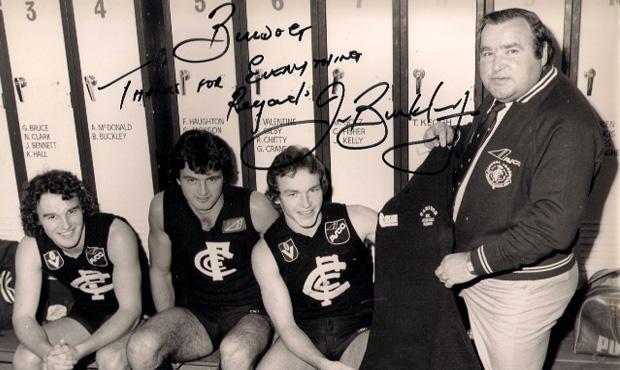
Blues’ big man Brian Buckley dies

Brian Buckley during his playing days at Princes Park. (Photo: Carlton Football Club)

Brian Buckley, the 116-game Carlton ruckman from 1956-65, and father to the Blues’ former players Stephen and Mark, has died on the eve of his 79th birthday.

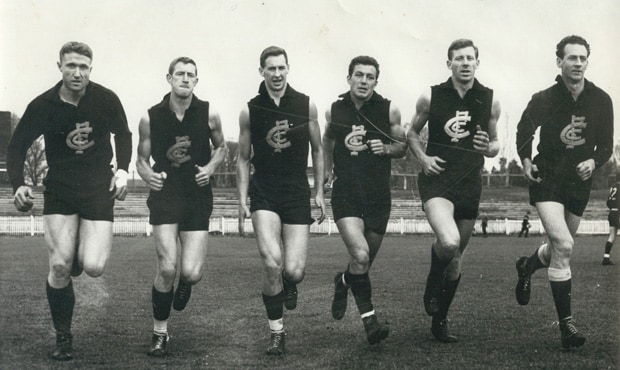
Buckley, whose father Jack also represented Fitzroy in five senior matches through 1929, formed part of a formidable following division which included John Nicholls, Ken Greenwood, Maurie Sankey, Sergio Silvagni and Graham Donaldson. The six men were famously photographed completing their run-throughs shoulder to shoulder at a Princes Park training session in 1960.

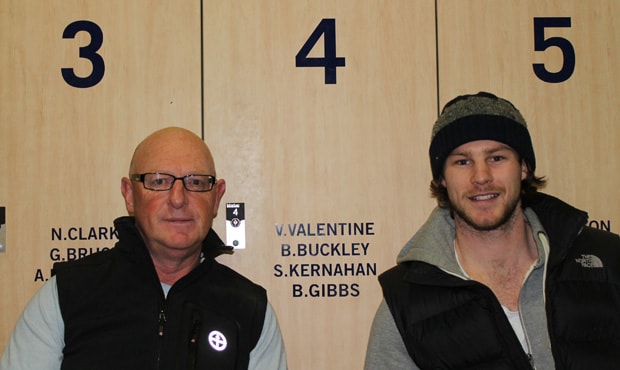
Forging his reputation in the No.4 worn by Stephen Kernahan and (now) Bryce Gibbs, Buckley made his mark as a strong-marking tap ruckman who was equally effective either as a fill-in full-back or as a close-checking back pocket on the opposition’s resting big man.

Recruited to Carlton from Coburg as a junior on the recommendation of George Armstrong, Buckley first plied his craft with Carlton’s Under 19 outfit in the days of Dick Pratt, and savoured Premiership success with the thirds in 1951.

Fifty-eight years ago this week, having completed what was a long football apprenticeship, Buckley finally got his first senior call-up. It happened in Round 16, 1956, against Collingwood at Victoria Park of all places, on the day after his 21st birthday.

Carlton won.

Buckley would be part of the fold for what would be a lean period in Carlton history. His only senior appearances came in the 1957 semi-final against Hawthorn (he was 19th man) and the ’62 finals series, with injury costing him his place in the Grand Final of that year.

As fate would have it, Ron Barassi, with whom Buckley had once schooled at Preston Tech, would be his Senior Coach in his final year at Carlton.


A training session at Princes Park, 1960 – from left to right: John Nicholls, Ken Greenwood, Maurie Sankey, Sergio Silvagni, Graham Donaldson and Brian Buckley. (Photo: Carlton Football Club)

Buckley’s final senior appearance in a dark Navy Blue guernsey came against Essendon in Round 18, 1965 at Princes Park, in what was also Berkley Cox’s last hurrah. Fittingly, the team took out the match by nine points over an opposition which would ultimately land the ’65 pennant.

“Dad held his connection with the football club dearly. Like so many players to come through the system before or since, football gave him opportunity and taught him how to conduct himself,” Buckley’s son Stephen said this week.

Those valuable lessons learnt proved invaluable to Buckley at Port Melbourne (where he captained and coached the Borough to victory in the 1966 Grand Final) and later back at Princes Park where he assisted Bryan Quirk as coach of Carlton’s all-conquering Premiership teams of 1978 and ’79 – the latter of which his youngest son Mark was part.

“Dad was very good with the young kids, because in those days kids from in and around the area, from the Lygon Street flats and what have you, would gravitate to Carlton. He valued how those kids would feel in trying to play, he understood what they were about and he got the best out of them,” Buckley said.

“He was also actively involved with the Carlton past players. He was great friends with Ken Hands, his old coach and Chris Pavlou, who was coach of Carlton when I was playing Under 19s and he liked to walk around in his Carlton blazer because everyone knew him.”

Buckley was equally supportive of his two sons as they embarked on their Carlton senior careers – Stephen in six matches through 1980; Mark in 27 matches through four seasons from 1982.


Stephen Buckley with Bryce Gibbs in front of the No.4 locker. (Photo: Carlton Football Club)

But he never imposed his will on the boys.

“Dad was as proud as punch (Mum even moreso) in seeing Mark and I out there, but he never came down on us saying ‘you’ve got to do this, this and this’. I’ll be honest with you, if neither of us played League footy he wouldn’t have given a toss,” Stephen said.

“In saying that, if he felt that we were doing something he thought was detrimental to our game, he’d tell us. For instance, I was more a ground level type of player but he knew I could take a mark, so he’d say to me ‘Why aren’t you going for your marks when the opportunity presents?’, because he came from an era where you did that.

“He also used to say to me that when you get the football, go the burst for ten metres to give yourself the space, and keep your hands up because if you do get tackled you can give it off.”

Stephen said that his father maintained a healthy interest in the Carlton team’s fortunes in his later years.

What did Carlton mean to him?

“In a nutshell, he knew that by playing for Carlton the people out there, those in this great football community, recognised him because they put him on a pedestal,” Buckley said.

“But he also put back into this football club – and he was playing at a time when players were getting bugger all.”

Brian Buckley died after a long illness. He is survived by his beloved wife of 56 years Beverley, children Stephen, Sharyn and Mark, their respective spouses and eight grandchildren.

The Carlton players will wear black armbands as a mark of respect when they take to the field for Saturday match with Gold Coast at Etihad Stadium, at which members of the Buckley family will attend.

More By Tony De Bolfo

New Past Player Videos Page

We are excited to announce that all the past player videos we have produced can now all be accessed easily from the one page. Just the click the ‘Player Videos’ tab in the menu you see at the top of this screen, alternatively click on the following link:

PAST PLAYER VIDEOS

There you will find hours of enjoyment with over 150 past players represented.

We will not stop there though, we are going through each player over time and we are only up to 1983! So keep an eye out for plenty more past player videos.

Warren McKenzie’s 50th

Happy 50th birthday to Warren McKenzie.


——

From the Blueseum


Career: 1985-1990
Debut: Round 12, 1985 vs Footscray, aged 20 years, 319 days
930th Carlton Player
Games: 67
Goals: 43
Last game: Round 22, 1990 vs Fitzroy, aged 26 years, 32 days
Guernsey No. 45 (1985 – 1990).
Height: 190cm
Weight: 86kg
DOB: 31 July, 1964
Premiership Player: 1987

Warren McKenzie played 67 games from 1985 kicking 43 goals. McKenzie wore the number 45 guernsey for Carlton. He was recruited from Mooroolbark, this was in the the Carlton zone in the Eastern Suburbs.

McKenzie played in Carlton’s 1987 Grand Final victory over the Hawks. Prior to that victory, he and fellow Blue, Shane Robertson played in three straight losing Grand Finals for the Blues, they were 1984 and 1985 Reserve Grand Finals, and the 1986 Senior Grand Final.

In 1988, Warren McKenzie suffered a serious knee injury mid-season, that ruled him out of the remaining part of the season. It also took him a while to get going the following year after this serious setback.

After 1990, McKenzie was transferred to the Swans where he played for a further 2 seasons. Carlton traded McKenzie for the No.2. pick in the National Draft so that they could secure James Cook.

After two years in Sydney, McKenzie packed his bags at the end of the 1992 season and headed back to Victoria. He played 27 games and booted 13 goals for the Swans. McKenzie later lined up for VFA Club Sandringham for the 1993 season.

Milestones

50th game: Round 15, 1989 vs Collingwood

Career Highlights

1983 – U/19’s 3rd Best & Fairest
1985 – Reserves Equal Runner-up Goalkicker 38 goals
1986 – Reserves 6th Best & Fairest
1987 – Senior Premiership Player
1990 – Reserves Premiership Player

How Alf Egan led the way

AlfEganArticle_620X370.jpg

Alf Egan is credited as being the first indigenous player to play for Carlton. (Photo: Carlton Football Club)
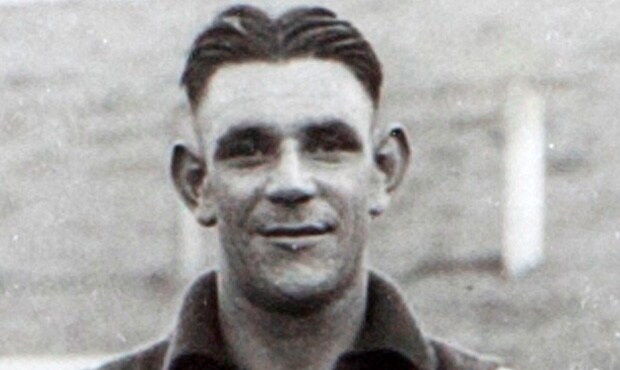
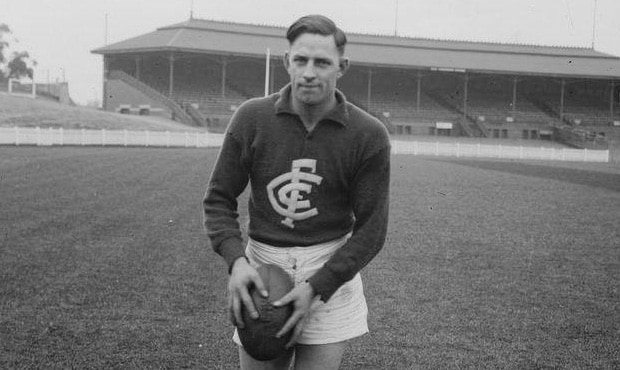
In the lead-up to Friday night’s match at Etihad Stadium, thoughts turn to the little known life of a man who in so many ways blazed a trail for both the Carlton and North Melbourne Football Clubs more than 80 years ago.

Before Syd Jackson and Cyril Mann, before Barry Cable and the brothers Krakouer, came Alf Egan – Alfred George Egan – the first known Indigenous footballer to have represented both clubs at senior League level.

Born on April 3, 1910, Egan hailed from the tiny town of Myamyn in Victoria’s south west. Little is known of his early childhood, although the following article (entitled LAKE CONDA ABORIGINES – only three Pioneers remain), which appeared in the local Portland Guardian of February 8, 1943, offers a little insight into Alf and his bloodline.

The article, which laments the dilapidated state of the local Aboriginal station, acknowledges the enduring presence of the Indigenous elders James Lovett, Mrs HC Connolly (a daughter of the king of the district’s tribe “King Billy”) and Alf McDonald – the latter one of Alf Egan’s forefathers.

The article reads in part;

Mrs Lovett has (illegible) grandchildren and 20 great grandchildren. She was born at Condah about 85 years ago and (illegible) under an operation when she was over 80 years of age, this being the first time she was attended by a doctor. She was walking around the sports ground quite smart for her age. She has three great-grandsons in the AIF.

Her brother, Alf McDonald, is 83 years of age . . . He was well-known for his ability in breaking in horses and also stock riding. He was a boundary rider for Mr. Cope , and also for Mr. Fred Co..Drayton for a number of years and also for Mr. T. H. Laidlaw and Selwyn Stewart. He was (illegible) Ettrick and reared a family of seven, and has quite a number of grandchildren. One known as Alf Egan played football with well-known Wanderers team, later with Carlton and North Melbourne.

Listed as Carlton’s 478th senior player since 1897, Egan completed his senior debut at Princes Park against Essendon in the third round of 1931. Named on a half-forward flank alongside another first-gamer Bernie O’Brien, Egan would boot a goal in the first of his 36 games for the Blues through the course of three seasons as a ruckman/forward.

Egan was part of Carlton’s Senior XVIII which took to the field against Richmond in the play-off for the 1932 premiership pennant. He was named at centre half-forward after Jack Green was ruled out with an injury sustained against Collingwood in the previous week’s preliminary final, on a day in which Harry “Soapy” Vallence booted a lazy 11.

Regrettably, the Tigers took out the match with two time-on goals in the final quarter, but Egan earned plaudits for a stoic showing on the game’s biggest stage.

For whatever reason, Alf’s tenure at Princes Park ended with Carlton’s loss to Geelong in the first semi-final of 1933. At just 23, he saw fit to follow his football dream at North Melbourne, but by the end of ’35 and after just 15 senior appearances his League career was at an end.

Little is known of Egan’s life away from the game. It is known that in the mid-1950s he married May Cabner in Richmond and that she bore him a son, John.

Sadly, heart disease would claim Egan’s life at just 51. According to the death certificate, his occupation was listed as ‘labourer’ and he was of no fixed address, so presumably he was estranged from his family.

Egan was cremated by order of the Coroner without an inquest. His cremated remains were placed in Church of England, Compartment C, Section 14, Grave 40 at Springvale Botanical Cemetery, the service having been conducted on January 26, 1962.

Since Egan first ran out on that second Saturday in May of ’31, 13 Indigenous footballers have followed at Carlton – in order of senior debut, Cyril Mann, Syd Jackson, Rod Waddell, Mark Naley, Sean Charles, Troy Bond, Justin Murphy, Cory McGrath, Andrew Walker, Eddie Betts, Joe Anderson, Jeff Garlett and Chris Yarran.

At North there are 22 – Percy Johnson, Bertie Johnson, Allan Bloomfield, Barry Cable, Craig Holden, Phil Krakouer, Jim Krakouer, Derek Kickett, Andrew Krakouer, Adrian McAdam, Warren Campbell, Byron Pickett, Winston Abraham, Gary Dhurrkay, Shannon Motlop, Daniel Motlop, Eddie Sansbury, Djaran Whyman, Matt Campbell, Cruize Garlett, Daniel Wells and Lindsay Thomas.

Alf Egan
April 3, 1910 – January 1962

478th Carlton player
Guernsey no. 27
36 games, 20 goals 1931-’33
Senior debut: Round 3, 1931 v Essendon, aged 21 years, 43 days
Last game: Semi Final, 1933 v Geelong, aged 23 years, 159 days


Cyril Mann
April 31, 1918 – March 3, 1964

548th Carlton player
Guernsey no. 25 (1939), 27 (1940-’45) and 34 (1942)
42 games, 65 goals 1939-’42
Senior debut: Round 4, 1939 vs Footscray, aged 20 years, 255 days
Last game: Round 3, 1945 vs Essendon, aged 26 years, 247 days


Syd Jackson
July 1, 1944 –

808th Carlton player
Guernsey no.5
136 games, 165 goals 1969-’76
Senior debut: Round 1, 1969 vs St Kilda, aged 24 years 278 days
Last game: Preliminary Final, 1976 vs North Melbourne, aged 32 years 79 days
Premiership Player 1970, 1972
Carlton Hall of Fame 2006


Rod Waddell
May 23, 1957 –

898th Carlton player
Guernsey no.10
Five games, two goals 1981-’82
Senior debut : Round 18, 1981 vs Geelong, aged 23 years, 70 days
Last game : Round 8, 1982 vs Footscray, aged 24 years, 357 days


Mark Naley
March 11, 1961 –

940th Carlton player
Guernsey no.17
65 games, 74 goals 1987-’90
Senior debut: Round 1, 1987 vs Hawthorn, aged 26 years, 16 days
Last game: Round 21, 1990 vs Hawthorn, aged 29 years, 166 days
Premiership player 1987


Troy Bond
July 14, 1973 –

992nd Carlton player
Guernsey no.8
36 games, 26 goals 1994-’95
Senior debut: Round 1, 1994 v Adelaide, aged 20 years, 256 days
Last game: Preliminary Final, 1995 v North Melbourne, aged 22 years, 71 days
AFL Rising Star Nominee: Round 18, 1994


Justin Murphy
April 24, 1976 –

1007th Carlton player
Guernsey no.18
115 games, 105 goals 1996-2000 & 2000-’03
Senior debut: Round 1, 1996 vs Collingwood, aged 19 years, 342 days
Last game: Round 19, 2003 v Port Adelaide, aged 27 years, 108 days


Sean Charles
May 18, 1975 –

1022nd Carlton player
Guernsey no.10
One game, 0 goals 1998
Round 1, 1998 v Adelaide, aged 23 years, 314 days


Andrew Walker
May 18, 1986 –

1079th Carlton player
Guernsey no.1
179 games*, 118 goals* 2004 –
Senior debut: Round 5, 2004 vs West Coast, aged 17 years, 341 days
AFL Rising Star Nominee: Round 5, 2004


Cory McGrath
February 4, 1979 –

Guernsey no.20
50 games, four goals 2004-’06
Senior debut: Round 11, 2004 v Adelaide, aged 25 years, 122 days
Last game: Round 22, 2006 vs Sydney, aged 27 years, 211 days


Eddie Betts
November 26, 1986 –

1084th Carlton player
Guernsey no.19
184 games, 290 goals 2005-’13
Senior debut: Round 1, 2005 vs North Melbourne, aged 18 years, 120 days
Last Game: Semi Final, 2013 vs Sydney, aged 26 years, 262 days


Joe Anderson
December 24, 1988 –

1101st Carlton player
Guernsey no.26
17 games, 0 goals 2007-2010
Senior debut: Round 4, 2007 vs West Coast, aged 18 years, 118 days
Last Game: Round 11, 2010 vs Melbourne, aged 21 years, 162 days


Jeff Garlett
August 3, 1989 –

1116th Carlton player
Guernsey no.38
107 games*, 183 goals* 2009 –
Senior debut : Round 1, 2009 vs Richmond, aged 19 years, 235 days
AFL Rising Star Nominee: Round 19, 2010


Chris Yarran
December 19, 1990 –

1122nd Carlton player
Guernsey no.13
96 games*, 79 goals* 2009 –
Senior debut: Round 7, 2009 vs Fremantle, aged 18 years, 142 days
AFL Rising Star Nominee: Round 1, 2010

More By Tony De Bolfo

Big Lance laps it up

WhitnallKernahansArticle_620X370.jpg

David and Stephen Kernahan with Lance Whitnall in the Carlton rooms. (Photo: Carlton Football Club)
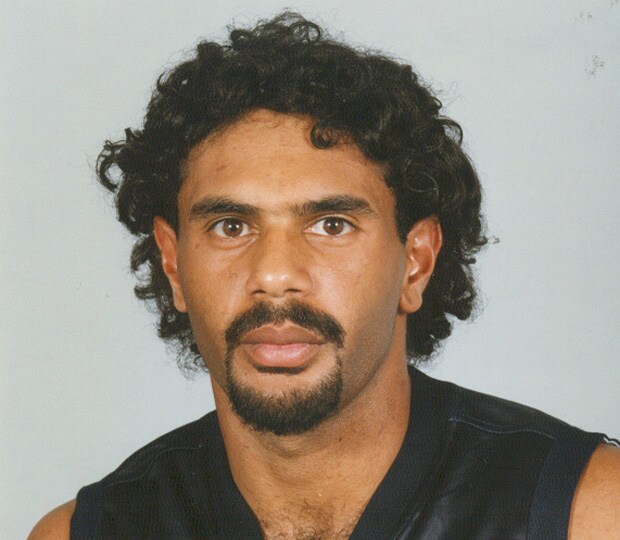
“Big Red” barnstormed his way into the winner’s circle on Friday night – and if the North result is anything to go by he’ll be slapping backs at Paterson’s Stadium in a fortnight.

“I reckon I’m a lucky charm – I’ll be back,” said Lance Whitnall, the former Carlton Captain, club best and fairest and All-Australian representative.

Whitnall is one of those former players who still fronts up on matchdays to cast a discerning eye over today’s team. Another is David Kernahan, who was also  on hand in the rooms as the players belted out one of the more passionate versions of Lily of Laguna.

Whitnall said it all for the former players when he said “I get to as many games as I can and I love watching the boys play”.

“It was great to see the boys notch a great win like that tonight and fantastic to see blokes like ‘Waitey’ (Jarred Waite) get up like that.”

Whitnall, a 216-game centre half-forward through 11 seasons for the Blues, was always known for his football smarts – and only too happy to cast astute judgment on today’s Carlton model and where it was heading.“The club is certainly heading in the right direction, that’s for sure,” Whitnall said. “Funny game football. Last week everyone was down, this week they’re all up again, which just goes to show it turns around pretty quickly.

Resplendent in suit and tie as a guest at the Carlton President’s Luncheon, Whitnall still chases the occasional footy for Glenroy reserves as a fill-in and oversees the fortunes of the senior team as Coach.

Has the game taken its physical toll? “My knees are hurting a bit and I’ve already been told I have to go under the knife, so it will happen at some stage.”

More By Tony De Bolfo

Announcement: SOC Luncheon Cancelled

Regretably. the SOC Exec has made a decision today that we will not be proceeding with the Lunch this year, due to market conditions and the plethora of Carlton events this year.

We appreciate your support in the past and look forward to your support again in 2015.

Apologies for any inconvenience.

Medallion means all to True Blue Butler

AdrianButlerArticle_620X370.jpg

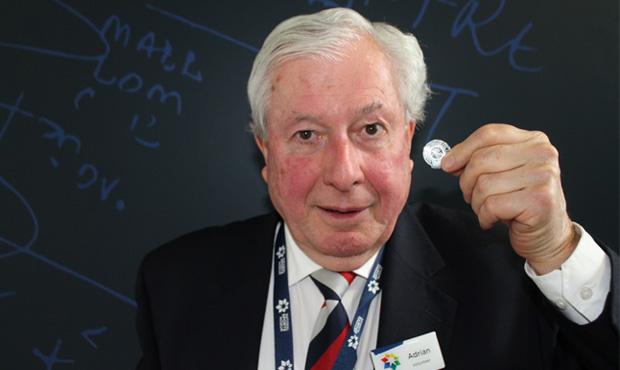
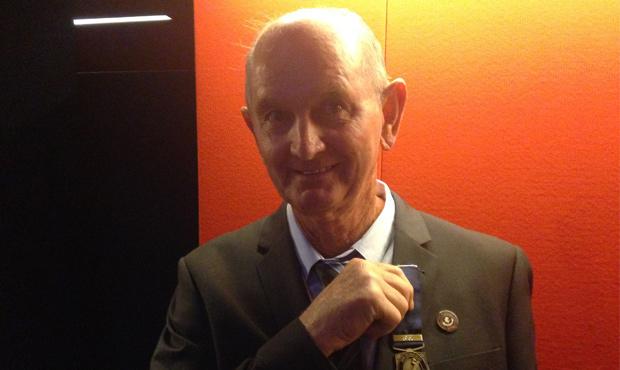
Adrian Butler with commemorative medal no.522. (Photo: Carlton Football Club)
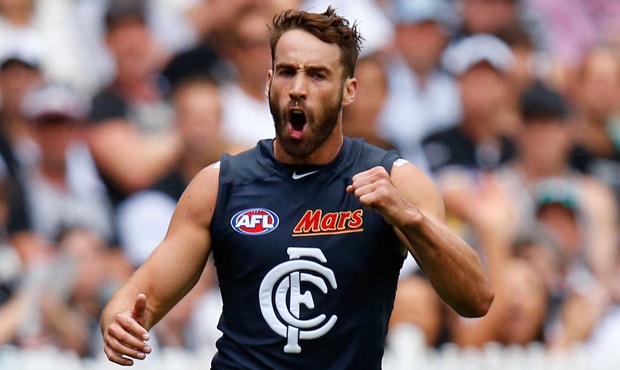
Commemorative medal no.522 means everything to Adrian Butler. The medal, signifying that his late father Bert was the 522nd man to represent the Carlton Football Club at senior League level, now serves as a wonderful throwback to happy times for him.

“This medal makes me very proud that long gone past players are not forgotten,” Adrian said.

“The Butlers have been lifelong Carlton supporters, influenced by my father. My brother is Carlton, my son is a mad Carlton supporter, so to have this medal alongside the ’38 Premiership medallion makes me very proud.”

Adrian’s keen sense of sporting history is truly palpable, the legacy of his involvement with the Melbourne Cricket Club as an MCG tour guide. In collecting his medal at Visy Park, Adrian came armed with precious mementoes of Bert’s 25-game career from 1935-38 and again through the war years of 1941 and ’44.

The ’38 Premiership medallion to which Adrian refers was awarded to Bert despite the fact that he never made the cut for the 19-man team led by captain-coach Brighton Diggins which completed that drought-breaking triumph over Collingwood.

Adrian has completed his research into that medallion and believes a total of 25 players who contributed to the cause through the 38 season, received Premiership Medallions, Bert included, “which is interesting when you consider that these days if you don’t make it you don’t get a medallion”.

“Dad was unlucky. He’d established himself in the team, was best man on the ground the week before he got injured, and then six weeks before the finals, in the dying minutes of the match against Richmond, Jack Dyer cleaned him up, smashed his collarbone and he didn’t play again that season,” Adrian said.

“I remember coming in here to past player functions and old ‘Mocca’ Johnson telling me that Dyer was never game to take on the big blokes . . . which says a lot because Dad was a rover.”


Bert Butler (far right) with Carlton captain Bob Atkinson, prior to a training session at Princes Park circa 1944. (Photo: Supplied)

Adrian said that it was important that the club recognised its grand history, even beyond the 1930s when his father, who died in 1999, shared roving duties at Princes Park with the late Edward “Ansell” Clarke.

Past players and/or their descendants wishing to collect their individually numbered 150th year commemorative medallions from the club can contact Tony De Bolfo on 9389 6241 or tony.debolfo@carltonfc.com.au

Mac joins Newt in Ton-Up Club

Mac100Article_620X370.jpg

Mac Wilson, relaxing at his Thornbury home, August 2009. (Photo: Carlton Football Club)
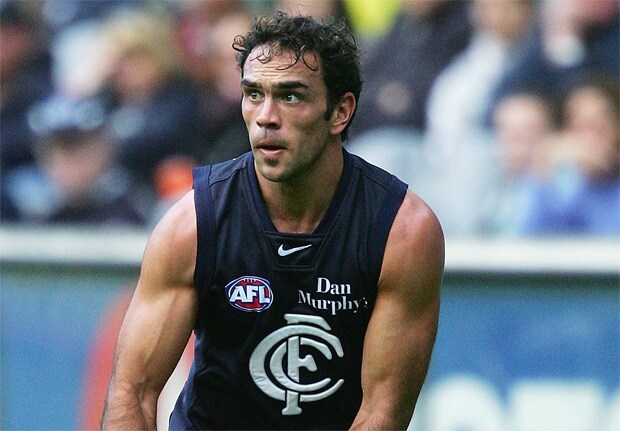
In the long history of the Carlton Football Club, only one former player, Newton Septimus Weston Chandler – “the grand old man of Princes Park” as he is remembered – has lived to be 100.

Chandler, the 69-game footballer, recruiter, secretary, vice-president and treasurer, was in fact 103 years, 186 days when he finally met his maker on March 24, 1997.

Today, 17 years later, Carlton lays claim to its second member of the “Ton Up Club” when Mac Wilson celebrates his 100th birthday. By then, he will have received his congratulatory message from the Queen, together with a card signed by members of Carlton’s current playing group, amongst them Dennis Armfield who wears Wilson’s old No.27 on his back.

Andrew McDonald “Mac” Wilson was born in the Yarra Valley town of Woori Yallock on July 9, 1914, 19 days before the official outbreak of the First World War. Not long after, his family relocated to the Nyah region on the other side of Swan Hill in the Mallee, only to return to Woori in 1934.

Having played at Piangil where the ’45 Carlton Premiership player Jim Mooring also chased the leather, Wilson later returned to Woori Yallock for a season (and he’d later represent the Woori team in its first Grand Final victory in ’47), before joining Sunshine with the promise of a job. Sunshine, in the Footscray sub-district League, must have doubled as football’s school of hard knocks for Mac, although one of his contemporaries there at the time was none other than the fearsome Bob Chitty, later the Carlton captain, Premiership player, dual best and fairest and lord protector.

“He (Chitty) was a hard tough fellow and he trained just as hard as what he played you know,” Wilson said in a recent interview. “If you happened to knock him over at training you were likely to get into a fight with Chitty.”

Wilson, like Chitty, would ultimately cross to Carlton – in the former’s case on the recommendation of Mooring, as Wilson explained.

“During the war the Air Force used to play games at Carlton, and my brother was in the Air Force. Anyway, he and I were walking around the ground looking at things and I was particularly good friends with Jimmy Mooring and Jimmy came from Piangil and he was a mate of mine,” Wilson said.

“Now he was walking around with Harry Bell (the then Carlton secretary) and he (Mooring) said to Bell, ‘This is the chap I’ve been telling you about’. Bell asked me then, ‘Come out and have a go’ and I said ‘Yeah, righto’ – but I wasn’t much interested in it . . . I liked playing football but I wasn’t much interested in playing League football. I was too shy I was.”

Wilson’s nine-game career would encompass the 1933 and ’44 seasons, at a time when the Allies gained momentum in World War II.

A late starter, (Wilson was 29 years, 21 days when he completed his senior League debut), he joined Carlton from Footscray District League club Sunshine at a time when young men continued to volunteer for military service and footballers were something of a rare commodity.

Seven of Wilson’s nine matches for Carlton would be as 19th man. Remarkably, his first and last games would result in 100+-point thrashings of Collingwood and Geelong, and his first full game would be a final.

According to the record books, Wilson followed his captain Jim Francis onto the field for the first time in Round 12, 1943, in what was the match with the black and whites at Victoria Park. Warming the pine as 19th man, Wilson must have sat there in awe as Francis (with eight goals) and Jack Wrout (seven) completed the rout, 28.10 (178) to the black and whites’ 11.8 (74).

It may well be that Mac didn’t get a run in this match, as he cites the Round 14 match versus Essendon at Windy Hill – Francis’ last game – as his first real League foray. As he said: “Arthur Sanger broke his arm and I was 19th man . . . and the first bloke I played on was ‘Dicky’ Reynolds”.

Wilson took his place in the dugout in three of his team’s last four games of the ’43 season, ending with Fitzroy at Brunswick Street Oval. The visitors’ 15-point win in that one earned them another shot at the Maroons in the first Semi Final, and Wilson got the call-up fir his first full game at half-back, replacing the injured Frank Anderson.

Regrettably, Fitzroy emerged 51-point victors and duly ended Carlton’s September campaign.

In February of the following year, Wilson enlisted in the RAAF, where basic training deprived him of any football for months. Not until Round 8 did Wilson make himself available and he got the call-up for another encounter with Collingwood, this time at Princes Park.

This time, Carlton won.

Wilson sat on the bench twice more, before taking his place in the starting line-up for the Round 17 match against Geelong at Princes Park. Another serving member of the RAAF turned out for the first time in that one – the West Australian-born future Carlton Premiership captain and club champion Ern Henfry – who was near-best on the ground in the Blues’ 106-point demolition of the Pivotonians.

Wilson was either unavailable or omitted for what proved to be a controversial last game of the home and away season against Footscray the following weekend, when a hotly-disputed goal after the final bell gave the Bulldogs victory by one point and forced Carlton out of finals contention.

By then it was all over for Mac the player – but 70 years on, Mac the man is still going strong.

Top ten oldest surviving Carlton past footballers

1.     Mac Wilson, born July 9, 1914

2.     Keith Rae, born July 30, 1917

3.     Harcourt Dowsley, born July 15, 1919

4.     Doug Williams, born February 3, 1923

5.     Ron Hines, born July 11, 1923

6.     Ken Hopper, born June 8, 1924

7.     Alex Way, born August 13, 1925

8.     Allan Greenshields, born January 22, 1926

9.     Ken Hands, born October 26, 1926

10.   Jim Davies , born December 6, 1926

AFL’s top six oldest surviving past footballers

1.     Mac Wilson (Carlton), born  9/07/1914

2.     Ken Feltscheer (Melbourne, Hawthorn), born  June 9, 1915

3.     Keith Rae (Carlton, Richmond), born July 30, 1917

4.     Bob Sayers (Fitzroy) October 26, 1917

5.     Cec Austen (Hawthorn), November 30, 1918

6.     Bill A. Duckworth (Collingwood) June 10, 1918

More By Tony De Bolfo

Past Player Interview: Peter Fyffe

In a new series of interviews we not only want to hear the views of Carlton past players but also promote their business activities and at the same time promote the SOC business directory which not only aims to connect Carlton past players with each other in terms of business connections, but also to connect Carlton supporters with Carlton past players. After all, when choosing between two products or services always choose the one produced by a Carlton past player!

The SOC business directory can be found here: http://spiritofcarlton.com.au/blog/business-directory/

Any past player can become a member of the SOC and add their own business. In fact if you would like to be the subject of an interview such as this contact admin@spiritofcarlton.com.au or contact Jamie on 0403907997.

Peter Fyffe played 19 senior games for the Blues from 1970 to 1973. He would later complete a successful career with Castlemaine, playing in their 1984 premiership and being named as one of Castlemaine’s 25 greatest players and a member of the Bendigo leagues team of the 1980s.


Q: What are your memories of your time at the Carlton Football Club?

My memories of the Carlton FC are still vivid and very wide-ranging. As you would expect every player’s experiences and memories are different and very personal, but here goes…As a country kid from Newstead (near Castlemaine) I was invited to join the Blues in 1970 at the age of 18. It was like moving to a different planet! From the farm life of fishing, footy and fast cars I was suddenly transported to living on the corner of Sydney and Brunswick Roads with traffic, noise, crowds and a much faster and exciting way of life.

My move from Newstead to Princes Park was like dream come true. I couldnt believe I was meeting (and training and playing football) with the likes of Ron Barassi, John Nicholls and Alex Jesaulenko. These people were my sporting heroes and I was suddenly part of it all. In my first year (1970), mainly with the then Reserves , the Carlton senior team won the Grand Final. As a member of the Senior List, I was lucky enough to be included on a world tour at the end of the footy season with the Carlton FC and a VFL Team of Champions playing exhibition matches in many countries. What an experience!

Although I played the majority of my 4 years of footy at Carlton with the Reserves (Seconds) there was a very inclusive culture between the Firsts and Seconds senior list players. My memories of Saturday nights at “Nicks Nightclub” having a few beers with Doully, “Jack” O’Connell, “Curly” Austin, “Crackers” O’Brien and “Ocker” Warburton are still very strong. The Carlton FC provided a fantastic culture of support, ambition, success and cameraderie which still exists to this day, mainly through the Spirit of Carlton (Past Players and Officials group).

Then along came the Bendigo Boys such as Geoff Southby, Rod Ashman, Ray Byrne, Peter Hall, Greg Kennedy and many others. What a pleasure to train and play with such gifted players. Like most past players I sometimes dream of what could have been, but mostly I reflect on how lucky I was to be part of an era of such success and talent in the early 1970’s at the Blues.

Q: What does the club mean to you?

The Carlton FC means success, tradition, loyalty and a heavy dose of expectation. The professionalism surrounding the club way back in the 1970’s was groundbreaking. We had a fitness coach (much despised – not really, we loved George), club doctor (Bill B), club physiotherapist (“Bruv” Luke), committee members who were allocated a country recuit to look after, and many other support staff who were always helping and supporting the playing group. Players (Firsts and Reserves) were made to feel professional and valued and we usually reciprocated with on-field (and off-field) performance.

I truly value and have great pride in the navy blue jumper, the Carlton logo, and the club song – even after 40 years. The “club” means exactly what it is – a group of people (players, coaches, committee, support staff, wives and girlfriends) who all share a special bond of being involved with an elite and successfull sporting tradition whose history spans 150 years. The club is really all about the good friends you make and hopefully continue those friendships.

Q: In your playing days did you have plans in place for your post football career?

None whatsoever. In the ’70’s, all players worked or studied. Before going to Carlton I had decided to go to RMIT University to study Microbiology. Footy was something that got in the way of my studies. As a young player with Carlton I didnt think much about the future, it was “live for now – the future will take care of itself”. After 4 years, and a knee injury, I was traded for a young buck from Tasmania – Greg Towns. I didnt consider my footy future much at this stage, I just sort of ended up playing for Cooee in Tassie then went to Castlemaine and finally finished at Northern United in Bendigo where we won 2 premierships.

Q: What was the catalyst for the formation of your current business?

My current business is a winery called Glenwillow Wines. About 15 years ago with the help of my brother Malcolm, and our families, we planted 7 acres of grapevines on the family farm near Yandoit (near Castlemaine). At this time I was still working full time as a water scientist for the local water authority, Coliban Water. I wanted something useful to do in my retirement, and I liked wine, so starting a vineyard from bare paddocks seemed like a good idea. We ploughed the paddock, cut down trees for vineyard posts, installed the vine wires, planted vines all with the help of a few mates (and a few beers).

Q: How is your business going and what plans are there for the future?

Glenwillow Wines is a boutique family business which specializes in super-premium, red wines from the Bendigo Region. We specialize in shiraz, cabernet sauvignon and the Italian varieties nebbiolo and barbera. Our business has grown steadily over the last few years to a stage where I am very happy. My business goal is not to make a fortune, but to produce the very best wines possible, enjoy the vineyard work, continue the involvement of friends and family and maybe make a modest profit. My goal is to continue to receive great wine reviews from James Halliday, and perhaps pick up a few more trophies and gold medals. I also plan to expand my wine sales and distribution to selected quality wine outlets in Melbourne. With the support of SOC past players , officials and supporters, I hope to provide great Bendigo wine to many more winelovers in Melbourne. So, jump on board my website (or email me) and join my Glenwillow “Cellar Club” for great information and wine specials at www.glenwillow.com.au.

Q: What do you see as the positives for past players in using the SOC business directory?

I would like to see a strong following for all businesses in the SOC Business Directory amongst all the Carlton “family”. We all share a passion for the Navy Blues and by supporting SOC Past Players & Officials we are continuing the friendships and connections that we have made in the past and perhaps develop new commercial relationships. This all helps to build a stronger club network of friends and businesses, both large and small. For the SOC Business Directory to work, we all need to support each other and use the opportunities that this great idea can provide.

Q: What advice would you give current players given your experience pre and post football?

Despite what we all may think, football has a very limited life, and our bodies and minds are only at their peak for a few years. Enjoy football at the highest level you possibly can, continue the friendships you have made in sport into life after football. Prepare well for the transition from elite sport (and the rarefied environment that often surrounds AFL clubs) to normal life without the hype and intensity of AFL. Develop interesting skills and follow your passions after footy. Maintain your friendships as they can be easily forgotten when clubmates leave and grow old. And most of all …”remember the good old times”…

Syd Jackson’s 70th

Happy 70th birthday to Syd Jackson.


———-

From the Blueseum


Playing Career : 19691976
Debut : Round 1, 1969 vs St Kilda, aged 24 years 278 days
Carlton Player No. 808
Games : 136
Goals : 165
Guernsey No. 5
Last Game : Preliminary Final, 1976 vs North Melbourne, aged 32 years 79 days
Height : 172 cm (5 ft. 8 in.)
Weight : 72.5 kgs (11 stone, 6 lbs.)
DOB : July 1, 1944
Premiership Player 1970, 1972
Carlton Hall of Fame (2006)

Before St Kilda’s Nicky Winmar made his celebrated stand against racism at Victoria Park; before Jim and Phil Krakouer redefined the art of ball-handling, and before a succession of brilliant aboriginal small forwards transformed the forward pocket from a respite station for tired rovers into a major avenue to goal – there was the mercurial Syd Jackson; a gifted, courageous aboriginal footballer who was a star in two Carlton Premiership teams.


Milestones

50 Games: Round 8, 1971 vs Richmond
100 Games: Round 5, 1974 vs Collingwood

100 Goals: Round 20, 1971 Vs Hawthorn

Career Highlights

1969 – Best First Year Player Award
1970 – Maurie Sankey Memorial Trophy: 4th Best & Fairest
1970 – Premiership Player
1972 – Premiership Player
1974 – 2nd Reserves Best & Fairest
1975 – 4th Best & Fairest
1975 – B. J. Deacon Memorial Trophy: Best Clubman Award

Graham McColl’s 80th

Happy 80th birthday to Graham McColl today.


——————-

From the Blueseum:


Playing Career: 1958
Debut: Round 2, 1958 v North Melbourne, aged 23 years, 305 days
Carlton Player No.: 712
Games: 10
Goals: 4
Guernsey No.: 36
Last game: Round 18, 1958 v South Melbourne, aged 24 years, 66 days
Height: 186 cm
Weight: 83 kgs
DOB: June 18, 1934

Graham McColl played 10 games at Carlton starting in the 1958 season. He managed 4 goals for the Blues. Graham’s story was one only too familiar for many footballers, what might have been if not for injury. During a night match against St Kilda in 1958 he injured his knee snapping the anterior cruciate ligament which resulted in sitting out the entire 1959 season. During McColl’s convalescence the club contacted the medical arm of the American NFL Grid Iron code who had been experimenting with knee taping tehniques at the time to stabilise ACL injuries. Sadly the knee was re-injured during pre season training in 1960 and any attempt at a VFL comeback was thwarted. The silver lining in all this though was that the recovery techniques piqued McColl’s interest and is what lead him to become interested in becoming a trainer. Later, McColl did become a Trainer for the Blues, commencing as head trainer for the U19s in 1973 and moved up through the ranks of the reserves to the seniors.

In 1981 McColl was the deserved recipient of life membership of the Carlton Football Club. After spending some time on the past players committee in the early 1980s in 1985 he retired as a trainer at the club to concentrate on his professional career.

McColl was recruited from Coburg, after originally playing for Preston Swimmers U16s (where he played alongside Ron Barassi and Brian Pert). Whilst at Coburg, McColl played 70 games, winning the best and fairest in 1956.

“Turkey Tom” in historic turnout

TurkeyArticle_620X370.jpg

“Turkey Tom” Carroll at Saturday night’s 150th celebration event at The Plenary. (Photo: Carlton Football Club)
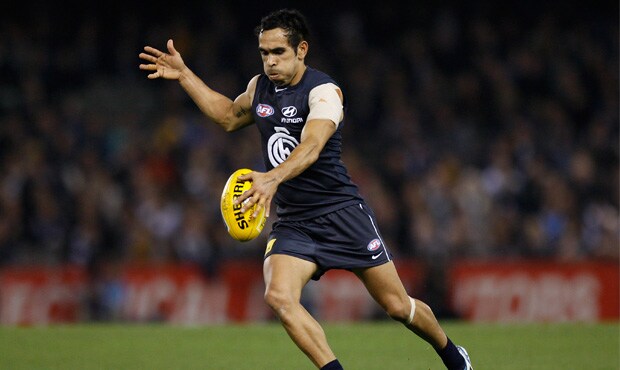
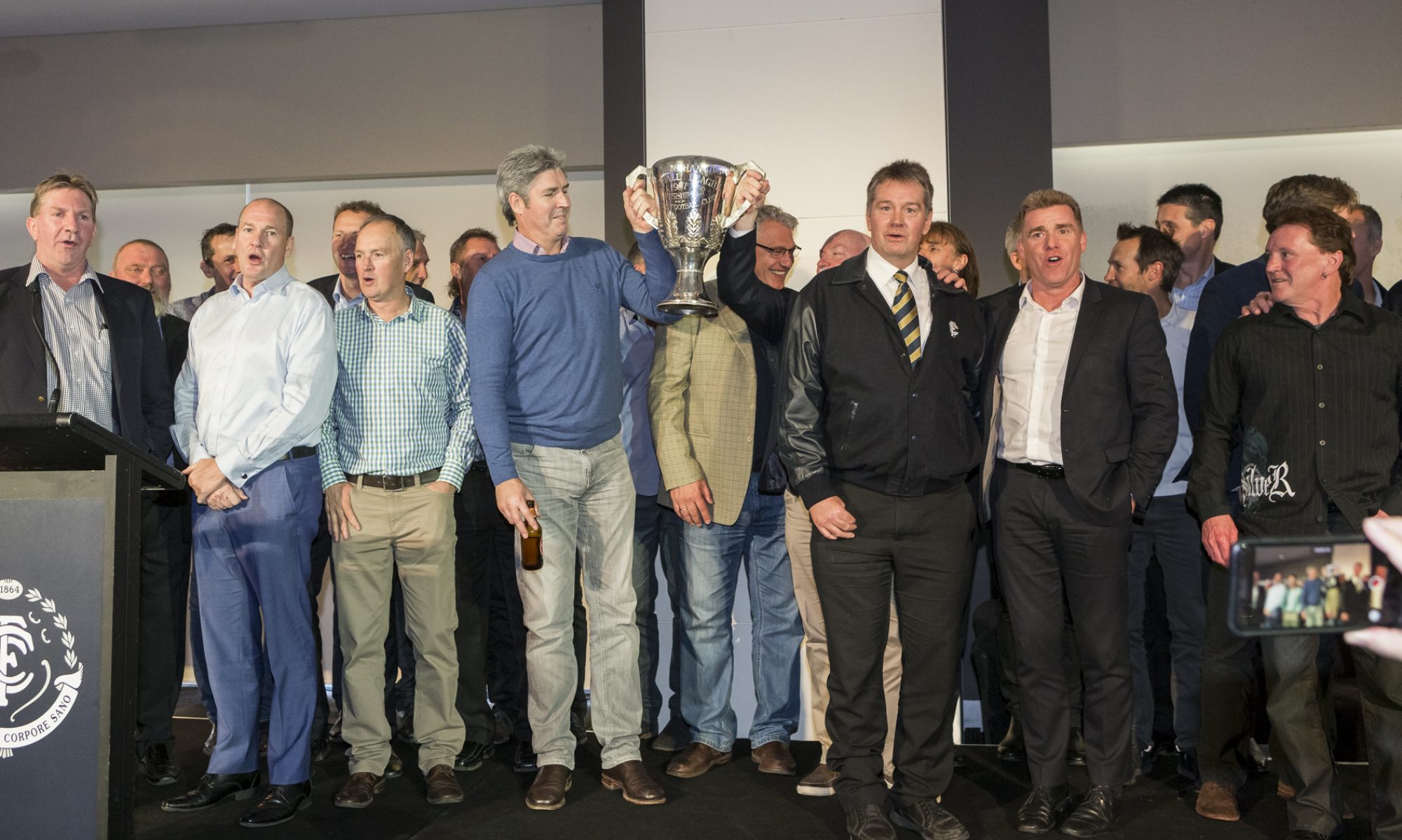
More than 260 former players gathered for one of the truly memorable occasions in Carlton history on Saturday night – amongst them the full-forwards Brendan Fevola, Warren Ralph, Peter McKenna, Alex Jesaulenko and the club’s first John Coleman Medallist, “Turkey Tom” Carroll.

Renewing acquaintance with his Carlton contemporaries Gordon Collis, Berkley Cox, Don Nicholls, John Nicholls, John Reilly and Vasil Varlamos, Carroll was amongst the 2200 in attendance at The Plenary for the club’s 150th anniversary dinner.

Carroll was only too happy to pose with the medal earned for his 54-goal haul through his maiden season of 1961 – thereby becoming the first Carlton player since “Soapy” Vallence 30 years before to take out the competition’s goalkicking honors.

Hailing from Ganmain outside Wagga Wagga, Carroll, Carlton’s three-time leading goalkicker who also wore the No.22 made famous by Vallence, admitted he often thought about what might have been in the 50 years since heading home.

“The Coleman Medal’s great, he (Coleman) was my hero as a kid and I even got to meet him,” Carroll said. “But a Premiership would have been better. We got beaten in the ’62 Grand Final and I didn’t think much about it back then, but I do now.”

That said, Carroll believed it was important for the club to ensure its focus wasn’t solely confined to Premierships alone, given that only 179 of Carlton’s 1152 senior-listed players had savoured Grand Final success in League competition.

He also took the liberty of commending the club for welcoming a fellow former front man back into the fold. As he said of “Fev”, “ I know he’s done so much work behind the scenes for people in the community back home and he’s pretty much turned his life around”.

Carroll, who booted 143 goals in 55 matches through three seasons, also sported the 150th anniversary commemorative medal in his lapel. The medal carries the number 736, acknowledging Carroll as the 736rd senior player to have represented Carlton since Jimmy Aitken led the first team to compete in League competition, against Fitzroy at the Brunswick Street Oval, in the opening round of 1897.

Former Carlton greats come home

DieselDaisyArticle_620X370.jpg

Blues great Greg Williams chats to Dale Thomas after training. (Photo: Carlton Football Club)
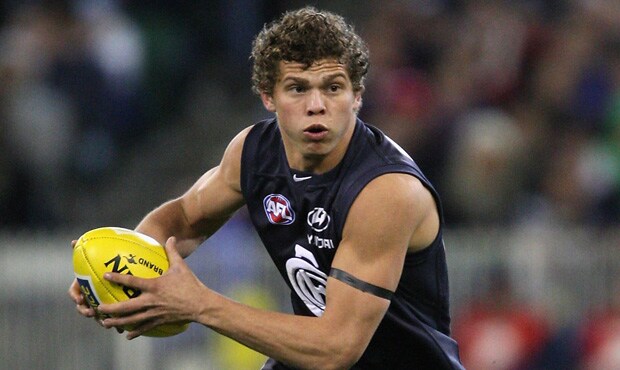
Some of the more revered names in Carlton history – and others not so well-known – have returned to Visy Park to support today’s senior players in their final warm-up for tomorrow night’s match with reigning Premiers Hawthorn at the MCG.

Joining Carlton President Stephen Kernahan and fellow Director Adrian Gleeson were Premiership players Ken Hunter, Ken Sheldon, Peter Bosustow, Mark Maclure and Greg Williams.

Also there was one-game player, Maryborough’s John Stephenson, who followed John Nicholls to Carlton in that landmark season of 1957.

“I came to Carlton in the same season as John. John was very successful and I was not so successful . . . but I did manage to play,” Stephenson said.

“My father played for Carlton a long while back, in 1920 . . . so it’s a great honor to be here.”

Stephenson and co. are amongst the 260 former Carlton footballers, including Hall of Fame Legends and Members, to have committed to Saturday night’s 150th anniversary celebrations at The Plenary.

Former players from as far back as Ken Hopper, a 17-game player through 1945/’46 who ironically later crossed to Hawthorn, will be in attendance. Also there will be “Big Nick’s” older brother, the 77-game Carlton centreman Don Nicholls, while the 102-game midfielder Berkley Cox will be jetting in from Tasmania.

Carlton’s three living Brownlow Medallists – Gordon Collis (1964), Greg Williams (1994) and Chris Judd (2011) – will also be in the house.

“It’s a big week for the club,” Kernahan said after the training session. “We’ve got a game tomorrow night which is absolutely the most important thing, and Saturday night is a one-off and I can’t wait to see old faces in the room.

“This is Carlton – players and people getting together and celebrating what this club is all about.”

John Comben’s 70th

Happy 70th birthday to John Comben today.


——————–


Career: 1963 – 1966
Debut: Round 1, 1963 v Fitzroy, aged 18 years, 311 days
Carlton Player No. 751
Games: 38
Goals: 11
Last game: Round 18, 1966 v Geelong, aged 22 years, 75 days
Guernsey No. 25
Height: 175cm
Weight: 70kg
DOB: 13 June, 1945

The younger brother of Carlton legend Bruce ‘Bugsy’ Comben, John was a fine footballer in his own right, but one who inevitably suffered from comparisons with his champion sibling in his four seasons at Princes Park. He was recruited from Werribee South.

While ‘Bugsy’ began his career as a rover before making the back pocket his domain, John played all of his football on a wing. Wearing guernsey number 25, he kicked 11 career goals in his 28 games. He crossed to Melbourne in 1967, but managed just one more senior game.

The oldest of the Comben boys Bill Comben played U/19’s football for Carlton back had to retire almost as soon as it started due to the growth of the family grocery business in Melbourne’s western suburbs.