70 reasons to cheer for Jim Pleydell

Happy 70th birthday today to Jim Pleydell.


———————

From the Blueseum:

Jim Pleydell

l


Career : 1964 – 1967
Carlton Player No. 763
Debut : Round 6, 1964 vs St Kilda, aged 20 years, 52 days
Games : 37
Goals : 6
Last Game : Round 16, 1967 vs St Kilda, aged 23 years, 132 days
Guernsey No. 33
Height : 179 cm (5 ft. 10 in.)
Weight : 74.5 kg (11 stone, 10 lbs.)
DOB : 1 April, 1944
Best First Year Player 1964

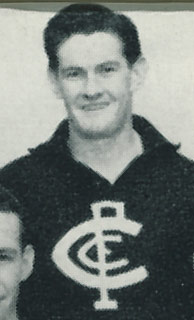
In 1964, an agile, left-footed wingman from Maffra named Jim Pleydell made a strong impression in his first year of VFL football with the Navy Blues. Given the nickname “Sam” by his team-mates, and wearing guernsey number 33, Jim played his first senior match against St Kilda at the Junction Oval in round 6 of that season. He showed glimpses of real talent in a disastrous 48-point loss to the Saints, and thereafter, held his place in the team throughout the remainder of the year. At season’s end he won Carlton’s Best First Year Player Award, and his future looked assured.

However, just two games into his second season, Pleydell copped an errant forearm to the face from a Geelong opponent; a blow that broke his jaw and shook his confidence for months. Although he eventually returned to senior football late in the year to play another five games, by 1966 his position in the team had been largely usurped by the likes of Garry CraneBryan Quirk, and Cliff Stewart. The Blues’ match committee gave Jim other opportunities at half forward in 1966-67, but it was soon obvious that he was first and foremost a winger, and therefore surplus to requirements.

So it was that after 37 matches over four seasons, Pleydell departed Princes Park and joined Essendon. He spent all of 1968 at Windy Hill without breaking into the Bombers’ senior side, and retired from VFL football at the end of that year.

By 1970, Jim was in Tasmania, where he won consecutive Best and Fairests for Cooee in the North Western Football Union in 1971-72.

Stan Harrison hits 70

Happy 70th birthday to former blueboy, Stan Harrison.

—————

From the Blueseum:

Stan Harrison

Career : 1964 – 1965
Debut and Only Game : Round 14, 1965 vs South Melbourne, aged 21 years, 124 days
Carlton Player No. 777
Games : 1
Goals : 0
Guernsey No. 42 (1965).
Height : 184 cm (6 ft. 0½ in.)
Weight : 77 kgs (12 stone, 2 lbs.)
DOB : March 28, 1944

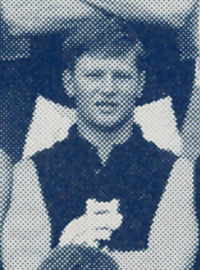
Stan Harrison wore guernsey number 42 in his one and only senior game for Carlton in round 14, 1965, when the Blues hosted South Melbourne at Princes Park. Sitting fourth on the ladder, Carlton was expected to win easily that afternoon. However, the eighth-placed Swans were inspired by their champion captain Bob Skilton – who kicked four goals and was clearly best on ground – to upset the home team, and put Carlton’s finals hopes in real jeopardy.

Harrison sat on the bench as 19th man for the majority of the match, and it is unclear whether he actually did make it out on to the field.* Still, he is credited with that one appearance, which came after he had produced a series of good games on the wing for the Reserves.

Unfortunately for Stan, he was omitted from the team selected to play North Melbourne the following week, and didn’t get another chance before he was delisted at season’s end.

Incidently, two other Harrisons have played for Carlton – Arthur Harrison, who managed a single game in 1914, and Ben Harrison, who played 2 games in 1995 before going on to have a long career with Richmond and the Western Bulldogs.

The 777th VFL player for Carlton, Stan Harrison was recruited from West Preston YCW.

.*Stan did make it onto the field during the third quarter when he replaced Brian Buckley who was suffering from a badly bruised jaw.

Steve Da Rui turns 50

Happy half century to Steve Da Rui.


—–

From the Blueseum:

Steve Da Rui


Career : 1988 – 1991
Debut : Round 1, 1988 vs Hawthorn, aged 24 years, 12 days
Carlton Player No. 948
Games : 55
Goals : 5
Last Game : Round 21, 1991 vs St Kilda, aged 27 years, 141 days
Guernsey No. 5
Height : 183 cm (6 ft. 0 in.)
Weight : 85 kg (13 stone, 5 lbs.)
DOB : 21 March, 1964

Remembered as a hard-hitting, determined customer who took no prisoners on the football field, Steven Da Rui was recruited by Carlton from East Perth prior to the 1987 season, along with his good mate Richard Dennis. A solid unit at 183 cm and 85 kg, Da Rui was no racehorse, but he was a strong mark, a great exponent of the legal ‘hip and shoulder’ bump, and a fierce tackler who revelled in the physical challenges.

Beginning his career at Perth’s St Mark’s College, Da Rui had played the first of his 87 matches for East Perth in 1981. His first few years were hampered by injury, so his potential wasn’t really apparent until 1986, when he was switched from defence into a ruck-roving role and became one of the Royals’ stars. At the end of that year, he and Dennis signed with Carlton, and the pair were soon at Princes Park for the start of pre-season training. Confident in the ability of both recruits, the club assigned them guernsey numbers 3 and 5 respectively.

But while ‘Rocky’ Dennis went on to play in the Blues’ 1987 Premiership team, Da Rui spent all of his first season with Carlton Reserves. The Blues’ list was abundant with midfielders at the time, and Steve soon realised that if he was going to play senior football at Carlton, then it had to be in defence. Still, he helped make ’87 a year of double celebration, when he was among his team’s better contributors as they comfortably beat St Kilda for the Reserves flag.

Eventually, Da Rui’s opportunity at senior level arrived the following year, when he was selected for Carlton’s round one match against Hawthorn at Princes Park. Stationed alongside Ian Aitken and Peter Dean at half-back, he made it a doubly-special occasion by kicking his first career goal in a hard-earned 15-point win.

From then on, he missed only a handful of games for the year, and was used as a shock trooper off the bench in all three of the Blues’ finals matches. When Carlton’s Premiership defence ended in the Preliminary Final with a 22-point defeat by Melbourne, Demon ruckman Steve O’Dwyer was reported for striking Da Rui, and his subsequent 3-week suspension cost him a place in the Grand Final.

Over the next three seasons, Carlton went through a period of instability at the top as three coaches; Robert WallsAlex Jesaulenko and David Parkin arrived or departed. The team drifted into a period of mediocrity, but Da Rui could always be relied on to light up the crowd. Some of his more memorable moments were the games where he ironed out opposing captains Michael Tuck of Hawthorn and Terry Daniher of Essendon, and the perfectly-delivered shirtfront that sent Melbourne’s Greg Healy to Disneyland at Princes Park.

In 1990, Da Rui represented Western Australia in that year’s State of Origin match against Victoria in Perth. Then, just over a year later, both he and Richard Dennis ended their careers at Carlton in the same match – round 21, 1991; when St Kilda’s champion full-forward Tony Lockett kicked 13 goals in a 54-point demolition of the hapless Blues.

Mark Williams’ Half Century

Happy 50th to Mark Williams today.

————–


Career : 1983 – 1988
Debut : Round 13, 1983 vs Footscray, aged 19 years, 91 days
Carlton Player No. 911
Games : 19
Goals : 10
Last Game : Round 17, 1988 vs Richmond, aged 24 years, 127 days
Guernsey No. 39 (1983 – 1988).
Height : 184 cm (6 ft. 1 in.)
Weight : 76 kg (12 stone, 0 lbs.)
DOB : 18 March, 1964 
Best First Year Player1983

His playing career may have been almost completely overshadowed by two other AFL identities with the same name; 2004 Port Adelaide Premiership coach Mark M. Williams, and 2008 Hawthorn Premiership forward Mark L. Williams – but Carlton’s Mark Patrick Williams spent six loyal seasons at Princes Park from 1983 to 1988. More than 20 years later, he is still coaching at elite level.

The son of former Blue John Williams, Mark first pulled on the navy blue strip in 1975, as a member of Carlton’s Little League squad. Later, he began his career proper at Carlton with the Under 19 team, after coming under notice as a lively schoolboy forward at St Mark’s College at Fawkner. By 1983 he was a regular half-forward flanker in the Blues strong Reserves team, and was promoted to the seniors for the first time in mid-June, when Carlton hosted Footscray. Wearing guernsey number 39, he lined up at half-back alongside champion Bruce Doull, and had an easy day of it as the dominant Blues won by a mammoth 89 points. Jim BuckleyKen Hunter and Peter Bosustow kicked 14 goals between them on a good afternoon for the Blues.

Mark went on to play another four games in his debut year, kicking his first two senior-level goals in a huge win by the Blues over St Kilda in round 19. He wasn’t selected in Carlton’s losing Elimination Final team, but still finished off a memorable season when he was awarded the club’s Best First Year Player trophy.

From then on however, although he was a consistent contributor at Reserves level, Mark played only 14 more senior matches in five seasons. He was at half-forward in Carlton Reserves’ 1986-87 Premiership double, before asking for – and being granted – a transfer to Footscray in 1989. At the Western Oval, Williams managed 14 games for the Bulldogs over 1989-90, before heading to Coburg in the VFA to finish off his playing career.

Afterwards, Williams was appointed senior coach at VFL club Preston from to 1998 to 2003, during which time he oversaw the club’s amalgamation with Carlton, and its transition into the Northern Bullants. In 2004 he was appointed senior coach at Sandringham with immediate success, taking the Zebras to three successive Premierships in 2004-05-06. Whilst at Sandringham, he combined his duties with the role of development coach at the Melbourne Football Club. After eight seasons with the Demons, Mark moved on again in 2011, crossing to Richmond as a senior assistant to Damien Hardwick.

Williams also wore guernsey No. 45 whilst playing with Carlton reserves in 1982.

Happy 70th to Ian Nankervis

A very happy 70th birthday to Ian Nankervis today!


———–

Career : 1964 – 1966
Debut : Round 2, 1964 vs Hawthorn, aged 20 years, 43 days
Carlton Player No. 760
Games : 27
Goals : 24
Last Game : Round 6, 1966 vs Footscray, aged 22 years, 75 days
Guernsey No. 23 (1964 – 1966).
Height : 170 cm (5 ft. 7 in.)
Weight : 67 kg (10 stone, 7 lbs.)
DOB : March 13, 1944.
Club Leading Goalkicker 1964

Ian Desmond Nankervis was a handy goal-kicking rover who played 27 games for the Blues between 1964 and 1966. He was Carlton’s leading goal-kicker in his first season, albeit with a very modest total of 18 majors. Afterwards, however, his career was almost completely overshadowed by another player with the same name; Geelong champion Ian J. Nankervis – who made his VFL debut in 1967 and played 325 games for the Cats. While captaining his club for five seasons, he represented Victoria 11 times, and was one of the first men chosen in Geelong’s Team of the Century.

Carlton’s Ian Nankervis was recruited from Mildura Imperials. A quick and lightly-built rover, he inherited the number 23 guernsey from Martin Cross, a fellow small man with a similar build and playing style. After making an eye-catching debut for Carlton Reserves against North Melbourne in the first game of 1964, Nankervis was included in the senior team the following week for the match against Hawthorn at Glenferrie Oval. He spent most of that game on the bench as 20th man, watching on while Hawthorn beat the Blues by 21 points.

Another Saturday afternoon warming the bench followed, before Ian was included in Carlton’s starting line-up for the first time when the Blues met Footscray at Princes Park in round 4. Nankervis started well in that match, and kicked his first career goal in the opening quarter, but after that, it was all Footscray and they ran out convincing winners by 31 points. Although Ian was a regular in Carlton’s senior team for the rest of that year, and notched up 18 goals from his 15 games, 1964 was the worst season in Carlton’s history to that point, and mediocrity is never tolerated for long at Princes Park.

In a stunning football coup, a new committee took power in the off-season, and rocked the game to its core by appointing Melbourne champion and captain Ron Barassi as captain-coach of the Blues for five years. Under Barassi, Nankervis found the going tougher, and a place in the senior side increasingly harder to claim. He managed eight first-grade appearances in 1965, and another four during the first six rounds of 1966, but after that, spent the rest of the year in the Reserves side.

Over the spring and summer of 1966-67, Barassi and Carlton’s match committee culled the Blues’ playing list, and Nankervis was among those who were told that their services were no longer required. Prior to the next season, he was cleared to Williamstown in the VFA. Twelve months later, his name was to hit the sporting headlines in regrettable fashion.

After enjoying a superb debut season with the Seagulls, Nankervis won the 1968 Field Medal as Best and Fairest in the VFA 2nd Division. Williamstown finished a game and a half clear on top of the ladder, before comfortably defeating the Geelong West Roosters in the second Semi Final to firm into raging hot favourites for the flag. But afterwards, while being presented with his award, Nankervis somewhat foolishly used the occasion to publicly criticise his coach Max Papley, and to demand more money. The Seagulls were outraged, and Nankervis was immediately suspended. He didn’t play in the Grand Final and was sorely missed, as Williamstown lost a nail-biter by 12 points to the persistent Roosters.

In 1969, Nankervis was traded to Dandenong, and Williamstown earned their delayed promotion by defeating Sunshine in the Grand Final.

Expression of Interest for Past Players Game

“Get the boots on again and bring the family”
Carlton v Collingwood Past Players Match – Sun, May 4, 2014, Visy Park.
As part of the clubs 150th celebrations the Spirit of Carlton Past and Present committee is organizing a past player match between our arch enemy – the Collingwood Football Club.
To the best of our knowledge this is the first past player match that these two great clubs have ever played in 150 years of being in the VFL/AFL competition.
The purpose of the match is to raise funds for the Peter McCallum Cancer Foundation, the Ted Whitten Prostate Cancer Research Foundation and our respective Past Player Welfare accounts.
We are confident that we can attract a crowd in excess of 10,000 and our planning will include a corporate lunch, after match entertainment, past player novelty events, auction items, past player interviews and a Sons / Daughters / Grandsons / Daughters Match at half time of past players children and grand children. We are doing some research into the possibilities of have the match televised as a part of our 150th celebrations – watch this space!
We need your support!
1. We are seeking players from the following eras – 1980s, 1990s, 2000s to assist us form a competitive team and if you are interested please complete the Expression of Interest Form by CLICKING HERE TO DOWNLOAD.
2. Sons/Daughters/ Grandchildren Under 12 – if you would like your siblings to participate in the half time matches please complete the Expression of Interest Form below
3. RSVP – 31st March 2014 or earlier please.
4. Please note that Colin Kinnear will be the coordinator for all past players and children participating on the day so please feel free to contact him for further information and follow up mobile – 0412 315 1780412 315 178
Looking forward to your support and we encourage you to come and join us for what should be a great day for all concerned.
Executive – Spirit of Carlton

Birth of the “Woof”

Paul Kelly once wrote that “from little things big things grow”, a sentiment that duly applies to the evolution of the “Woof” at the Carlton Football Club. Frank Andreula was one of the original group that came up with the idea to shout “Boof” whenever Val Perovic booted the ball. Frank described to the Blueseum how the six high school friends who regularly watched and enjoyed the footy at Princes Park from in front of the old press box wanted to honour the kicking prowess of recent recruit, Val Perovic. The idea which originated at the start of the 1982 VFL season was to imitate the sound of the foot connecting with the ball to accentuate the kick itself.

Understandably six people in a crowd of thousands are not easily heard and for the first few weeks their efforts were not really catching on. However, good ideas have a way of succeeding and by the round four match against Hawthorn a quiet but discernible noise could be heard on the TV replay. It was not loud enough to get the public’s attention, but many of the regulars in front of the press box could hear it and liked the idea.

The breakthrough came in the round seven game at Princes Park against Geelong. In what was a convincing ten goal win to the Blues. Perovic only gathered a handful of kicks for the game, however the mood of the crowd was buoyant with the big win against strong opposition and as the game progressed the “Woof” became louder and louder. It was in this game that Val Perovic himself began to notice the noise coming from the crowd every time he kicked the ball.

The media noticed at this stage as well but the “Boof” was interpreted as a “Woof” and from that time forward the moniker would stick (although Mike Coward did refer to Val “Boom” Perovic in a game review for The Age after the Geelong game). Round eight saw a loss at the Western Oval and Val did not play in the round nine thrashing of South Melbourne. Thus it was in the round ten game against Richmond where the “Woof” became a phenomenon. It was loud and proud throughout the entire game and the supporters at Princes Park had become hooked on the “Woof”.

After a while the “Woof” would take off to such an extent that it seemed as though Val’s kicks were travelling an extra ten metres on the power of the crowd alone. Of course the legend has lived on most notably through the efforts of Ang Christou and later Chris Bryan. Tradition demands that the legend must live on, Frank Andreula, one of the six originators of the call reckons that either Josh Bootsma or Matthew Watson are the most likely candidates on the Blues current list.

A video of the evolution of the “Woof” has been produced below.


When Carlton went with the big C

By Tony De Bolfo

CFCFirstArticle_620X370.jpg

A still taken from footage of the 1909 Grand Final. (Photo: Carlton Football Club)

It’s a seemingly innocuous minute, hidden amongst entries such as the appointment of Dr Strahan as club surgeon at a remuneration of 15 guineas.

But the minute listed at a Carlton committee meeting at the League Rooms on Collins Street on the evening of March 15, 1909, surely ranks as one of this club’s most significant.

“Uniforms: Resolved unanimously that a large white C. be worked on front of sweaters.”

In the room for this landmark moment in Carlton history were messrs Urquhart (Chair), Abrahams, Uren, Quirk, Blay, Hooper, Coulson, McInerney, Bruce, O’Connor, Gurr, Taylor, Kennedy, Coulthard, McGregor, secretary.

It was the night those 15 gentlemen also recommended that Fred “Pompey” Elliott be presented with the 1908 Premier Ball on pedestal on the opening day of the 1909 season.

Thirty-five days later, on April 19, 1909 the Carlton committee received correspondence from the then VFL approving the “letter C to be worn on the jerseys”, replacing the original blue lace-up with chamois yoke.

And the rest, as they say, is history.

VC awarded to Doug Baird’s boy

By Tony De Bolfo
BairdVCArticle_620X370.jpg

The late corporal Cameron Baird. (Photo: Supplied)

The late corporal Cameron Baird – son of the former Carlton footballer Doug Baird, has been posthumously awarded the Victoria Cross – the 100th recipient of the highest military medal.

Doug, his wife Kay and their son Brendan were amongst members of Corporal Baird’s family present in the Australian Federal Parliament when Prime Minister Tony Abbott confirmed the news.

“This is a bittersweet day,” Mr Abbott told the Lower House, reminding that the honour was bestowed for “acts of valour, extreme devotion to duty and ultimate self-sacrifice”.

Corporal Baird, who previously served in East Timor and Iraq, died in Afghanistan on June 22, 2013 – the 40th digger to die in the conflict.

As a 32-year old member of the 2nd Commando Regiment, Corporal Baird was killed in a firefight in the Khod Valley.

Corporal Baird’s courage was previously acknowledged with his awarding of the Medal for Gallantry six years ago. He had braved Taliban machine-gun fire to lead his men in recovering a mortally-wounded Private.

At the time of Corporal Baird’s death, Brendan contacted the club this morning to confirm the link and to say that all members of the Baird family, Cameron included, “have been Carlton to the core from day dot”.

The Carlton-Baird connection can be sourced to the late 1960s, to when Doug, a six-game Carlton player through 1969 and the Premiership year of 1970, was recruited from the Paramount Football club in Melbourne’s north.

Doug plied his craft at Under 19 and Reserve Grade level at Princes Park through the Barassi years. From full-forward he took out the League’s Under 19 goalkicking honours with 40 goals in 1968 (to tie with Richmond’s David Droscher) and he was adjudged fourth in the reserve grade best and fairest award just two years later.


The 1970 squad. (Photo: Carlton Football Club)

At senior level, Doug donned the No.27 now worn by Dennis Armfield, and while his senior career was all-too-brief the interest in Carlton never wavered – in part through the lifelong friendships with Robert Walls, Andy Lukas and the late Vin Waite.

“Wallsy” would act as best man at Doug’s wedding, and Andy and “Vinny” as groomsmen.

With Alex Jesaulenko the resident Carlton full-forward through the period, senior appearances for Doug were unfortunately all too few. That said, Doug’s contemporaries like the four-time Premiership player David McKay remember him as a very capable footballer.

“Doug was a good strong mark and an accurate, but as a full-forward he was probably in the wrong place at the wrong time with ‘Jezza’ there,” McKay said.

“He led the goalkicking in the Under 19s and reserves and I remember playing alongside him in ’69 when the reserves were runners-up in the Grand Final against Melbourne.”

Corporal Baird was born in Burnie, for this was a time when Doug captained and coached Cooee and later Ulverstone. On the family’s relocation to Melbourne, Corporal Baird, at just 15, turned out with the Calder Cannons’ 17 year-olds under the watch of the former Northern Blues coach Robert Hyde. There he played alongside Jude Bolton and Ryan O’Keefe (later dual Premiership players with Sydney) and Paul Chapman, a three-time Premiership player for Geelong.

Mr Abbott said Corporal Baird was already an iconic figure in the army, and was recognized with his awarding of the VC for most conspicuous acts of valour, extreme devotion to duty and ultimate self-sacrifice in Afghanistan as a commando team leader.

“He was on his fifth special forces tour when he was killed in the action for which he was awarded the Victoria Cross,” the prime minister said.

Mr Abbott said Corporal Baird was the 40th Australian soldier killed in Afghanistan – “and, please God, the last”.