
Past Player Interview: Peter Fyffe

In a new series of interviews we not only want to hear the views of Carlton past players but also promote their business activities and at the same time promote the SOC business directory which not only aims to connect Carlton past players with each other in terms of business connections, but also to connect Carlton supporters with Carlton past players. After all, when choosing between two products or services always choose the one produced by a Carlton past player!

The SOC business directory can be found here: http://spiritofcarlton.com.au/blog/business-directory/

Any past player can become a member of the SOC and add their own business. In fact if you would like to be the subject of an interview such as this contact admin@spiritofcarlton.com.au or contact Jamie on 0403907997.

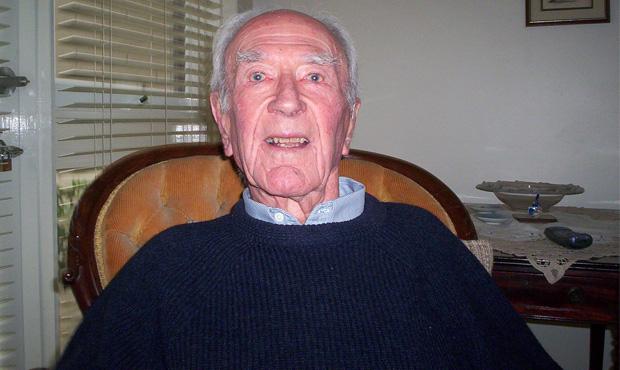
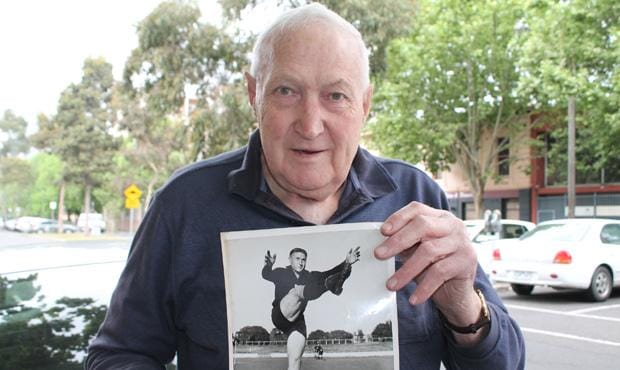
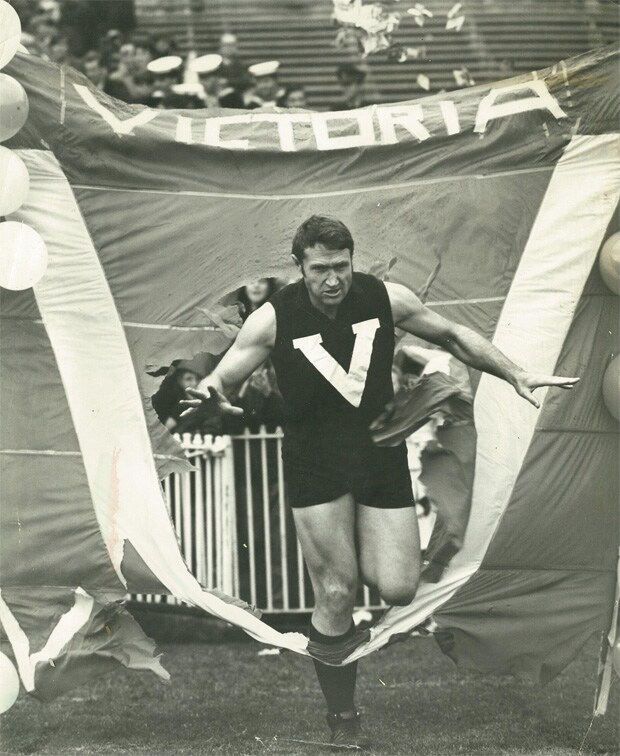
Peter Fyffe played 19 senior games for the Blues from 1970 to 1973. He would later complete a successful career with Castlemaine, playing in their 1984 premiership and being named as one of Castlemaine’s 25 greatest players and a member of the Bendigo leagues team of the 1980s.


Q: What are your memories of your time at the Carlton Football Club?

My memories of the Carlton FC are still vivid and very wide-ranging. As you would expect every player’s experiences and memories are different and very personal, but here goes…As a country kid from Newstead (near Castlemaine) I was invited to join the Blues in 1970 at the age of 18. It was like moving to a different planet! From the farm life of fishing, footy and fast cars I was suddenly transported to living on the corner of Sydney and Brunswick Roads with traffic, noise, crowds and a much faster and exciting way of life.

My move from Newstead to Princes Park was like dream come true. I couldnt believe I was meeting (and training and playing football) with the likes of Ron Barassi, John Nicholls and Alex Jesaulenko. These people were my sporting heroes and I was suddenly part of it all. In my first year (1970), mainly with the then Reserves , the Carlton senior team won the Grand Final. As a member of the Senior List, I was lucky enough to be included on a world tour at the end of the footy season with the Carlton FC and a VFL Team of Champions playing exhibition matches in many countries. What an experience!

Although I played the majority of my 4 years of footy at Carlton with the Reserves (Seconds) there was a very inclusive culture between the Firsts and Seconds senior list players. My memories of Saturday nights at “Nicks Nightclub” having a few beers with Doully, “Jack” O’Connell, “Curly” Austin, “Crackers” O’Brien and “Ocker” Warburton are still very strong. The Carlton FC provided a fantastic culture of support, ambition, success and cameraderie which still exists to this day, mainly through the Spirit of Carlton (Past Players and Officials group).

Then along came the Bendigo Boys such as Geoff Southby, Rod Ashman, Ray Byrne, Peter Hall, Greg Kennedy and many others. What a pleasure to train and play with such gifted players. Like most past players I sometimes dream of what could have been, but mostly I reflect on how lucky I was to be part of an era of such success and talent in the early 1970’s at the Blues.

Q: What does the club mean to you?

The Carlton FC means success, tradition, loyalty and a heavy dose of expectation. The professionalism surrounding the club way back in the 1970’s was groundbreaking. We had a fitness coach (much despised – not really, we loved George), club doctor (Bill B), club physiotherapist (“Bruv” Luke), committee members who were allocated a country recuit to look after, and many other support staff who were always helping and supporting the playing group. Players (Firsts and Reserves) were made to feel professional and valued and we usually reciprocated with on-field (and off-field) performance.

I truly value and have great pride in the navy blue jumper, the Carlton logo, and the club song – even after 40 years. The “club” means exactly what it is – a group of people (players, coaches, committee, support staff, wives and girlfriends) who all share a special bond of being involved with an elite and successfull sporting tradition whose history spans 150 years. The club is really all about the good friends you make and hopefully continue those friendships.

Q: In your playing days did you have plans in place for your post football career?

None whatsoever. In the ’70’s, all players worked or studied. Before going to Carlton I had decided to go to RMIT University to study Microbiology. Footy was something that got in the way of my studies. As a young player with Carlton I didnt think much about the future, it was “live for now – the future will take care of itself”. After 4 years, and a knee injury, I was traded for a young buck from Tasmania – Greg Towns. I didnt consider my footy future much at this stage, I just sort of ended up playing for Cooee in Tassie then went to Castlemaine and finally finished at Northern United in Bendigo where we won 2 premierships.

Q: What was the catalyst for the formation of your current business?

My current business is a winery called Glenwillow Wines. About 15 years ago with the help of my brother Malcolm, and our families, we planted 7 acres of grapevines on the family farm near Yandoit (near Castlemaine). At this time I was still working full time as a water scientist for the local water authority, Coliban Water. I wanted something useful to do in my retirement, and I liked wine, so starting a vineyard from bare paddocks seemed like a good idea. We ploughed the paddock, cut down trees for vineyard posts, installed the vine wires, planted vines all with the help of a few mates (and a few beers).

Q: How is your business going and what plans are there for the future?

Glenwillow Wines is a boutique family business which specializes in super-premium, red wines from the Bendigo Region. We specialize in shiraz, cabernet sauvignon and the Italian varieties nebbiolo and barbera. Our business has grown steadily over the last few years to a stage where I am very happy. My business goal is not to make a fortune, but to produce the very best wines possible, enjoy the vineyard work, continue the involvement of friends and family and maybe make a modest profit. My goal is to continue to receive great wine reviews from James Halliday, and perhaps pick up a few more trophies and gold medals. I also plan to expand my wine sales and distribution to selected quality wine outlets in Melbourne. With the support of SOC past players , officials and supporters, I hope to provide great Bendigo wine to many more winelovers in Melbourne. So, jump on board my website (or email me) and join my Glenwillow “Cellar Club” for great information and wine specials at www.glenwillow.com.au.

Q: What do you see as the positives for past players in using the SOC business directory?

I would like to see a strong following for all businesses in the SOC Business Directory amongst all the Carlton “family”. We all share a passion for the Navy Blues and by supporting SOC Past Players & Officials we are continuing the friendships and connections that we have made in the past and perhaps develop new commercial relationships. This all helps to build a stronger club network of friends and businesses, both large and small. For the SOC Business Directory to work, we all need to support each other and use the opportunities that this great idea can provide.

Q: What advice would you give current players given your experience pre and post football?

Despite what we all may think, football has a very limited life, and our bodies and minds are only at their peak for a few years. Enjoy football at the highest level you possibly can, continue the friendships you have made in sport into life after football. Prepare well for the transition from elite sport (and the rarefied environment that often surrounds AFL clubs) to normal life without the hype and intensity of AFL. Develop interesting skills and follow your passions after footy. Maintain your friendships as they can be easily forgotten when clubmates leave and grow old. And most of all …”remember the good old times”…

Syd Jackson’s 70th

Happy 70th birthday to Syd Jackson.


———-

From the Blueseum


Playing Career : 19691976
Debut : Round 1, 1969 vs St Kilda, aged 24 years 278 days
Carlton Player No. 808
Games : 136
Goals : 165
Guernsey No. 5
Last Game : Preliminary Final, 1976 vs North Melbourne, aged 32 years 79 days
Height : 172 cm (5 ft. 8 in.)
Weight : 72.5 kgs (11 stone, 6 lbs.)
DOB : July 1, 1944
Premiership Player 1970, 1972
Carlton Hall of Fame (2006)

Before St Kilda’s Nicky Winmar made his celebrated stand against racism at Victoria Park; before Jim and Phil Krakouer redefined the art of ball-handling, and before a succession of brilliant aboriginal small forwards transformed the forward pocket from a respite station for tired rovers into a major avenue to goal – there was the mercurial Syd Jackson; a gifted, courageous aboriginal footballer who was a star in two Carlton Premiership teams.


Milestones

50 Games: Round 8, 1971 vs Richmond
100 Games: Round 5, 1974 vs Collingwood

100 Goals: Round 20, 1971 Vs Hawthorn

Career Highlights

1969 – Best First Year Player Award
1970 – Maurie Sankey Memorial Trophy: 4th Best & Fairest
1970 – Premiership Player
1972 – Premiership Player
1974 – 2nd Reserves Best & Fairest
1975 – 4th Best & Fairest
1975 – B. J. Deacon Memorial Trophy: Best Clubman Award

Graham McColl’s 80th

Happy 80th birthday to Graham McColl today.


——————-

From the Blueseum:


Playing Career: 1958
Debut: Round 2, 1958 v North Melbourne, aged 23 years, 305 days
Carlton Player No.: 712
Games: 10
Goals: 4
Guernsey No.: 36
Last game: Round 18, 1958 v South Melbourne, aged 24 years, 66 days
Height: 186 cm
Weight: 83 kgs
DOB: June 18, 1934

Graham McColl played 10 games at Carlton starting in the 1958 season. He managed 4 goals for the Blues. Graham’s story was one only too familiar for many footballers, what might have been if not for injury. During a night match against St Kilda in 1958 he injured his knee snapping the anterior cruciate ligament which resulted in sitting out the entire 1959 season. During McColl’s convalescence the club contacted the medical arm of the American NFL Grid Iron code who had been experimenting with knee taping tehniques at the time to stabilise ACL injuries. Sadly the knee was re-injured during pre season training in 1960 and any attempt at a VFL comeback was thwarted. The silver lining in all this though was that the recovery techniques piqued McColl’s interest and is what lead him to become interested in becoming a trainer. Later, McColl did become a Trainer for the Blues, commencing as head trainer for the U19s in 1973 and moved up through the ranks of the reserves to the seniors.

In 1981 McColl was the deserved recipient of life membership of the Carlton Football Club. After spending some time on the past players committee in the early 1980s in 1985 he retired as a trainer at the club to concentrate on his professional career.

McColl was recruited from Coburg, after originally playing for Preston Swimmers U16s (where he played alongside Ron Barassi and Brian Pert). Whilst at Coburg, McColl played 70 games, winning the best and fairest in 1956.

“Turkey Tom” in historic turnout

TurkeyArticle_620X370.jpg

“Turkey Tom” Carroll at Saturday night’s 150th celebration event at The Plenary. (Photo: Carlton Football Club)

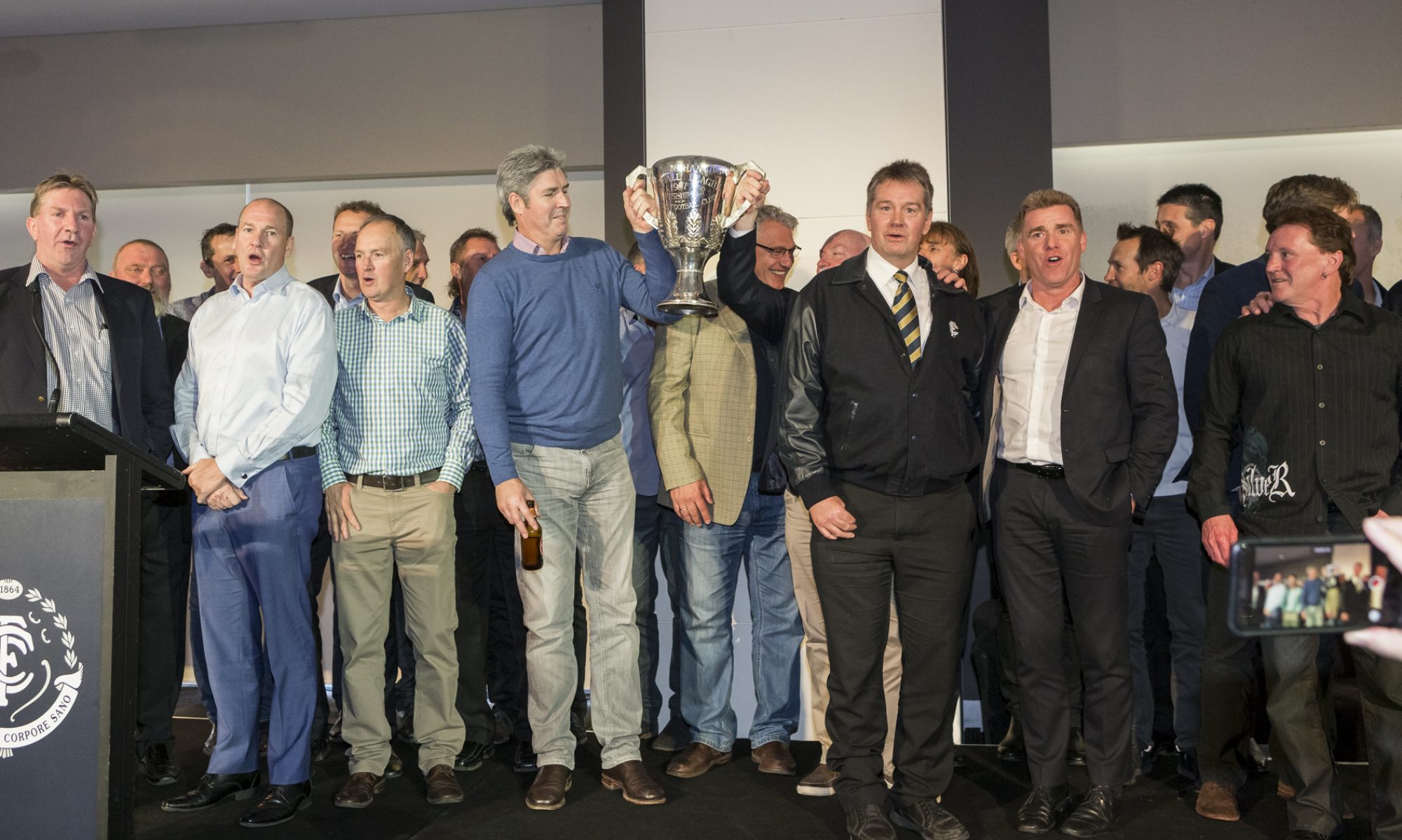
More than 260 former players gathered for one of the truly memorable occasions in Carlton history on Saturday night – amongst them the full-forwards Brendan Fevola, Warren Ralph, Peter McKenna, Alex Jesaulenko and the club’s first John Coleman Medallist, “Turkey Tom” Carroll.

Renewing acquaintance with his Carlton contemporaries Gordon Collis, Berkley Cox, Don Nicholls, John Nicholls, John Reilly and Vasil Varlamos, Carroll was amongst the 2200 in attendance at The Plenary for the club’s 150th anniversary dinner.

Carroll was only too happy to pose with the medal earned for his 54-goal haul through his maiden season of 1961 – thereby becoming the first Carlton player since “Soapy” Vallence 30 years before to take out the competition’s goalkicking honors.

Hailing from Ganmain outside Wagga Wagga, Carroll, Carlton’s three-time leading goalkicker who also wore the No.22 made famous by Vallence, admitted he often thought about what might have been in the 50 years since heading home.

“The Coleman Medal’s great, he (Coleman) was my hero as a kid and I even got to meet him,” Carroll said. “But a Premiership would have been better. We got beaten in the ’62 Grand Final and I didn’t think much about it back then, but I do now.”

That said, Carroll believed it was important for the club to ensure its focus wasn’t solely confined to Premierships alone, given that only 179 of Carlton’s 1152 senior-listed players had savoured Grand Final success in League competition.

He also took the liberty of commending the club for welcoming a fellow former front man back into the fold. As he said of “Fev”, “ I know he’s done so much work behind the scenes for people in the community back home and he’s pretty much turned his life around”.

Carroll, who booted 143 goals in 55 matches through three seasons, also sported the 150th anniversary commemorative medal in his lapel. The medal carries the number 736, acknowledging Carroll as the 736rd senior player to have represented Carlton since Jimmy Aitken led the first team to compete in League competition, against Fitzroy at the Brunswick Street Oval, in the opening round of 1897.

Former Carlton greats come home

DieselDaisyArticle_620X370.jpg

Blues great Greg Williams chats to Dale Thomas after training. (Photo: Carlton Football Club)

Some of the more revered names in Carlton history – and others not so well-known – have returned to Visy Park to support today’s senior players in their final warm-up for tomorrow night’s match with reigning Premiers Hawthorn at the MCG.

Joining Carlton President Stephen Kernahan and fellow Director Adrian Gleeson were Premiership players Ken Hunter, Ken Sheldon, Peter Bosustow, Mark Maclure and Greg Williams.

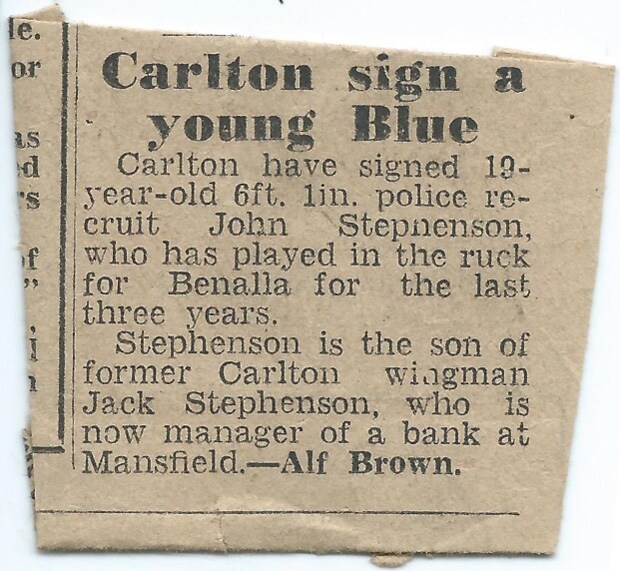
Also there was one-game player, Maryborough’s John Stephenson, who followed John Nicholls to Carlton in that landmark season of 1957.

“I came to Carlton in the same season as John. John was very successful and I was not so successful . . . but I did manage to play,” Stephenson said.

“My father played for Carlton a long while back, in 1920 . . . so it’s a great honor to be here.”

Stephenson and co. are amongst the 260 former Carlton footballers, including Hall of Fame Legends and Members, to have committed to Saturday night’s 150th anniversary celebrations at The Plenary.

Former players from as far back as Ken Hopper, a 17-game player through 1945/’46 who ironically later crossed to Hawthorn, will be in attendance. Also there will be “Big Nick’s” older brother, the 77-game Carlton centreman Don Nicholls, while the 102-game midfielder Berkley Cox will be jetting in from Tasmania.

Carlton’s three living Brownlow Medallists – Gordon Collis (1964), Greg Williams (1994) and Chris Judd (2011) – will also be in the house.

“It’s a big week for the club,” Kernahan said after the training session. “We’ve got a game tomorrow night which is absolutely the most important thing, and Saturday night is a one-off and I can’t wait to see old faces in the room.

“This is Carlton – players and people getting together and celebrating what this club is all about.”

John Comben’s 70th

Happy 70th birthday to John Comben today.


——————–


Career: 1963 – 1966
Debut: Round 1, 1963 v Fitzroy, aged 18 years, 311 days
Carlton Player No. 751
Games: 38
Goals: 11
Last game: Round 18, 1966 v Geelong, aged 22 years, 75 days
Guernsey No. 25
Height: 175cm
Weight: 70kg
DOB: 13 June, 1945

The younger brother of Carlton legend Bruce ‘Bugsy’ Comben, John was a fine footballer in his own right, but one who inevitably suffered from comparisons with his champion sibling in his four seasons at Princes Park. He was recruited from Werribee South.

While ‘Bugsy’ began his career as a rover before making the back pocket his domain, John played all of his football on a wing. Wearing guernsey number 25, he kicked 11 career goals in his 28 games. He crossed to Melbourne in 1967, but managed just one more senior game.

The oldest of the Comben boys Bill Comben played U/19’s football for Carlton back had to retire almost as soon as it started due to the growth of the family grocery business in Melbourne’s western suburbs.

Happy 90th to Ken Hopper

A very happy 90th to Ken Hopper today.

——————————

From the Blueseum:


Career : 1945 – 1946
Debut : Round 1, 1945 vs Melbourne, aged 20 years, 317 days
Carlton Player No. 601
Games : 17
Goals : 8
Last Game : Round 14, 1946 vs Hawthorn, aged 22 years, 48 days
Guernsey No. 2
Height : 183 cm (6 ft. 0 in.)
Weight : 76 kg (12 stone)
DOB : 8 June, 1924

Ken Hopper was a clever half-forward flanker from Pascoe Vale who seemed destined for a good career at Carlton when he played another 13 matches in succession after his debut in 1945. But from then on, he found it increasingly difficult to hold his place in a rapidly improving Carlton combination. In 1947, he crossed to Hawthorn, where he gave the Hawks excellent service for five years.

Ken grew up in Melbourne’s northern suburbs (born in South Melbourne) and developed his football ability at Pascoe Vale.

When Hopper wore guernsey number 2 for the first time that afternoon at Princes Park, he lined up on a half-forward flank, beside Alex Way and Charlie McInnes – team-mates who were both destined for glory as late inclusions in Carlton’s Grand Final team. It wasn’t an auspicious start for Hopper – the Blues lost to the Demons by 21 points – but at least he held his place in the seniors over succeeding weeks. By July, he had stretched his career to an unbroken sequence of 14 matches – only to be eventually omitted after a narrow 3-point loss to Essendon in round 14.

Ken wasn’t selected again for five weeks. When he was, he spent most of the afternoon sitting on the bench, watching the Blues maintain their late-season momentum by crushing a hapless Geelong by 94 points at Princes Park in round 19. Left out again the next week, he could only watch on as the Bob Chitty-inspired Carlton juggernaut powered its way to the 1945 flag.

Although Hopper did not play in that momentous Grand Final for Carlton, he was part of a celebratory tour to Sydney and Canberra by a party of Carlton players and officials in the following year. Some 63 years later, his snapshot photos of the tour were shared with the Carlton Football Club, and the gallery can be accessed below.

Ken played only twice more for the Blues in 1946, and in 1947 transferred to Hawthorn. At Glenferrie Oval, the struggling Hawks gave Hopper considerably more opportunity, and he quickly developed into a true utility who could play anywhere. From 1947 to 1951, he racked up 66 matches for the Hawks, kicked 9 goals, and was one of their most popular and respected players throughout his stay.

Koutoufides and Henfry enter AFL hall of fame

Tony De Bolfo

For all the champions they’ve liked to send up, few have endeared themselves more to the Carlton faithful – or the League community at large for that matter – than Anthony Koutoufides.

So it was of no reals surprise then that the League last night saw fit to induct the great “Kouta”, together with the late former Carlton Premiership captain Ern Henfry, into its coveted Australian Football Hall of Fame.

Koutoufides, whose breathtaking 278-game career was punctuated by glorious individual and collective achievement – most notably the Carlton captaincy, two club best and fairests, the AFLPA’s Most Valuable Player award and of course the 1995 Grand Final triumph – was suitably modest in the aftermath of this latest accolade.

“There was talk about me perhaps being inducted into the Hall, but I’ve been out of the game for a little while now and time marches on, so you tend to forget,” Koutoufides said.

“Then I got a letter in the mail about two months ago. I was over the moon, totally blown away by it.”

In saying that, Koutoufides believed his induction served as validation of all that he had achieved in his time at Princes Park.

“This completes my career. It’s the final recognition,” he said. “When I think back to when I was a young kid just wanting to play one AFL game I was over the moon to have done that because at times it seemed almost unreachable. To not only have represented the best club in the competition, but to have also been acknowledged by the AFL for the struggle, the heartache, the blood, the sweat and the tears, makes it all worth it.”

Man enough to admit he knew little of Henfry’s Carlton tenure (he only met Henfry’s son Ken for the first time at last night’s induction ceremony), Koutoufides said he now appreciated the greatness of the West Australian once described by the late Collingwood champion Bob Rose as the finest opposition footballer of his time.

Representing Carlton in two matches on permit whilst on leave from war service in 1944, Henfry, for the record, captained Carlton in all but two of his 84 matches from 1947-52, having stood out for the ’46 season after his clearance from Perth was refused by the WAFL. A dual Carlton Best and Fairest who led Carlton to the 1947 Grand Final, Henfry also tied with Bert Deacon for the Robert Reynolds Trophy in that year – the same year Deacon completed an historic Brownlow victory.


Ern Henfry is chaired off the ground after the 1947 Grand Final. (Photo: Carlton Football Club)

Of Henfry’s recognition, Koutoufides said: “Ern is a most worthy recipient. I can see that now that I’ve learned a little more of the huge impression he made on his players and his club”.

Sharing in Koutoufides’ moment last night was his devoted mother Anna, wife Susie and children Jamie and Monique, together with his brothers Paul and Kristian and their respective wives.

Anthony Koutoufides

DOB: January 18, 1973

Career: 1992-2007

Carlton Player No. 985

Senior Debut : Round 13, 1992 vs Adelaide, aged 19 years, 147 days

Final Game : Round 17, 2007 vs St Kilda, aged 34 years, 191 days

Games : 278

Goals : 226

Guernsey No. 43

Height : 190 cm (6 ft. 2 in.)

Weight : 95 kg (15 stone, 0 lbs.)

Premiership Player: 1995

Leigh Matthews Trophy (AFLPA MVP) : 2000

Best and Fairest: 2001, 2005

All Australian: 1995, 2000

Leading Goalkicker : 1997

Club Captain: 2004 – 2006

AFL Hall of Fame 2014


Ern Henfry

DOB : 24 July, 1921

DOD: January 13, 2007

Career : 1944, 1947-1952

Carlton Player No. 597

Senior Debut : Round 17, 1944 vs Geelong, aged 23 years, 33 days

Final game : Round 17, 1952 v Collingwood, aged 31 years, 23 days

Games : 84

Goals : 20

Guernsey Nos. 5 (1944) and 6 (1947 – 1952)

Height : 182 cm (5 ft. 11 in.)

Weight : 81.5 kg (12 stone, 12 lbs.)

Premiership Captain 1947

Captain: 1947-1952

Best and Fairest: 1947 (tie), 1949

Carlton Hall of Fame (1992)

AFL Hall of Fame (2014)

Michael Jez’s 60th

Happy 60th birthday to Michael Jez today.


—————

From the Blueseum:


Career : 1979 – 1980
Debut : Round 20, 1979 vs Footscray, aged 25 years, 71 days
Carlton Player No. 880
Games : 2
Goals : 0
Last Game : Round 2, 1980 vs Geelong, aged 25 years, 304 days
Guernsey Nos. 13 and 9
Height : 187 cm (6 ft. 1 in.)
Weight : 80 kg (12 stone, 8 lbs.)
DOB : June 7, 1954

East Fremantle wingman Michael “Mick” Jez caught the eye of VFL talent scouts with a string of impressive WAFL games in 1978 – a run of consistently good form that culminated in his selection in the WA State of Origin team that convincingly beat South Australia at Football Park in July of that year.

Football folklore has it that Fitzroy pounced on Jez first; signing him on a VFL Form Four, which allowed him to play four senior games without entering into a binding contract with the Lions. But when word reached the Brunswick St. Oval that Mick was an equally keen player on the nightclub scene as he was on the football field, the Lions had a rethink and cancelled their offer.

Carlton was next in line, and Jez joined a playing group at Princes Park that was simply exceptional. Over the next four years, the Blues would win three Premierships; only missing out on the fourth in 1980 because of off-field dramas. So Jez was forced to wait until round 20, 1979 before he got his first shot at senior football, on a miserably cold and wet day at Waverley Park. Wearing guernsey number 13, he warmed the interchange bench that afternoon alongside Jim Buckley, helping the Blues to a convincing 6-goal win over Footscray.

Eight months later, under a new coach; ‘Percy’ Jones, and carrying guernsey number 9, Mick played his second and last senior match for Carlton when he was called into the team as a late replacement against Geelong in round 2, 1980. Big defender Val Perovic had been ruled out by a troublesome thigh injury on the morning of the match, and Jez took his place on the bench alongside rover Vin Catoggio. Carlton trailed a spirited Geelong by 19 points at half-time, but overhauled the Cats in the last term and won a terrific game by 5 points. Jez was then omitted the following week, and after languishing in the Reserves team for most of the season, requested a clearance to St Kilda.

Carlton let him go, but Jez couldn’t impress the Saints enough to be given another senior game. At the end of 1980, his brief sojourn in the VFL came to end when he bid farewell to St Kilda and returned to WA.

John Kemp’s 70th

Happy 70 birthday to John Kemp today.


——————–

From the Blueseum:


Career : 1965 – 1966
Debut : Round 1, 1965 vs Hawthorn, aged 20 years, 315 days
Carlton Player No. 770
Games : 6
Goals : 0
Last Game : Round 14, 1966 vs Fitzroy, aged 22 years, 53 days
Guernsey No. 7 (1965 – 1966).
Height : 180 cm (5 ft. 11 in.)
Weight : 76 kg (12 stone, 0 lbs.)
DOB : 6 June, 1944

Easily picked out on the football field because of his shock of bright red hair, Johnny Kemp was a versatile contributor at Under 19 and Reserve grade for the Blues at the dawn of the Barassi era. Wearing guernsey number 7, he played six matches in two seasons on Carlton’s senior list in 1965-66, only to find the intensity required too hard to maintain.

Born on D Day – June 6, 1944 – Kemp began his junior football at Pascoe Vale before joining Carlton’s Under 19 squad in 1962. In September of the following year, played across half-back as the young Blues destroyed Essendon by 38 points to win that season’s Under 19 Grand Final.

A consistent year of Reserves football in ’64 earned John his promotion to the senior team at last in round 1, 1965 – a pivotal moment in the history of the Carlton Football Club, because it marked the debut of former Melbourne champion Ron Barassi as captain-coach of the Blues. On that eagerly-anticipated Saturday afternoon, a ground-record 36,000 spectators packed into Hawthorn’s Glenferrie Oval to see the Baggers upset their hosts by 37 points. Kemp spent most of the match on the bench as 19th man, as he did the following week, when Carlton was narrowly beaten by Geelong at Princes Park.

After waiting almost a year for another opportunity, Johnny was selected for four successive matches between rounds 11 and 14, 1966. He was tried in a variety of roles at half-forward and half-back, but just couldn’t cement his spot in the side and was omitted for the remainder of the season.

At the end of that year, Barassi pruned his playing list with a heavy hand, and Kemp was among those who were told that their services were no longer required.

Kemp wore guernsey No. 42 in 1964 whilst playing with Carlton’s reserves team.

Frank Bateman’s 90th

Happy 90th birthday to Frank Bateman today.


—————

From the Blueseum:


Career : 1949 – 1950
Debut : Round 17, 1949 vs Geelong, aged 25 years, 67 days
Carlton Player No. 634
Games : 16
Goals : 13
Last Game : Round 17, 1950 vs Footscray, aged 26 years, 73 days
Guernsey No. 29
Height : 183 cm (6 feet)
Weight : 86 kg (13 stone, 9 lbs.)
DOB : 6 June, 1924

Frank Bateman was a robust follower-forward from Leongatha who experienced the thrill of playing in the 1949 Grand Final for Carlton in just his fifth senior match. He showed enough promise to be urged to continue, but his form tailed off in his second season, and his career petered out after just over a year of VFL football.

Bateman got his first opportunity at senior level in round 17, 1949, when the Blues travelled to Geelong to take on the Cats at Kardinia Park in a crunch game. Carlton was entrenched in third place on the ladder, while Geelong were sixth – but still very much in contention. The absence through injury of Carlton’s front-line tap ruckmen; ‘Chooka’ Howell and Ken Hands, created the opportunity for a couple of lesser lights in Bateman and Bernie Baxter to show their wares, and both contributed in a slashing 43-point win by the Blues.

Bateman stood up under real physical pressure, while Bernie and his brother Ken went on a goal-kicking rampage, ending up with nine majors between them. Bernie drifted across from the pocket and sent through a good goal, while Ken marked everything that came his way and kicked the other eight!

It was Frank’s turn to get among the goals the following week, when he booted the first two majors of his career in a 21-point victory over St Kilda at Princes Park. On the same day, Ken Hands returned to the team, joining with Bateman and Herb Turner in a first ruck combination that would lead the Blues into battle throughout our finals campaign.

Although a shock loss to North Melbourne at Arden Street wasn’t the ideal way to finish off the 1949 home and away season, Carlton struck back and knocked over the Shinboners in the second Semi Final. That meant that, after only four senior games for the Blues, Bateman was in line to play his next match in a VFL Grand Final against Essendon. The only question was; would Carlton’s selectors keep him in the team now that Howell and Hands were fit again?

The answer was yes. Frank’s dream came true after the following Thursday night’s hectic training session at Princes Park when he was told that he had retained his place alongside Hands in the ruck, allowing ‘Chooka’ Howell to go to centre half-forward.

Sadly, all those preparations came to nothing on Grand Final day. In front of 90,000 spectators at the MCG, Essendon thrashed Carlton by 73 points in a one-sided affair – highlighted by the duel between Essendon’s blossoming champion full-forward John Coleman, and Carlton’s great full-back Ollie Grieve. Coleman kicked the six goals he needed to take his season’s tally to 100, but few who were there would agree that he got the better of Grieve in a classic football duel.

In his second year, Bateman got off to a slow start when he sat on the reserve bench as 20th man in Carlton’s first two games. He then kicked four goals from a forward pocket when Carlton beat Richmond by 11 points in round 4 at Princes Park. Next, he was tried in a number of other positions – including full-forward – without fully grasping his chances, and by late in the season he was back in a dressing gown on the wrong side of the boundary line.

Although he didn’t know it at the time, Frank appeared in his last senior match for Carlton as 19th man against Footscray the Western Oval in round 17, 1950. On a typically cold and windy day, the Bulldogs used their home-ground advantage well, and beat the Blues by 13 points. Bateman was then left out of the team for the last game of the season, before fronting up again at Princes Park in 1951.

Frank never did manage to break back into the seniors after that, but at least he represented the Reserves for much of the year, and gained some small revenge when Carlton beat Essendon in a hard-fought 1951 Reserves Premiership. Wearing guernsey number 38, Bateman occupied the bench as 20th man yet again on that satisfying afternoon, when the Blues’ Twos toppled the Bombers’ Reserves by 12 points.

Bateman’s last season at the Blues was in 1952, he headed off to VFA Club Preston the following season.

Vale Wes Lofts

Words cannot convey how important Wes Lofts was to the Carlton Football Club in a period where the club was rebuilding into a powerhouse again after a long time away.


Our deep condolences go out to the Lofts family and the larger Carlton family who have all been influenced by the powerful and intelligent presence of Wesley Victor Lofts.


http://blueseum.org/tiki-index.php?page=Wes+Lofts


Kevin Hall Celebrates 70

Happy 70th birthday to Kevin Hall.


———————

From the Blueseum:


Playing Career : 1963-1973
Debut: Round 12, 1963 Aged 19 years 66 days
756th Carlton Player 
Games : 169
Goals : 51
Last Game: Grand Final, 1973 Aged 29 years 130 days
Guernsey No. 3
Height : 188 cm (6′ 2″)
Weight : 89 kg (14.00)
DOB : May 21, 1944
Premiership Player 196819701972
Carlton Hall of Fame (1999)

Kevin “Racehorse” Hall was a solid, reliable, often inspirational member of three Premiership teams for the Blues, and later, a valuable and long-serving committee and board member.

He was a somewhat reluctant recruit when he arrived at Princes Park in the summer of 1962, because until then he had wanted to play for Footscray. Although he was a Carlton local (from West Preston YCW) the Bulldogs chased hard after the strapping 19 year-old, 191 cm, 83 kg centre half-forward and the Blues were lucky to hold him. Hall’s cousin was Bernie Lee who played 95 games for the Bulldogs from 1957 to 1963.

His form in the 1963 pre-season practice matches was impressive, so Carlton assigned him guernsey number 3 and he made his senior debut that year as a forward. Later he was tried in defence, and found his niche on a half-back flank. Tall, very quick for his size and a strong mark, he proved to be a wonderful big occasion player. By 1968 the stands and the fences at Princes Park were echoing to the roar of “Go, Racehorse!” as Kevin went for one of his regular downfield dashes. In September of that year, Hall was a one of the unsung heroes in the Blues’ fighting three point Grand Final victory over Essendon – a low-scoring, dour struggle in which the Bomber half-forward line had little influence.

Two years later, he was involved in a sensation on the eve of the 1970 Grand Final when coach Ron Barassi dropped established full-back Wes Lofts from the team and sent Kevin to shadow Collingwood spearhead Peter McKenna. By half-time the move appeared to have backfired; Collingwood led by 44 points, and McKenna had booted five goals. But like each and every one of his team-mates, Hall lifted in the second half as Carlton shattered Collingwood to win by 10 points on perhaps the greatest day in the club’s history.

Kevin won his third Premiership medal when another gallant Carlton team demolished hot favourites Richmond in the 1972 Grand Final. Playing their fourth cut-throat match in as many weeks, the bruised and battered Blues met Richmond on a fine, clear day at the MCG. Richmond were at full strength and refreshed after a weeks rest, but it was Carlton who triumphed again; kicking 28 goals to Richmond’s 22 to snatch another glorious flag victory. Among the changes that unsettled the Tigers early was the switch of captain-coach John Nichollsto full-forward, and Hall from defence onto the ball as a ruck-rover.

Kevin played his 169th and last game for Carlton in the 1973 Grand Final. Still smarting from their defeat in ’72, Richmond were hell-bent on revenge and got it. Hall, full-back Geoff Southby and Nicholls were all knocked senseless in the first half, and the Blues never recovered. Hall managed two goals to take his career tally to 51, then announced his retirement after the game. His departure from the team was done with dignity and with a minimum of fanfare; which pretty much sums up the way Kevin played his football.

In 1978 Kevin Hall was appointed to Carlton’s match committee, and over the next twenty-five years or so served the Club in a variety of positions, including a period on the Board of Directors. In 1999 his contribution was recognised in the most appropriate of ways, when he was elected to the Carlton Hall of Fame.

Hall wore No.53 when he played reserve grade football for Carlton in 1963.