Exclusive Bruce Doull Video for Spirit of Carlton Luncheon

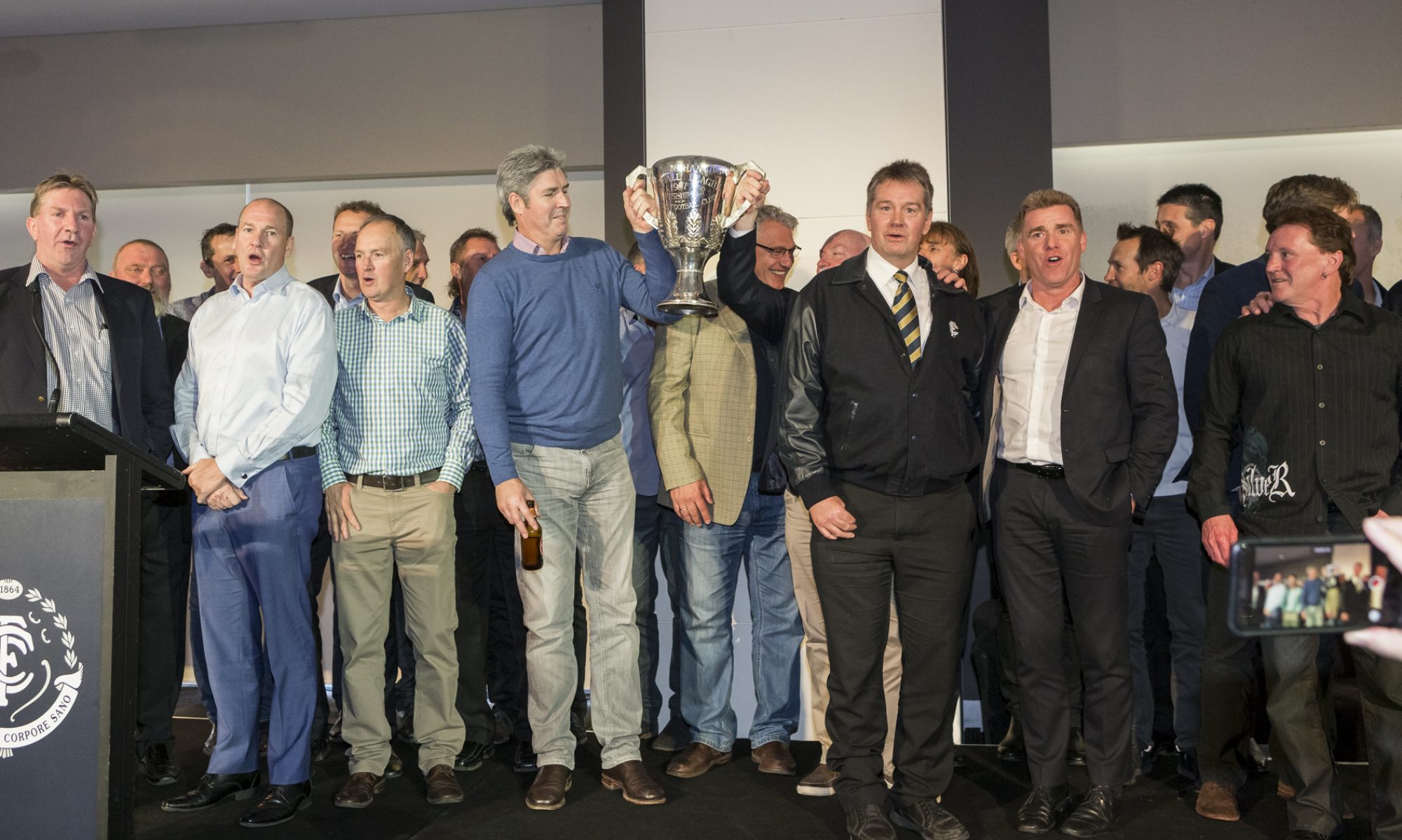
We have some very exciting news for our ‘Taming the Tigers’ Luncheon on 3rd August.

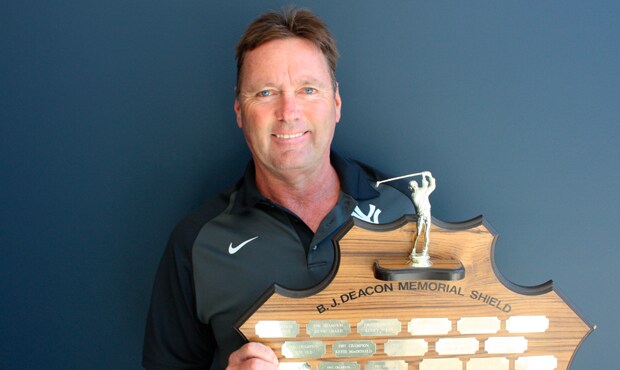
Guests at the luncheon will be have the privilege of seeing an exclusive extract of a recent interview with Bruce Doull conducted at the Carlton Football Club by Tony De Bolfo.

Call 1300 227 586 for your tickets to this special Carlton event.

————————————

By Tony De Bolfo

Bruce Doull, one of the game’s greatest and most revered footballers, has returned to the place he called home for twenty years to reflect on his time at Carlton for the record.

From the dark of night and long after the last of today’s players had filed out of Visy Park, he emerged, setting foot in the redeveloped facility on Royal Parade for the first time. There he saw the 16 premiership trophies (he had a hand in four of them); his 1981 Norm Smith Medal (for subduing Craig Davis on that last Saturday in September); and that quintessential Bruce Doull photograph, complete with Carlton guernsey and trademark headband, which now graces the 200-game wall.

Bruce also ventured outside and onto the landing, to what was once the site of the Robert Heatley Stand. There the AFL’s (and Carlton’s) Team of the 20th century half-back stood for a moment, as his mind took him back to those glorious days when Princes Park was truly his domain.

Bruce Doull sits in front of his old locker

Later, in the sanctuary of the players’ dressing room, Bruce found his place by the famous No.11 locker, where his name shares door space with the likes of Rod McGregor, Jack Hale, John Goold and Earl Spalding – Carlton premiership greats one and all.

For the man David Parkin once declared “the best team player I ever coached”, Bruce was happy to be back.

“I’m overwhelmed. To think of how it was when I was here. It’s fantastic. I can’t believe it, to be truthful,” Bruce said.

“It does feel like home. I was here for more than 17 years if you count the Under 19s so it was a big period of my life and I just love the place . . . ”

Bruce’s very special cameo came after he’d graciously agreed to sit for an extensive to-camera interview for the club’s archive. Part of the interview will be screened at the Spirit of Carlton’s August 3 celebrations of the premiership teams of 1972 and ’82, as Doull is the only Carlton player to have participated in both.

The interview process couldn’t have been easy for this intensely shy character, having made an art form of evading media requests for the better part of his 356-game tenure. But on this occasion and with the fullness of time, Bruce was more than accommodating – recounting the pivotal moments of his unique football odyssey for a one-off 90-minute film now consigned to the football club vault.

For this reporter, it was the rarest of privileges.

Happy 93rd to ‘Harc’

Happy 93rd Birthday to Harc Dowsley!


See an excerpt below from the Blueseum article on Harc from 2009.

They were a Great Mob – The Harcourt Dowsley Story

http://www.blueseum.org/tiki-read_article.php?articleId=104

On the eve of the 2009 AFL season, prior to Carlton’s blockbuster first round clash with Richmond at the MCG, the Blueseum was privileged to catch up with one of our club’s living treasures – Harcourt ‘Harc’ Dowsley, who first played for the Navy Blues an amazing 68 seasons ago.

These days he may be a yard or two slower and a few kilos lighter than in his prime, but when 90 year-old Dowsley talks about his brief yet notable career as a league footballer for Carlton, his four years of war in the air piloting flying boats in the Pacific during World War II, and his post-war efforts as a first-class cricketer for Melbourne and Victoria, the passion that drove him in his youth still burns in his clear blue eyes.

‘Call me Harc,’ he insists with a smile, ‘only my mother called me Harcourt – and even then, it was only when I had done something wrong.’ Football is soon mentioned of course, and the memories come flooding back. ‘Carlton was a great club, and they were such wonderful men,’ he says with genuine affection, while recalling his all-too brief, three-game career in the number 20 navy blue guernsey. He swells with pride when he talks about kicking a goal at his first attempt for Carlton, and steering through four majors on debut against St Kilda in May, 1941.

‘I certainly can remember it,’ he says. ‘It was a beautiful day at the old Junction Oval, and I was on cloud nine when we ran out onto the ground. At the age of six or seven, I had decided that the two things I wanted most in my life were to play first class cricket, and to play league football. I had already volunteered to join the air force and I didn’t know what the future held – but at least I was about to achieve one of my main ambitions.’

It was a time of apprehension and uncertainty for all Australians. In Europe, France and the low countries had fallen to a remorseless German army, while to the north of Australia, the sabre-rattling Japanese would soon be on the march through south-east Asia. With our continent under threat, thousands of young Australians – including hundreds of VFL footballers – were flocking to volunteer for military service.

Twenty year-old Harc Dowsley and his older brother Bill volunteered together for duty as RAAF aircrew in August 1940, but the sheer volume of applicants and a shortage of equipment meant that they both had to bide their time until there were places available for them. Meanwhile, they joined the Militia (or Army Reserve) and went on with their sporting interests.

A gifted, natural sportsman throughout his education at Melbourne Grammar School, Harc Dowsley emerged as a punishing right-hand opening batsman in summer, and a dashing, long-kicking key defender on the football field in winter. At the tender age of nine (yes, nine) he had regularly driven his classical right-foot drop-kicks more than 40 metres, and he was a trail-blazer in his teens when he began running off his opponent deep in defence, to set up play with accurate kicks to position.

Remarkably, Dowsley played as an amateur throughout his football career. It was a deliberate decision, taken to ensure that his ambition of reaching the elite level of Australia’s two most popular sports could not be compromised, and it turned out to be a wise move.

Harc attracted serious attention from a number of VFL clubs after starring at full-back for Old Melbournians in their successive B and A section Premiership victories in 1938 and 1939. Melbourne, however, had first call on the rangy 188 centimetre defender, and by early 1941, he was playing solid football on the last line for the Demons’ seconds.

The problem was that Melbourne was the dominant team of that era, and they were already shaping up as premiers for the third year in succession. The possibility of Harc forcing his way into the seniors seemed slim. Then a chance meeting with Carlton’s Jim Francis changed everything.

Dowsley and Francis had built both a healthy rivalry and a long-running friendship after numerous clashes on the cricket field, so Harc listened when Francis said, ‘why don’t you come up to Carlton, Harc? We’d like to play Ken Baxter at centre half-back, so we’re looking for a forward. You can take a good mark, and you can kick the ball a country mile.’

Facing his call-up by the air force sometime in the very near future, the opportunity for Harc to grasp one of his great ambitions was a powerful temptation. He thought briefly, then told Francis that yes, he would take a punt on Carlton.

To his relief and gratitude, Melbourne understood his situation, and didn’t stand in his way. Essendon made a late approach through another of Harc’s cricketing associates, Dick Reynolds, but Harc had given his word and was on his way to the Blues.

In fact, by then, the Dowsley family already had a strong association with the Carlton Football Club through Harc’s grandfather, William Dowsley. A successful newsagency proprietor and real estate agent in West Brunswick, he had been a club supporter, committee member and benefactor for many years, and was still widely remembered when Harc first arrived at Princes Park. ‘One of my fondest memories is of hearing people around the club saying, ‘he’s come home to Carlton’, says Harc, ‘and that was rather nice.’

What was not quite so nice was the embarrassment of his first night at training. ‘I was a bit of a dag, and maybe a bit swollen-headed when I turned up at my first training session,’ he says, ‘without my football boots. Thankfully, Horrie Clover took a liking to me, and said, ‘come with me, son.’ He dug out a couple of old pairs he’d left somewhere around the place, so I can say that in my first run at Carlton, I wore a champion’s boots. But I paid for it later, because they were a little too small for me.’

Horrie Clover also passed on some tips about forward play that would soon bear fruit. ‘He told me to always kick the ball high over the posts, not between them,’ says Harc. ‘Because if the ball drifts over the post, it can’t hit it – and the goal umpire will usually give you the benefit of the doubt.’ Within weeks, Dowsley would be putting that advice to good use.

Happy 98th Birthday to Max Wilson

A very happy birthday to the oldest living Carlton past player to play a senior game, Andrew McDonald “Max” Wilson. 98 years young today, we wish you all the best on this special day.


—–

From the Blueseum:


Career : 19431944
Debut : Round 12, 1943 vs Collingwood, aged 29 years, 21 days
Carlton Player No. 584
Games : 9
Goals : Nil
Last Game : Round 17, 1944 vs Geelong, aged 30 years, 48 days
Guernsey Nos. 25 (1943) and 27 (1944)
Height : 170 cm (5 ft. 7 in.)
Weight : 71.5 kg (11 stone, 4 lbs.)
DOB : 9 July, 1914

In a short stay at Princes Park at the height of World War II, Andrew McDonald ‘Max’ Wilson who was born in Balwyn, played nine matches for Carlton – seven of them as 19th man. Remarkably, his first and last appearances came in games that were 100-point thrashings for Collingwood and Geelong respectively, and his first full game was a final.

Wilson was 29 years old, a seasoned campaigner for Sunshine in the Footscray District League when he found his way to the Carlton Football Club in 1943, he had previously played for Sunshine VJFA. With so many young men continuing to volunteer for military service, all VFL teams were short of players and welcoming anyone with football ability.

Wilson was named to make his debut as 19th man for Carlton’s much-anticipated clash against Collingwood at Victoria Park in round 12, 1943. Winning at the Magpies’ home ground had been one of football’s toughest assignments for decades, but it was a task eagerly anticipated by the Blues. On that bright Saturday afternoon, in front of the usual fanatical crowd, Percy Bentley’s Blueboys handed out a football lesson to their fiercest rival. Key forwards Jack Wrout and Jim Francis shredded the Magpie defence with 15 goals between them. Rover Mick Price added five, and half-forward Charlie McInnes chipped in with another four, as Carlton slaughtered an inept Collingwood by 104 points to give Wilson the perfect introduction to VFL football.

Max warmed the bench another three times during Carlton’s last four games of the season, which culminated in a 15-point defeat by Fitzroy at the Brunswick St. Oval in round 16. The Blues still qualified for the finals on percentage however, and aimed up for another shot at the Maroons in the first Semi Final. On the Thursday evening prior to that match, Wilson was chosen for his first full game at half-back for the Blues, replacing the injured Frank Anderson.

Despite the deprivations of wartime life in Melbourne, nearly 40,000 spectators crammed into the MCG on that weekend. They were treated to a typically rugged clash that was decided in the third quarter, when the Maroons pulled away to win by 51 points and end Carlton’s finals hopes at the first hurdle.

After that, it was into uniform and back to the pine for Max in 1944. In February he enlisted in the RAAF, where basic training kept him off the football field until late June. But as soon as he could, he made himself available and was selected as 19th man for another meeting with Collingwood in round 8, this time at Princes Park. Carlton triumphed again over the Magpies – by five goals – in an even team effort.

Two more Saturday afternoons wrapped in a dressing gown and pacing the boundary followed, before Max was called into the Blues’ starting line-up for the second and last time when Carlton met Geelong at Princes Park in round 17, 1944. Another serving member of the RAAF played his first game for in navy blue that day – the brilliant West Australian-born, future Premiership captain of Carlton, Ern Henfry – who was near-best on the ground while the Blues smashed the Cats by 106 points in a seamless exhibition of team football. Alex Way kicked 5 goals, Mick Price and Charlie McInnes four each.

Wilson was either unavailable or omitted for a controversial last game of the season against Footscray the following week, when a hotly-disputed goal after the final bell gave the Bulldogs victory by a point – a result that tipped Carlton out of finals contention. Max didn’t go on after that, and his career at Carlton ended at the age of 30.

A New Baby Blue

James William (Go Blues) Comport. Aged 1 x month.  The grandson of a passionate Blues supporter, Stephen Comport

Happy 70th Birthday to Vasil Varlamos

Happy 70th birthday to Vasil Varlamos today!


—————————-

From the Blueseum:

Career : 19601964
Debut : Round 9, 1960 vs North Melbourne, aged 18 years, 1 day
Carlton Player No. 735
Games : 44
Goals : 0
Last Game : Round 15, 1964 vs Footscray, aged 22 years, 45 days
Guernsey No. 32
Height : 178 cm ( 5 ft. 11 in.)
Weight : 80 kg (12 stone, 8 lbs.)
DOB : June 17, 1942

Vasil Varlamos was a rugged half-back flanker of Greek parentage who was a popular clubman during his five seasons at Princes Park from 1960 to ’64. Born at Broken Hill, NSW, he was recruited by the Blues as a promising 17 year-old from bayside Mentone, and made his senior debut on the day after his 18th birthday in 1960.

By 1961 Varlamos was established as a regular senior player. A close-checking, hard-at-it type with good concentration, he played his football hard and collected some impressive scalps in his first two seasons, while the Blues posted consecutive mid-table finishes. In 1962, Carlton improved markedly to finish fourth, and fought their way through to meet minor premiers Essendon in the Grand Final. Varlamos made the team as 20th man, but got only the briefest of runs in the final term, as the Bombers proved far too good and won by five goals.

Following that defeat, Carlton went back into decline. Vasil played another 17 matches over 1963-64, until his tenure at Princes Park was ended with his clearance to fledgling VFA club Waverley. The Panthers had been admitted to the Association’s first division ahead of schedule, and were actively recruiting under their captain-coach Ian Thorogood – himself a future coach of the Blues.

That proved to be a fortuitous move indeed for Varlamos, because while the emerging Panthers were a revelation in their debut year, he himself struck a rich vein of form at centre half-back. After representing the VFA in matches against WA and Tasmania during the year, he was one of Waverley’s best when they swept to a fairy tale Premiership with a gutsy 12 point win over hot favourites Port Melbourne in the 1965 Grand Final. Vasil was rock solid in that victory, and his exploits that day made him one of the clubs’ favourite sons.

Varlamos continued to give the Panthers value throughout 1966, representing the VFA in the ANFC Carnival in Melbourne, and holding down the key defensive post right through to another Grand Final clash against Port Melbourne. This time however, the Borough would not be denied, and crushed Waverley by 43 points in gleeful revenge.

Varlamos retired after that second Grand Final appearance for the Panthers, and over succeeding years renewed his association with the Navy Blues. He derived much pleasure from watching the brilliant youngster who inherited his number 32 guernseyBryan Quirk – throughout his career, and as at 2012, is still seen regularly at club functions.

Footnotes:

In 1962, Varlamos earned the career-long enmity of Essendon supporters when he ironed out the Bombers’ captain Jack Clarke during a late-season game. Seizing an opportunity, he ran straight through Clarke at a centre bounce, and knocked the Essendon skipper out cold. Pandemonium ensued, while trainers tried to bring Clarke around and Vasil’s team-mates were hard-pressed protecting him from a squadron of Bombers hell-bent on revenge. Clarke eventually got to his feet, but still groggy, he began raining blows on the nearest player – who just happened to be his team-mate, Graeme Johnstone!

In the 1970s and 80s, Vas’ father owned a fish and chip shop in Hughesdale, where he proudly displayed images of his son. A typically proud Greek father, he was always up for a chat about the Blues, while frying up your potato cakes!

In 2004, amid a plethora of Teams of the Century and Best in 100 Years awards, Varlamos was one of four Blues honoured in the Greek Team of the Century. The others were Anthony Koutoufides, Ange Christou and Spiro Kourkoumelis. Alex Marcou and Chris Pavlou were also nominated, but missed out.

Happy 50th Birthday to Rhys

Happy 50th birthday to David Rhys-Jones today!


————-

From the Blueseum:


Career : 1985-1992
Debut : Round 1, 1985 vs Footscray, aged 22 years, 287 days
Carlton Player No. 923
Games : 106
Goals : 73
Last Game : Round 24, 1992 vs West Coast, aged 30 years, 75 days
Guernsey No. 26
Height : 188cm
Weight : 73kg
DOB: 16 June, 1962
Premiership Player: 1987
Norm Smith Medal: 1987

Superbly skilled, fiery, volatile – these are all apt descriptions of the enigmatic David Rhys-Jones. Originally from Oakleigh Districts, Rhys-Jones was signed by South Melbourne as an 18 year-old and made his debut for them in 1980. At 188 cm and 73 kg, he quickly established himself as one of the game’s tallest and best wingmen. He had pace, balance and wonderful aerial skills – but his short fuse soon had him regularly before the tribunal, and he was not popular with opposition supporters.

Rhys-Jones served the Swans with distinction from 1980 to 1981 (South Melbourne), and 1982 to 1984 (Sydney Swans). He was a crowd favourite with his fierce desire to win any contest he was in. During this time, he played 76 games and booted 39 goals for the Swans.

When South Melbourne were transplanted to Sydney in the early eighties, Rhys-Jones was one of a handful of Swans who asked for a clearance. Eyebrows were raised when it was announced that “Reese” was on his way to Princes Park for the 1985 season. The news was not greeted warmly by many Blues’ supporters, and Rhys-Jones struggled for wide acceptance in his first two seasons – especially when some brilliant games were indispersed with continued suspensions.

All that changed however, on Grand Final day in 1987. Carlton coach Robert Walls created huge surprise early by assigning Rhys-Jones to Hawthorn’s trump card – their champion centre half-forward Dermott Brereton. The Hawks’ star was 2 cm shorter than Jones, 19 kg heavier, and a proven big match performer – but Rhys-Jones played superb, disciplined football all day and Brereton was hardly sighted. Carlton won its 15th Premiership by 33 points. Rhys-Jones won the Norm Smith Medal and the plaudits (at last) of every Carlton fan.

“Reese” went on to play 106 games and score 73 goals for the Blues in a much-interrupted career from 1985 to 1992. It’s a pity that his outstanding natural ability was overshadowed by the fact that he was reported more times in his career than any other VFL/AFL player.

Once retired from the AFL scene, Rhys-Jones headed to Tasmania to coach TFL Club North Launceston from 1993 to 1995, in his last season he took Nth Launceston to a premiership. Rhys-Jones took on the role as playing coach for ‘The Robins’. Rhys-Jones also later coached VFL team Frankston from 1996 to 1998. Rhys-Jones would also later coach DVFL team Heidelberg in 2001. Rhys-Jones entered the world of reality TV when he coached WRFL Second Division team the Hammerheads during the 2002 season.

In later years Rhys-Jones would become a respected commentator for the ABC covering VFL games.

Old boys rally for Ratten

From: Steve Butler Melbourne, The West Australian June 14, 2012, 7:13 am

 Old boys rally for Ratten

The old boys of Carlton have rallied behind coach Brett Ratten as pressure continues to build on the Blues ahead of their crucial clash with West Coast at Patersons Stadium tonight.

Geoff Southby, Jim Buckley, Percy Jones and Alex Marcou all agreed yesterday that Carlton’s hopes had been hijacked by injury to key players after a barnstorming start to the season.

Preparing to celebrate in August the respective anniversaries of the Blues’ 1972 and 1982 premierships, the quartet gathered at Jones’ well-known Carlton hotel, affectionately known as Percy’s Pub.

Southby, a dual club best and fairest who was named in Carlton’s team of the century in a back pocket, reflected the quartet’s thoughts on Ratten and the club’s rollercoaster season with his belief that injuries had played a rotten role.

“They’re pretty disappointing at the moment in what’s been a tough year,” Southby said.

“We started in a blaze of glory and then went from chocolates to boiled lollies very quickly.

“We’ve had a few injuries, but we’ve also dropped off badly in our intensity at the ball over the last five or six weeks and it’s hurt us badly.

“We’re really going to have to get our act together to get back and be a contender for the eight.

“To finish top four was a reasonable expectation after the last couple of years and it wasn’t beyond them.

“But it’s a tough competition and amazingly competitive.

“Ratts has done very little wrong in his time there. He’s made his way and gradually improved the team and deserves to be where he is at the moment.

“He loves the club … he’s given his heart and soul to it both on and off the field.”

Southby also said he hoped the Blues would be able to revive their season in time for the 30 and 40-year celebrations of their grand final wins, both over Richmond.

The Taming the Tigers luncheon will be held at Etihad Stadium on August 3.

“It will celebrate the wonderful era of the two premierships against the Tigers,” Southby said.

“It’s a great day for the Spirit of Carlton (the club’s past players group) and raising the spirit.

“The lies are getting bigger and bigger by the year, as are the kicks and the stats, so there will be plenty of that going on.”

Life After Footy – Val Perovic

The AFL is doing a wonderful series of videos on past players and the latest subject is our very own Val Perovic. Watch the following video and enjoy, the Spirit of Carlton even gets a mention!

Carlton calls on its own to come home

By Tony De Bolfo

The Carlton Football Club is seeking to re-engage with any player who wore the Dark Navy Blue guernsey at senior level and who, for whatever reason, never realised the dream of being part of a Carlton premiership.

Of the 1137 senior Carlton footballers since 1897, a total of 956 players weren’t fortunate enough to raise the silverware. Further, a total of 976 Carlton senior players have played 99 matches or less and as such have never been acknowledged on the 100-game lockers – from the Italian-born one-gamer Peter Bevilacqua through to the 95-game Brownlow Medallist and club best and fairest of 1964, Gordon Collis.

It is the surviving members of these two groups with whom Carlton and the Spirit of Carlton Past & Present want to re-connect, in acknowledging their on-field contributions to the club.

The initiative has in part been driven by men like Brett Sholl, who as a 35-game former player from 1992-’94 and member of the club’s losing 1993 Grand Final outfit meets the aforementioned criteria.

Brett is of the view all former Carlton players who for whatever reason may have had issue with the club should now re-connect.

“The immediate feeling when you leave the club is one of disappointment in that you never played in a premiership… and as the years go by you realise that up to now only the premierships are celebrated,” Brett said on a welcome visit to Visy Park recently.

“That leaves you feeling a little bit alienated and when you think that for every Carlton premiership player there’s half a dozen more who aren’t, there’s probably a lot of former players who feel that way.

“In my case we got to the Grand Final, but just couldn’t get the job done. That sometimes makes it even worse, knowing that you got so close to the ultimate but didn’t quite achieve the goal.

“Sometimes these things take time to get over and sometimes it takes other things like family to put it all in perspective. I’ve got a son who’s 12 and interested in Carlton and the game itself and it’s only really now that I’ve been able to look back on my time here with pride because I’ve worked my way through it.”

To that end, Brett sought to make the following personal appeal to all former Carlton players of his ilk, with the club planning a function celebrating Carlton by guernsey number.

“My message to the players and to the club itself is this – re-engage,” Brett said.
“To the past players who wore the guernsey and played one, two, three, 40 or 50 games and who because they didn’t participate in a premiership may not have felt a part of it, it’d be great to see you back at Carlton.

“To the club, it’s important that it realises – and I’m sure it does realise – the significance of the contributions of all those players who wore the guernsey and in their own way help set up the premierships for those others who actually played in them.”

All former Carlton senior players who wore the guernsey in 99 matches or less are urged to contact Tony De Bolfo – tony.debolfo@carltonfc.com.au or admin@spiritofcarlton.com– as the club plans a “coming home” function for Visy Park later this year.

Judd’s legacy a Shaw thing

By Tony De Bolfo

Meeting Chris Judd completed a life well-lived for Ken Shaw… and while the boy from Mentone never quite made it to the seniors, he never forgot his time at Carlton when he kicked off the dew in the immediate post-war years.

As Ken’s daughter Julie O’Brien unhesitatingly declared: “Dad was Carlton through and through”.

When Ken died at the age of 83 in January of this year, Julie found amongst her father’s treasured possessions a letter penned by the then Carlton secretary and former player Harry Bell.

Dated February 15, 1947, the letter formally invites Ken to preseason training in what was ultimately a premiership year – but on one condition.

“I should like to point out that there is still an acute shortage of equipment, so would you be good enough to bring along jersey, socks, knicks and boots for your own use, please,” Bell wrote.

Ken couldn’t get to Carlton quick enough.

But while he made a clear impression at reserve grade level, taking out the club’s best and fairest trophy in 1949, Ken never got the senior call-up he so desperately wanted.

“Dad told me that he trained at Carlton for a while but could see he wasn’t going to break into the team,” Julie said. “In those days you trained for a position and Bert Deacon kept him out of centre half-back.”

Ken eventually saw the writing on the wall and so pursued his football career in the sticks. He captained and coached at Echuca, then Nagambie (winning the Morrison Medal for best player in the Goulburn Valley League in ’56) and finally Finley, leading “The Cats” to 1958 premiership glory with son Greg on hand as mascot.

When Ken got the nod as Carlton’s reserve grade champion in ’49 he was presented with a silver teapot for his troubles. He took possession of the receptacle at a presentation before the members who had gathered for the annual meeting at Princes Park on the evening of February 1, 1950.

Almost sixty years later, during a break in a Carlton school clinic at Finley Recreation Reserve in August 2008, Ken approached Chris Judd for a photographed armed with his prized possession, the silver teapot.

The Carlton captain, then relatively new to the club in the wake of his much-heralded transfer, duly obliged… and Ken cherished the moment.

“What a great honour and privilege to meet such a wonderful player,” Ken said at the time. “Even better now that he is at Carlton.”


Happy 60th Birthday to Hon Peter Hall

Happy 60th birthday today to Hon Peter Hall!


—————–

From the Blueseum:


Career : 19711974
Debut : Round 12, 1971 vs North Melbourne, aged 19 years 22 days
Carlton Player No. 829
Games : 36
Goals : 13
Last Game : Round 20, 1974 vs Fitzroy, aged 22 years, 81 days
Guernsey No. 31
Height : 182 cm (5 ft. 11 in.)
Weight : 80 kg (12 stone, 8 lbs.)
DOB : May 27, 1952

Peter Hall was a classy utility who won Castlemaine Football Club’s Under 19 Best and Fairest award in 1969. That fine season by the 17 year-old impressed Carlton’s scouts, including our Chairman of Selectors Jack Wrout, who was very keen to get the youngster into the Old Dark Navy Blue.

Hall told Wrout that his main aim in life was to obtain a University degree or two, but while he was studying, he would be happy to pull on his boots for Carlton. He enrolled in an Arts Degree course at Monash University in 1971, and played his first match for the Blues in June of that year against North Melbourne at Princes Park. Carlton dominated all day to thrash the ‘Roos by 91 points, with rugged full-forward Ricky McLean kicking seven goals.

While Hall was a stylish player with good pace and balance, he was more at home in the spaces of a half-forward flank than taking on the ruck-roving role he was expected to compete for. Carlton’s brilliant midfield division of that time boasted the names Jesaulenko, Gallagher, Keogh, Robertson, Quirk, Chandler and three or four others, so places in the side were hard earned.

For all of these reasons, plus the pressures of his studies, Hall managed only five senior appearances in his first two seasons. But coming off a brilliant, record-breaking Grand Final win over Richmond the previous September, some of Carlton’s big guns went off the boil in 1973, to give Peter and some of the other lesser lights their chance to shine.

In 1973, Hall had his best season for the Blues, holding his place at half-forward for 20 matches. Carlton finished third on the ladder, only to fall to a rampaging Richmond in the Grand Final. Hall missed out on a place in all three finals – squeezed out each time by the return of proven big match performers.

Peter rounded off his career at Carlton in 1974, playing another 11 games before he and fellow fringe dweller Lance Styles were cleared to West Australian club Subiaco, as part of the wheeling and dealing to get champion ruckman Mike Fitzpatrick to Princes Park. But after only a brief stay in the west, Hall returned to Victoria and graduated from Monash with majors in Mathematics and Psychology. He then accepted an offer to captain-coach prominent LaTrobe Valley club Traralgon for the 1976 season, while also beginning a new working life in the provincial centre as a secondary school teacher. His new adventure in the bush was to prove spectacularly successful.

At Traralgon, he twice won the League’s Best and Fairest player award, while coaching his team to the 1978 and 1980 Premierships. He then switched clubs to Morwell, and took the Latrobe Valley Tigers to another flag in 1985.

In 1988 – on the back of his high profile and sporting success – he stood for election to Parliament as a National Party candidate and won his seat with a comfortable majority. Since then, he has risen to hold a number of senior positions with the Nationals – in particular, as Party Leader in the Legislative Council, holding the shadow portfolios of Education and Resources and Environment. On election to Government in November 2010, Peter was appointed Minister for Higher Education and Skills, and Minister responsible for the Teaching Profession.


Happy 70th Birthday to Tony Thiessen

A very happy 70th birthday to Tony Thiessen today!


————-

From the Blueseum:


Career : 1964
Debut : Round 3, 1964 vs Melbourne, aged 21 years, 342 days
Carlton Player No. 761
Games : 24 (13 at Carlton)
Goals : 9 (7 at Carlton)
Last Game : Round 17, 1964 vs St Kilda, aged 22 years, 82 days
Guernsey No. 24
Height : 183 cm (6 ft. 0 in.)
Weight : 81.5 kg (12 stone,12 lbs.)
DOB : 25 May, 1942

Originally from Sandy Bay, Tasmania, Tony Thiessen played VFL football for three VFL teams; Melbourne, Carlton and North Melbourne, in successive seasons between 1963 and 1965. A specialist half-forward, he wore Carlton’s number 24 guernsey in 13 matches for the Blues on the eve of the Barassi era.

Beginning his VFL career with Melbourne in 1963, Thiessen played seven times for the Demons, only to be delisted at the end of the year and picked up by Carlton. Fresh from finishing sixth, the Blues were looking to quickly bounce back into finals contention, but the ’64 season ended up being the worst in club history to date.

Thiessen made his debut in navy blue against his former club at the MCG in the third game of 1964, and was on the receiving end of a 46-point thrashing. Between then and his final outing in round 17 against St Kilda, he celebrated only three wins and an unlucky draw with Collingwood. By then Carlton was a club in the doldrums, and with a boardroom ruckus in the offing, Thiessen opted out. He crossed to North Melbourne, where he managed another four senior matches in 1965 to conclude his VFL career.

Afterwards, Thiessen joined reigning VFA premiers Waverley. In 1998, his son James was a member of the Adelaide Crows’ second AFL Premiership team.

Passionate Supporters Match Day Function

Thank you to everyone who attended our passionate supporters themed match day function yesterday at the Carlton vs Adelaide game. While the result was far from ideal it was fantastic to see around 100 in attendance on the day. Ian Robertsonwas fantastic as MC and interviewed past players, Lance Whitnall and Jimmy Buckley at half time in the game. There were give-aways of footys and SOC shirts to many of the kids in the room and our raffle which had five prizes was well supported.


Our next match day event is exclusively for SOC member and is just next week in the game against Melbourne at the MCG.

Premium seats and access to the Past Players Room in the Ponsford stand are available FREE for SOC members, all you need is a ticket/barcode to get into the ground.

Ring Mandy Hunter on 03 9389 6256 before 9am on Wednesday to secure your seats.

Happy 60th Birthday to Max O’Halloran

Happy 60th to Max today!


—————–

From the Blueseum

 
Career: 1974

Debut: Round 15, 1974 v Richmond, aged 22 years, 54 days
Games: 5
Goals: Nil
Last game: Round 19, 1974 v Footscray, aged 22 years, 82 days
Guernsey No. 22
Height: 178cm (5’10”)
Weight: 85 kg (13.7)
DOB: May 20, 1952

Wearing guernsey #22, O’Halloran played 5 games for Carlton after crossing from Footscray in 1974 where he played 13 games for 2 goals in his time at the Bulldogs (1972 to 1974). O’Halloran shared his debut with Alan Mangels.

O’Halloran was originally from Ulverstone in Tasmania.

Vale Les Carr

The Spirit of Carlton Past and Present would like to express our condolences to the family of Les Carr who passed away at the age of 83 last Friday.

His funeral is at Yarrawonga this Wednesday at 2.30 pm.

Les is survived by his wife Betty.

Les played 9 senior games for the Blues in 1947-48.


——–

From the Blueseum:


Career: 1947-48
Debut: Round 12, 1947 v Melbourne, aged 18 year, 44 days
Carlton Player No. 619
Games: 9
Goals: 0
Last game: Round 13, 1948 v Fitzroy, aged 19 years, 56 days
Guernsey No. 34
Height: 173cm
Weight: 70kg
DOB: 22 May, 1929

Wearing guernsey #34, Carr played 9 games after debuting in Season 1947.

Carr was recruited from Bacchus Marsh.