
Champion wingman John Chick dies

By Tony De Bolfo

ChickArticle_620X370.jpg

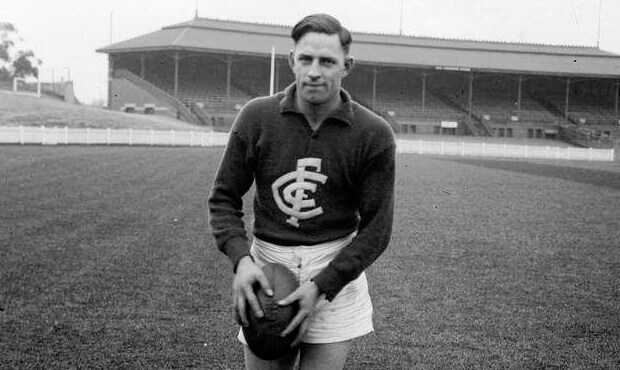
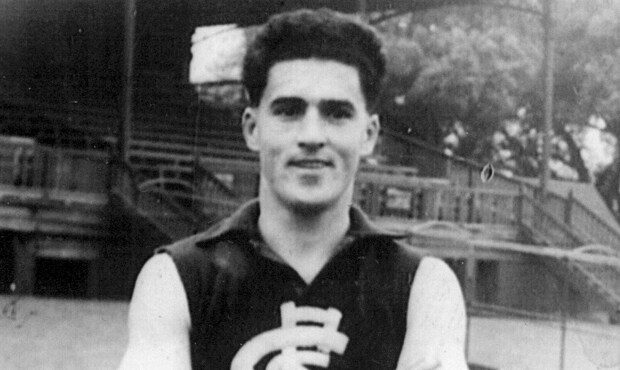
John Chick, the talented former Carlton wingman of the 1950s, has died peacefully in his native Tasmania at the age of 80 after bravely battling Alzheimer’s disease.

The oldest of six children, each of whom survive him, Chick first came to the attention of Carlton recruiting officers when he turned on a clinic for New Town (later Glenorchy) in its 1951 TANFL Grand Final demolition of North Hobart.

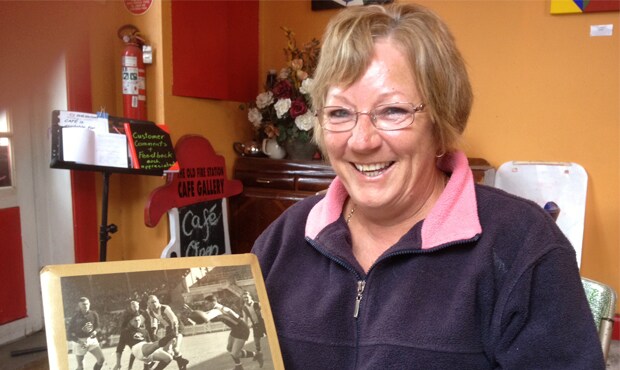
“It was a chance thing,” Chick’s daughter Sue Saunders said this week. “Somebody from Carlton came to Newtown to look at another player, but saw Dad and picked him up.

“He was always the sporting type, and as a young boy he was a very good tennis player. I’m pretty sure that when he came to Carlton he also played cricket for them and when he was told he had to give it up for football he was quite disappointed.”

Wearing the No.23 made famous by Bert Deacon and now worn by Lachie Henderson, Chick was 19 when he completed his senior debut for the Blues in the opening round of 1952 against North Melbourne at Arden Street. Twice finding the big sticks from half-forward, Chick contributed handsomely to the team’s creditable 23-point victory over the “Shinboners” that day, in what was the first of 119 matches over nine seasons in Carlton teams coached by Perc Bentley, Jim Francis and Ken Hands.

Chick’s on-field showings, marked for their durability and consistency throughout the 1950s, were duly acknowledged. He finished in the top five placegetters for the Robert Reynolds Trophy (now the John Nicholls Medal) in four consecutive seasons from 1954 and in 1956 was recognised with All-Australian honors after featuring prominently for Victoria through the ANFC Championship in Perth.

In the 17th round of 1957, against Fitzroy at Princes Park, Chick was reported for an incident involving the Lions’ Wally Clark. A subsequent eight-match suspension would rob him of a place in Carlton’s first finals appearance in five seasons, but he would be there when the Blues met Melbourne and Essendon in the ’59 first semi and preliminary finals respectively.

That year, 1959, Chick was named vice-captain in succession to Laurie Kerr. According to the club’s ’59 Annual Report, Chick “fully justified the committee’s action with many valuable games on the wing, distinguished by good kicking, clever ball handling and elusiveness on the move”.

“Dad loved his years at Carlton,” Sue said. “We tended to get the party stories because Carlton was very social back then and he liked a beer – but then they all did.

“We were all Carlton members and he would often take the family over to Melbourne to watch the team play. He followed Carlton all the way through, and he was there with John James and John Nicholls for the last game at Princes Park.”

Nicholls, generally regarded as Carlton’s greatest ever footballer, caught the tail-end of Chick’s on-field career.

“I played with John for two or three years and my brother Don was good friends with him. There was ‘Chicky’ on one wing and Graham Gilchrist on the other,” Nicholls said.

“He wasn’t nuggety, but he had thick, strong upper legs which did cause him a bit of trouble with hamstrings. In saying that he was a good footballer who earned All-Australian selection and he was a lovely bloke.”

Gilchrist concurred with Nicholls’ assessment of Chick the footballer.

“The only time I really spent with John Chick was out on the ground because he wasn’t a really outgoing bloke, but he was a very good player, a good thinker and he was very close to his family,” Gilchrist said.

“He played on one side of the wing and me on the other, which is bloody ridiculous when you think about it now because nobody moved around much and you tended to stay in your set positions.”

In 1961, Chick returned to Tasmania to accept the role of captain-coach of New Town (by then renamed Glenorchy) and led the Tasmanian Magpies from last to a Grand Final in his first year. According to his daughter, “we were always assured that what happened at Glenorchy was due to his astute guidance”.

Chick later coached Huonville in the Tasmanian country league, before accepting the role of Assistant Coach to Ray Giblett at Sandy Bay and later to Ian Bremner at North Hobart. He assumed senior coaching duties from Bremner for two seasons from 1979 before relinquishing the position to John Devine, and he even dabbled in athletics as coach.

“Football was very much a part of Dad’s life,” Sue said, “but he always moved on”.

“He was very private, but he was also very competitive . . . and he never lived in the past.”

Chick, who died last Sunday night, is survived by his wife of 61 years Margaret, daughters Sue and Gaylee, son Darren and grandchildren Sam, Ned, Georgina and Megan.

His funeral will be held in Hobart on Thursday, with the Carlton players to wear black armbands into Thursday week’s opening round match with Richmond at the MCG as a mark of respect.

Happy 60th Birthday to Renato Serafini

A happy 60th to Renato today!


——–

From the Blueseum:


Career: 1977 – 1978
Debut: Round 16, 1977 vs South Melbourne, aged 24 years, 102 days
Carlton Player No. 869
Games: 7
Goals: 6
Last game: Round 4, 1978 vs Essendon, aged 25 years, 35 days
Guernsey No. 23
Height: 188cm
Weight: 86kg
DOB: 18 March, 1953

Wearing guernsey 23, Serafini played 7 games and kicked 6 goals for Carlton after debuting in Season 1977.

He is listed as being 188cm tall. He may be better remembered as a Lion, having spent considerable time with Fitzroy. Serafini played from 1971 until midway through 1977 with the Lions, in his time with them he played 81 games and booted 117 goals.

Serafini was originally recruited from Assumption College, Kilmore.

Serafini and the Blues departed company at the end of the 1978 season. In 1979, he headed to VFA club Frankston and in his first year at the club, he kicked 95 goals and was the competition runner-up in the goalkicking award that year. Serafini then transferred to rival VFA club Coburg for the 1983 season.

Happy 85th to George Ilsley

A very happy 85th birthday to George Ilsley today!


————-

From the Blueseum:


George Ilsley


Playing Career : 1954
Debut : Round 1, 1954 Aged 26 years 33 days
674th Carlton Player
Games : 2
Goals : 1
Last Game : Round 2, 1954 Aged 26 years 40 days
Guernsey No. 27
Height : 174 cm (5’8½”)
Weight : 80.75 kgs (12.10)
DOB : March 14, 1928

Ilsley was recruited from the Bendigo club Eaglehawk for the start of the 1953 season. George debuted for the Blues in the opening game for the 1954 season against South Melbourne at the Lake Oval. Playing on the wing he scored a goal in the Blues’ 5 point loss to the Swans.

The following week Carlton played Melbourne at Princes Park. George was again selected on the wing, but the Blues lost the game this time by 19 points. It would be the last senior game George Ilsley would play. Ilsley would play only 2 games for the Blues, both in Season 1954 (he was on day permits to play both of these games).

George Ilsley was dissatisfied with city life and returned to Eaglehawk during the season, he was equal third in the Jack Michelsen Medal for best and fairest in the Bendigo Football League for 1954.

George went on to make his mark with the goldfields’ club after playing his first game in 1949 as a 15 year old. He played in two premierships in the 1950’s and captain-coached the club for three years, as well as representing the Bendigo League on more than a dozen occasions. He played more than 350 games for the Hawks, and captained-coached Northern United for 2 years.

George Ilsley was appointed ground manager in 1965, and 47 years on, is still (June 2012) the ground manager for the Eaglehawk Football & Netball Club!

1965 Eaglehawk Football Club Life Member
1986 Bendigo Football League Hall of Fame
1994 Bendigo Football League Life Member
2005 Eaglehawk Football Club Team of the Century – Centre Half Forward
2006 Eaglehawk Football Club rename best & fairest medal as George Ilsley Medal
2008 Eaglehawk Football Club Hall of Fame Living Legend

See Ilsley’s Blueseum Image Gallery (below) for for further details.

Thanks to the Ilsley family for the above information and photos.

Ken McKaige Cup Bowls Day

All Carlton past players are encouraged to take part in the Ken McKaige cup bowls day which is an event put on  by the combined past players association where teams of past players from different teams can compete and enjoy the day. The Spirit of Carlton Past and Present would love to see one or two teams compete as Carlton past player representatives and is willing to take care of the fees for those teams. Please see the details below for contact details.

OUR HISTORY: Alex Marcou

By Tony De Bolfo

MarcouArticle_620X370.jpg 

“My Dad always said to me ‘I always knew you were going to be a footballer’, because from the time you’d get up in the morning you’d get that ball and go out in the back whether it was summer or winter, cold, in your bare feet just kicking this ball around.”

The speaker is Alex Marcou, Carlton’s three-time premiership player and a key component of football’s fabled “Mosquito Fleet”.

That the little man in the No.34 guernsey managed to play the game at all, let alone at League level, is something of a minor miracle given the incredible challenges he faced as the son of new Australians who settled in Thomastown.

And yet it was “right place, right time” for the 134-game member of the 1979, ’81 and ’82 Grand Finals and Carlton Hall of Famer, whose talent was identified by the Grand Old Man of Princes Park, the late Newton Chandler.

In this podcast, exclusively for carltonfc.com.au, Marcou talks candidly about a whole range of issues including;

•         his Greek Macedonian heritage and the harsh realities of war for his father and mother;

•         difficulties with language in his early years;

•         Sergio Silvagni’s intervention to thwart his transfer to Essendon

•         his hand in each of Carlton’s three Grand Final triumphs;

•         his hilarious take on what was happening to him when the streaker invaded the MCG turf on that one day in September 1982;

•         which member of the ‘Mosquito Fleet’ he’d first name in his team – Ashman, Buckley, Harmes, Johnston or Sheldon;

•         his greatest regret in football; and

•         what Carlton means to him.

To listen to Alex Marcou, click here.

The Don Reaches 98

By Tony De Bolfo

NewDonArticle_620X370.jpg


Don McIntyre, Carlton’s oldest surviving club best and fairest, the last existing member of its victorious 1938 Grand Final team over Collingwood, and, as such, the Blues’ only surviving pre-World War II premiership player and club champion, is today celebrating his 98th birthday.

McIntyre, who still follows the fortunes of his team from afar, lives a quieter existence thesedays. His last foray into the old Carlton ground came three years ago when he generously donated four precious personal items of memorabilia for future display at the club – the Terry Ogden Memorial Medal for Most improved Player in 1936; the Angus Travill Medal and Robert Reynolds Trophy for best and fairest in 1937; and the 1938 VFL Premiership Medal.

Born in Geelong on March 5, 1915, Daniel Gordon McIntyre, as a young boy, followed the local football outfit with unbridled enthusiasm.

“I used to go with my grandfather and hardly missed a game down there through the early teen years,” McIntyre remembered in an interview back in 2008.

“Being a very enthusiastic young supporter I thought it was the best thing that could happen to you, to get down to Corio Oval and see them play on a Saturday afternoon. I can still remember the first Brownlow Medallist, “Carji” Greeves, number 20, playing in the centre, Jocka Todd, Cliff Rankin and so on.

Ultimately recruited to Carlton from Packenham, McIntyre represented Carlton in 100 matches between 1935 and ’42. A quick flick through Carlton’s annual reports of the day go some way to telling the tale of his personal achievements. In the 1936 report, the then secretary Newton Chandler declared McIntyre a worthy recipient of the memorial medal struck the previous year to mark the untimely death on March 2 “of that manly and brilliant little player, Terry Ogden”.

“The Terry Ogden Memorial Medal for the ‘Most improved’ player, was awarded to Mr. Don McIntyre. Don, in his first season, proved one of the best ‘Back Pocket’ players in the League. His success proved very popular,” Chandler wrote.

Then in late 1937, Chandler wrote in glowing terms of McIntyre’s taking of the Robert Reynolds Trophy (a forerunner to the John Nicholls Medal) for club best and fairest.

“As predicted in the previous Season, Don developed into the finest Back Pocket Player in the League. He was most consistent and the honor was richly deserved,” Chandler wrote.

The Carlton Football Club extends its best wishes to its oldest living player, Don McIntyre, on the occasion of his 98th birthday.

Follow Tony De Bolfo on Twitter: @CFC_DeBolfo

OUR HISTORY: Adrian Gallagher

By Tony De Bolfo

GallagherArticle_620X370.jpg 

“Ron Barassi was the best thing that happened to Carlton in 150 years . . . other than Chris Judd coming.”

The speaker is Adrian Gallagher – Carlton’s Team of the 2oth Century’s No.1 rover – and with John Nicholls and Sergio Silvagni a member of what was, and perhaps still remains, football’s greatest following division.

Wearing the No.10 made famous by the late John James and now donned by Matthew Watson, Adrian Gallagher is the only man in this club’s history to have represented Carlton at all levels – Under 15s, Under 16s, Under 17s, Under 19s, reserves and seniors. His 165 games over nine seasons also took in the Premierships of 1968, ’70 and ’72 . . . but don’t bother asking ‘Gags’ to name a favourite.

As he said: “Premierships are like children – you can’t pick your favourite”.

Adrian Gallagher recently gave up his time for what was the first of a series of podcasts exclusively for www.carltonfc.com.au. To hear Adrian talk of the great Ronald Dale, the Premierships and today’s Carlton team, click here.

Follow Tony De Bolfo on Twitter: @CFC_DeBolfo

Happy 60th John Tresize

Happy 60th birthday to John Tresize.

———————-

From the Blueseum:


Career: 1977 – 1978
Debut: Round 1, 1977 v Geelong, aged 24 years, 35 days
Carlton Player No.: 863
Games: 14
Goals: 1
Last game: Round 3, 1978 v Melbourne, aged 25 years, 48 days
Guernsey No. 22
Height: 180cm
Weight: 78kg
DOB: 26 February, 1954

Tresize wore guernsey #22 in 14 games for Carlton from Season 1977 onwards. He kicked 1 goal for the Blues. He was born in Bendigo and recruited from Kennington (Bendigo). During the 1978 season, he headed back to the bush to play for his original club Kennington.

Happy 85th Tom Leehane

Happy 85th to Tom Leehane!


————–

From the Blueseum:


Playing Career : 1948
Debut and Only Game: Round 15, 1948 Vs Footscray, aged 20 years 175 days
627th Carlton Player
Goals : 0
Guernsey No. 29
Height : 180 cm (5’11”)
Weight : 83 kgs (13.1)
DOB : February 14, 1928

Wearing guernsey #29 and standing at 180cm, Leehane played 1 game for Carlton in 1948. His only Carlton game was a victory over Footscray at the Western Oval by 68 points. He then went and joined his brother at Essendon where he played another 7 games without scoring a goal.

Leehane’s father, Steve, played 82 games for the Blues starting in 1914.

Leehane was recruited from CBC North Melbourne, and prior to that he played for East Brunswick YCW.

Happy 90th to Doug Williams

A very happy 90th birthday to Doug Williams today!


————————


From the Blueseum:


Career : 1944 – 1951
Debut : Round 11, 1944 vs Footscray, aged 21 years, 162 days
Carlton Player No. 594
Games : 120
Goals : 7
Last Game : Round 12, 1951 vs Hawthorn, aged 28 years, 168 days
Guernsey No. 12
Height : 178 cm (5 ft. 10 in.)
Weight : 70 kg (11 st.)
DOB : 3 February, 1923
Premiership Player 1945 & 1947

A skilled and consistent wingman for the Blues in a fine career spanning eight seasons, Doug Williams was a member of Carlton’s legendary 1945 and 1947 Premiership teams, as well as the losing Grand Final side of 1949. He was recruited from Yallourn in Victoria’s Latrobe Valley in 1944, and rarely missed a match in his first five years.

Deceptively tall and slender, Williams was quick, agile and strong overhead. A typical wingman of that era, his style of play was to provide a link between defenders and forwards, so he rarely ventured into attack. In his 120 games of VFL football, he kicked just seven goals. Nevertheless, he was widely regarded as one of the better centre-line players of the post-war years.

Williams was given his first opportunity at senior level for the Blues in July 1944, in a Round 11 match against Footscray. On that typically wet and windy afternoon at the Western Oval, Carlton’s scoreless last quarter was costly, and Footscray got home by three points. Williams’ impressive first-up effort however, ensured that would retain his place in a promising Carlton side for the rest of the year.

In Doug’s second season, Carlton got off to a very shaky start. Three heavy defeats in a row sent the Blues tumbling to the bottom of the VFL ladder, before a stirring mid-year revival culminated in a 53 point thrashing of Footscray in the last of the home and away rounds. That win snatched a finals berth for the Blues, and set the stage for one of the most sensational and controversial final series of all.

In August 1945, World War II ended when the Japanese Government signed an unconditional surrender to the Allied nations. Seven years of widespread death and destruction was ended at last, and the VFL proclaimed the 1945 flag – to be contested by South Melbourne, Collingwood, North Melbourne and Carlton – as the Victory Premiership. Instead, it has gone down in football history as the ‘Bloodbath’ Grand Final.

Carlton’s path to the ’45 Premiership was littered with the carcasses of North Melbourne and Collingwood, who were both vanquished in hard, spiteful games on the way to a deciding clash with the hot flag favourites South Melbourne. For Doug Williams, gaining a place in that Premiership play-off topped off a good season. He had missed just two games since his debut, and followed up his selection in the Victorian state side earlier in the year by controlling his side of the ground in Carlton’s Preliminary Final win over Collingwood.

On that sensational day, Doug lined up against South’s Billy King, who, like Williams, was considered a star in the making. King later paid tribute to his opponent for keeping him out of the fierce physical clashes – some within the rules, but most without – that began in the second quarter and intensified as the Grand Final degenerated into a series of rolling brawls.

There were passages of good football – even when the rain came in the second half – but they were instantly forgotten amid the mayhem. Eventually, the Blues’ inspirational captain Bob Chitty led his team to victory by almost five goals in a match that resonated through the league for years afterward. Nine players were reported, on fifteen charges. The eight found guilty were handed suspensions totalling 68 games.

Carlton’s eighth VFL Premiership in 1947 is fondly remembered for the last-minute goal by Fred Stafford – a celebrated snap-shot that won the ultimate football prize for the Blues by one point – and for the outstanding leadership of our first-year captain, Ern Henfry. A champion centreman from WA who led by example, the key to Henfry’s game was his superb disposal, which brought those around him into the game.

Among those to benefit most from his new captain’s influence was Doug Williams. He, Henfry, and Fred Fitzgibbon (himself notorious for his part in the 1945 Finals battles) made a formidable combination across the middle of the ground for Carlton, and as a combination, were a driving force for the Blues throughout the ’47 finals and beyond.

When Carlton shaped up to Essendon in 1949 Grand Final, Williams, Henfry and Fitzgibbon plunged into the fray together once more. But this time, neither they nor their team-mates had any answer to a rampaging Essendon. Spearheaded by their young full-forward John Coleman, the Bombers blitzed the Blues by 73 points – bringing to an end a golden era of three Grand Final appearances in six years by the team from Princes Park.

Perhaps inevitably, Carlton began a period of stagnation in 1950. After almost a decade of joy, the champions who had sustained the Blues through the tough football campaigns of the war years had reached the twilight of their careers, and the team began fading to the lower half of the ladder.

On a wet Saturday afternoon in July at Glenferrie Oval, after Carlton beat Hawthorn by 17 points, Williams brought the curtain down on his senior career in the navy blue number 12 guernsey. He wasn’t quite finished however, and stayed around long enough to celebrate one more flag, when Carlton beat Essendon by 12 points in the 1951 Reserves Premiership. In a fitting finale, Doug was the master of his side of the MCG once more on Grand Final day, and walked off the ground a winner for a third time.

The following year, Williams was appointed captain-coach of Tasmanian club North Launceston, and took the Robins into the NTFA finals at his first attempt. But home was calling for Doug and his wife Margaret, and in 1953 they returned to the Latrobe Valley. There, Doug rounded out a long and memorable career with one last season for the Morwell Tigers, which included another premiership, and to cap it all off – a Best and Fairest.

Happy 50th to Darren Ogier

A happy 50th birthday to Darren Ogier!


——-

From the Blueseum:


Career: 1985-1987
Debut: Round 7, 1985 vs Sydney
926th Carlton Player
Games: 13
Goals: 15
Last game: Round 16, 1987 vs West Coast
Guernsey No. 34 (1987), 49 (1985 – 1986) and 52 (1982)
Height: 184cm
Weight: 81kg
DOB: 2 February, 1963

Think about the revolving door of players tried and tested at full forward throughout the 1980s: Ross DitchburnWarren RalphWarren McKenziePhil PoursanidisMichael GallagherPeter Sartori

… the list goes on. Darren Ogier was one of the merry-go-round who never quite established himself, despite being a prolific goal kicker in the Reserves. His claim to fame was being the first Blue to sport a genuine mullet, which obviously proved inspirational to another young, impressionable recruit, a certain S. Kernahan.

Ogier, due to limited opportunities headed to North Melbourne for the 1988 season. While at the Roos’, he played two games and kicked three goals, the last of those two games was against the Blues where he potted two goals. The following season (1989), he headed north of the border to Sydney where he played a further eight games and kicked 16 goals. His last two games for the Swans he kicked 5 goals against Footscray, then 4 goals against the Eagles. Then he never played VFL football again! His VFL career was a total of 23 games and 34 goals at three clubs spanning five years.

In 1991, while living in England, Ogier guided the Earls Court Kangaroos to the British Australian Rules Football League premiership. He was an assistant coach at the Northern Bullants from 1998 to 2001 and served as the senior coach of Katamatite in 2006. The following year he joined the Murray Bushrangers, of the TAC Cup, as an assistant coach and was promoted to senior coach for the 2010 season.

Darren Ogier was originally recruited from Northern Suburbs club Hadfield.

Ogier also played with the Blues Little League in 1974.

Happy 60th to Mike Fitzpatrick

A happy 60th birthday to Mike Fitzpatrick.


———

From the Blueseum:


Career : 1975 – 1983
Debut : Round 1, 1975 vs Geelong, aged 22 years, 67 days
Carlton Player No. 850
Games : 150
Goals : 150
Guernsey No. 3
Last Game: Elimination Final, 1983 vs Essendon, aged 30 years, 218 days
Height: 191 cm
Weight: 91 kg
DOB: January 28, 1953
Premiership Player: 197919811982
Premiership Captain: 19811982
Captain: 1980-1983
Best and Fairest1979
Carlton Hall of Fame (1992)

When the Prime Minister of South Africa’s Cape Colony, Cecil Rhodes, died in 1902, he left one of the world’s great legacies. The multi-millionaire bachelor directed that his fortune be used to provide scholarships to outstanding young men and women from the British Empire and America, on the proviso that candidates must have demonstrated a combination of “scholastic excellence, sporting prowess and strong character.”

One of Western Australia’s brightest young men won a Rhodes Scholarship in 1975. His name was Mike Fitzpatrick. While studying Engineering at the University of WA, he was also playing WAFL football for Subiaco, on the verge of an outstanding VFL career that would see him afterward recognised as one of the great captains of the Carlton Football Club.

By late 1974, Fitzpatrick had already notched up 97 senior games with Subiaco. A mobile, skilful ruckman, he was targeted by several VFL clubs before Carlton won his services. He arrived at Princes Park and celebrated his 22nd birthday before making his debut in round one, 1975. At 191 cm and 91 kg he gave away height and weight to many opponents, but he was clever, athletic and an outstanding mark. Adept at assessing his opponents’ strengths and weaknesses, he was a fierce competitor who hated being beaten. “Fitzy” played every game that year, and by season’s end was already considered a future captain of the Blues.

His studies took him to England’s Oxford University in 1976 but he was able to return for the latter part of that VFL season, including two losing finals matches. He was away again throughout 1977 and managed just two appearances in 1978. After his full-time studies were completed, Fitzy and indeed, all Carlton supporters, were keen to have him back in 1979 – and he didn’t disappoint. With Fitzpatrick and the wiley veteran “Percy” Jones making up a formidable ruck division, the Blues had a great year, topped off with a fighting 5 point Grand Final victory over Collingwood. Fitzy had a superb final series; showcasing his tenacity and an ability to lift himself and his team on big occasions. He was a popular and deserving winner of Carlton’s Best and Fairest award.

Soon after the glory of the ’79 Premiership, ructions split the Carlton Football Club when President George Harris was tipped out of office and replaced by Ian RicePercy Jones retired as a player to take on the coaching role, and Mike Fitzpatrick was appointed captain. It was a popular decision all round, and The Blues began 1980 as flag favourites. Carlton went to top of the ladder after the home & away rounds, only to let themselves down by losing successive finals to crash out of contention. This brought an end to Percy Jones‘ senior coaching career. His place was taken by former Hawthorn Premiership coach David Parkin, who happily, found an immediate empathy with Fitzpatrick. Both were committed to success in every way, and both were prepared to pay the price for that success. Together they were a daunting proposition, committed to making amends for past failure.

Driven by that disappointment in 1980, Carlton finished the 1981 home & away rounds on top of the ladder by percentage over Collingwood, and went on to face the Magpies in the Grand Final. On that special day, Fitzpatrick rucked tirelessly all match against Peter Moore, and had the better of the Brownlow Medallist as the Blues won their thirteenth Premiership by a comfortable 20 points. Bruce Doull won the Norm Smith medal for Best on Ground, with Fitzy next best in the votes.

Season 1982 should be remembered as one of Carlton’s greatest ever. Not just for the feat of winning consecutive Grand Finals, but rather for the enormous physical effort required by every member of the team to defend the title. In a tough season, Fitzpatrick was inspirational on countless occasions. Always dangerous in attack, he regularly pushed forward to deliver vital goals when they were most needed. And when emotions spilled into confrontation, the captain was always there to fly the flag. He may have been a man of books, but he always stood ready to look after himself and his smaller team-mates when required.

Carlton began the ’82 finals in third spot behind Richmond and Hawthorn. In a torrid Qualifying Final against Hawthorn, Blues’ stars Wayne Johnston and Peter Bosustow were reported and subsequently suspended for two weeks and one week respectively. Carlton steamrolled the Hawks in the second half to win by 58 points. Then on the following Saturday, Carlton were no match for Richmond in the second semi-final. As always, the Tigers relied on physical pressure to unsettle their opponents. They hit hard and hit often to beat the Blues by 23 points; giving away 62 free kicks to Carlton’s 36, on the way to a week’s break and a place in the Grand Final.

While Richmond had their week off, the Blues met Hawthorn once more in the preliminary final. Bosustow had returned, but Jimmy Buckley and Mark Maclure didn’t come up at training. On selection night David Parkin and the match committee swung Fitzpatrick to centre half-forward to cover for Maclure, and Wow Jones into first ruck. In another fierce, physical clash, Leigh Matthews ran through Carlton’s Rod Austin in the first few minutes. First on the scene to even up was Mike Fitzpatrick, and soon there were prostrate Hawks aplenty. That incident sparked the Blues. Enough was enough and they refused to take a backward step from that moment on. When “Curly” Austin ran back out onto the ground after half-time, the whole team lifted further to win by five goals.

After three successive gruelling matches, Carlton were at long odds against Richmond in the Grand Final. The Blues regained JohnstonMaclure, and Buckley, while the Tigers were at full strength, rested and confident. As expected, Richmond went hard at the man and the ball from the opening bounce. Spot fires broke out all over the ground as Carlton slammed on two goals in the first two minutes, while commentator Lou Richards couldn’t take it all in and exclaimed, “this is the toughest opening ever!”

At half time Richmond had clawed their way to an eleven point lead, but Carlton had had four more scoring shots and an edge in general play. Fitzpatrick and big Wow Jones were on top of the Richmond rucks, Bruce Doull was impassable in defence and Wayne Johnston was brilliant in the centre. Coach Parkin demanded that his players take the initiative in the third quarter. He sent wingman Wayne Harmes to the back pocket, and captain Fitzpatrick to centre half-forward. Both moves were justified as the Blues ran rampant. Fitzy was the focal point in attack, marking strongly twice to kick telling goals as Carlton slammed on 5.4 to Richmond’s six behinds for a 17 point lead at three-quarter time.

As the fresher and fitter of the two teams, Richmond were expected to finish strongly, but that didn’t happen. The Blues were magnificent in that last quarter as wave after wave of Tiger attacks foundered on the rocks of the Carlton defence. Mike Fitzpatrick limped off the MCG late in the quarter with a satisfied grin on his face and appreciative applause swelling around the ground. The final margin was 18 points. Fitzy had won his third Premiership medal – his second as captain.

That ankle injury, and others to his hip and hands, plagued Mike throughout the 1983 season. When he and his beloved Blues limped into the finals that year, only to lose the first elimination final, he knew it was time to call it a day. Tributes from friends and foes everywhere poured into Princes Park when he announced his retirement after 150 inspirational games and 150 goals in his familiar number 3. He was 30 years old. A marvellous sporting career had ended, but there were more impressive achievements ahead.

With a Bachelor of Engineering (Hons.) from the University of WA, as well as a Bachelor of Arts (Hons.) from Oxford University to his name, Mike Fitzpatrick has been as spectacularly successful in his subsequent business career as he was on the football field. After a couple of seasons as Vice President of the AFL Players Association, he spent time in New York with the giant financial house Merrill Lynch before returning to Australia to senior positions with the Victorian Treasury and Telecom Australia. He then founded Hastings Funds Management Ltd and continues as the company’s Managing Director. He has also been Chairman of the Australian Sports Commission, a member of the Melbourne Park Tennis Centre Trust, and a Director of the Carlton Football Club.

In 1992, Fitzy was elected to the Carlton Hall of Fame. In early 2000 he was named on the bench in Carlton’s Team of the 20th Century. In 2003 he was appointed to the Board of the AFL Commission, and in March 2007 he became one of the most powerful and influential figures in the game, when he succeeded Essendon’s Ron Evans as AFL Chairman.

Cecil Rhodes would surely have approved.