Malthouse upholds the Massey tradition

By Tony De Bolfo

MickYMCALorettaArticle_620X370.jpg

Senior Coach Mick Malthouse is interviewed by Carlton’s Media Manager, Loretta Smith, at this morning’s YMCA Bridge Project breakfast. (Photo: Carlton Football Club)


The spirit of the former Carlton footballer “Jack” Massey is alive and well at YMCA, with Carlton Coach Michael Malthouse this morning dedicating his time and energy to a Breakfast convened by the YMCA Bridge Project of which he has been Patron since 2006.

Malthouse gave of his time to address guests at the breakfast at Show Time on the South Wharf Promenade. Few in the room could have known that Malthouse’s commitment to the cause is in keeping with that of the late Jack Massey MBE – the two-game Carlton footballer of 1910.

For it was Massey who also served as honorary Captain i/c of the YMCA with the AIF’s 4th Division from 1915-19; as National Staff Member of the YMCA in the United States in 1925; as Executive Secretary of the National YMCAs of England in 1939; and as National General Secretary of the YMCA of Australia from 1944.

Malthouse, in an interview with Carlton Media Manager Loretta Smith, told the gathering of his passion for the YMCA Bridge Project, which helps rebuild the lives of young offenders who have been involved in the youth justice system.

He talked of his keen personal interest in helping to rehabilitate young men whose lives have gone off the rails in some way and he used sport as a means of telling the story.

“If you go back through history you see great sporting achievements from people who have been given a second, third and fourth chance,” Malthouse said “You look around the world and you see people on the sporting field and in life in general just get that opportunity, that one glimmer of hope . . . and run with it.”

Malthouse’s dedication to the YMCA, which in Victoria has served the community since 1853, follows in the grand tradition set by the likes of men such as Massey.

John Tolson Massey was born in Hawthorn on May 1, 1887, the son of Henry John Massey, a draper, and Fanny Tolson. Recruited from Carlton Juniors (later Carlton District), Massey became the 242nd senior player to represent the Blues, managing two appearances in Rounds 17 and 18 of the 1910 season. The accompanying portrait was taken in 1912.


John Tolson Massey. (Photo: Carlton Football Club)

Notwithstanding his involvement with the YMCA, Massey was also seconded to the Commonwealth Government as organiser of voluntary organisations and churches assisting assimilation of immigrants into Australian life in 1949.

He was twice married, lived in Glen Iris and died in Camberwell on July 18, 1981 at the age of 94.

Vale Joan Baird

The Spirit of Carlton would like to extend its deep condolences to the family of Joan Baird. Joan was the much loved widow of dual premiership player, Jim Baird. Joan was a loved and respected member of the Carlton family and we all remember how proud she was when she accepted Jim’s induction into the Carlton Hall of Fame in 2006. Joan was 88 years old.

The Funeral Service to celebrate the life of Mrs Joan Baird will be held at the Davies Memorial Uniting Church, 74 Venice St, Mentone, on THURSDAY (Aug. 29, 2013) at 1 p. m. A Private Cremation will follow – See more at: http://tributes.heraldsun.com.au/notice/1994054/view#sthash.qjAYBgOI.dpuf

Past Players Dinner Cancelled for 2013

In previous years we have held an annual dinner towards the end of each year where past players had the opportunity to come to the club and enjoy a night talking about the season. Unfortunately we have made the decision that we will not be holding a Past Player’s dinner this year due to a lack of interest.

And then there were three

By Tony De Bolfo

ClarkAction_620X370.jpg

Jim Clark on the training track during his time with the Blues. (Photo: Carlton Football Club)
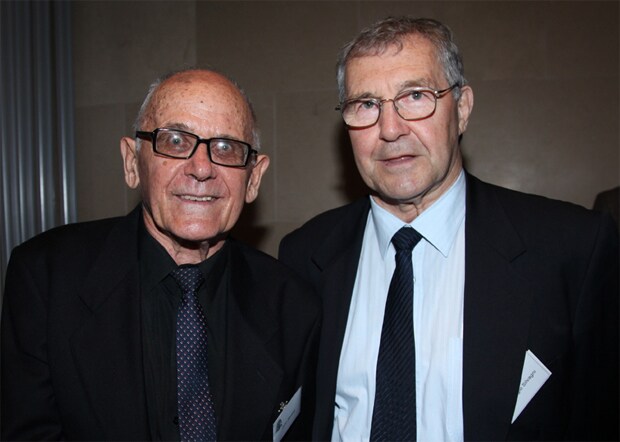
 

Jim Clark, one of Carlton’s last surviving members of the infamous “Bloodbath” Grand Final of 1945, has died in his hometown of Echuca at the age of 88.

Jim, who by the age of 22 had played his part in both the ’45 and ’47 Premierships, was also a three-time Victorian representative and, at 26, the winner of the ’51 Robert Reynolds Trophy for Club Champion.

By then, he was 161 games into his senior career and at the peak of his football powers. But he had played his last game for Carlton – the lure of a new house too great for him not to accept the position as captain-coach of Echuca.

Recruited to the club from Elmore on the Campaspe River, Jim’s links with Carlton were forged in 1943 – the year in which four of the club’s five former players paid with their lives in the field of combat.

One of them, Lieutenant James William “Jim” Park, was killed in the defence of a strategic Allied airfield in Wau, New Guinea. Less than five years previous, Carlton’s No.26 had quelled Collingwood full-forward Ron Todd’s influence in the 1938 Grand Final, and was a revered figure for those who followed, Jim Clark amongst them.

A wonderful raconteur, Jim’s understanding of the Park legacy was triggered by a faded sepia photograph, which hung from the old brick walls of what was once the players’ changerooms deep within the bowels of the Robert Heatley Stand.

The photograph, captured by a newspaper “snapper” at Princes Oval in the 1930s, swiftly earned iconic status. Taken from behind, the photograph featured Park completing an extraordinary chest mark, with his left foot planted firmly in the back of his hapless Melbourne opponent and his right leg extended outward to retain balance.

“We used to look at that photo, in the club, of a chap called Jim Park, who was a full-back for Carlton in the time of Rod McLean and those fellows,” said Jim in a final interview a few years ago.

“It was a famous photo of him taking a mark with his foot in the back of ‘Tarzan’ Glass, a ruckman. It was a famous one, published around the world it was.

“About a month after Jimmy Park was killed in the war, Mr Bell ,the secretary, came over to me in the clubroom and said ‘Jim, we’re going to take your number off you that you’ve got and give you Jimmy Park’s number,” Jim said.

“Talk about an honour. To be given Jimmy Park’s number out of respect for Jimmy Park was an honour that was hard to believe.”

Wearing Park’s No.26 like a badge, Jim took his place at half-back alongside Bert Deacon. Together they savoured the Grand Final triumphs of 1945 and ’47, and dealt with the disappointment of Grand Final loss in ’49.

The ’45 Grand Final – at which 62,986 people, many of them returned service men and women, somehow crammed into Princes Park to bear witness – has taken on mythical proportions with the passing of time and for the memorable observations of old-timers like Jim.

Only three players still live to tell the tale – Ken Hands, Alex Way and Doug Williams – but it was Jim who once declared: “Of ‘The Bloodbath’ I heard a fella say ‘I was at the wrong bloody war’”.

Fondly-dubbed “Racehorse”, Jim’s nickname probably had as much to do with his penchant for the equines as his fleet-of-foot athletic prowess.

“Jim Clark was always fond of the horses, even as a young man,” said Alan Bell, son of the then Carlton Secretary Harry Bell. “Back in those days there were only two phones at the club, one in the football club secretary’s office and the other in the cricket club secretary’s office. Quite often, just before a game, Jim Clark would come to my father and say ‘Mr. Bell, could I use your phone?’. And Dad would say ‘Yes, and put five bob on it each way for me too.’”

Jim’s loss to Carlton at the end of ‘51, together with the departures of fellow Premiership players Bert Deacon and Jim Baird, was truly felt. As was noted in the club’s 1952 Annual Report, “The loss of Jim Clark was a loss that could not be over-estimated and could have meant the difference between victory and defeat on several occasions . . . ”

And yet this most engaging of characters never forgot Princes Park or its people – the likes of President Ken Luke and Coach Perc Bentley – who were the Blues’ galvanising forces both during and beyond the dark years of wartime.

Jim, whose entire career was run and won under Bentley’s tutelage, once said of the man: “Loved him. Loved him”.

“He (Bentley) was a very prominent player in the times of ‘Skinny’ Titus and Jack Dyer,” Jim said. “I know I speak for all the players when I say he had the respect of every one of us. I never heard him swear in an address and he was always so supportive in his instruction. He was always encouraging.

“The same applied to Mr Luke. He was a great man. He was always a very hale fellow with us and I never heard an ill word from any one of the players who ever had any dealings with him.”

Jim last appeared for Carlton in a contest of further controversy – the Round 18 match of 1951 at Princes Park, in which the great John Coleman copped four matches for striking Harry Caspar – thereby depriving him of his place in the 1951 Grand Final and almost certainly costing the Bombers the chocolates.

On Saturday night, Carlton players will wear black armbands to honor the memory of Jim when they confront Essendon on the vast expanses of the MCG.

Predeceased by his wife Marg and son Gary, Jim Clark is survived by sons Lex, Greg, daughters Lesley and Jillian, and their families.

Jim’s funeral service will be held at Tobin Brothers, Bromley Chapel, 457 High Street, Echuca on Monday, August 26, commencing at 12.00 noon.

The funeral will leave at the conclusion of the service for burial at the Echuca Lawn Cemetery.

Special Offer for all Spirit Of Carlton Members!

The Jason Petch Racing team on the sponsors table at the Lunch with the Carlton Captains

The Spirit Of Carlton’s Major Sponsor – Jason Petch Racing – has come to us with a tremendous offer available to all of the Spirit Of Carlton members!

Please see the attached Flyer outlining the horses that we currently have available. These horses were personally selected and purchased by Jason and we believe that they are the horses to take JPR to the next level in racing.

CLICK HERE FOR FLYER –> JPR Ownership Opportunities

JPR is now looking for new owners to be a part of this journey and are hoping that you will become involved!

Currently JPR has shares remaining in both horses and they are seeking your interest in the opportunity to purchase into a racehorse with JPR.

There has never been a better time to become a Horse Owner with the amounts of prizemoney on offer being higher than ever before! Enjoy the Sport Of Kings at a fraction of the cost and go racing with your family and friends by forming a Syndicate, where you will have a lesser percentage of ownership which means less costs, however receive the same amount of perks as the person who owns 100% of a horse!

Racing is easy to become involved with and JPR can help you get involved today!

Please view the attached flyer and if you have any questions or would like further information, please feel free to contact Simon Buckley directly by responding to simon@jpetchracing.com.au or by calling Simon directly on the mobile on 0419 872 361.

Support those that support you!


Max Ellis 80 Today

Happy 80th birthday to Max Ellis today.

——————–

From the Blueseum:


Career: 1956
Debut: Round 2, 1956 v Melbourne, aged 22 years, 252 days
Carlton Player No.: 700
Games: 2
Goals: 0
Last game: Round 3, 1956 v St Kilda, aged 22 years, 259 days
Guernsey No. 21 (1956).
Height: 170cm
Weight: 70kg
DOB: 13 August 1933

Recruited from South Bendigo and aged almost 23 on his senior debut, Max Ellis wore guernsey 21 in his only two appearances for the Blues in 1956.

Photo: Max is pictured in the 1954 South Bendigo premiership team. (Courtesy of the South Bendigo Football & Netball Club)

A celebration of skippers

From: carltonfc.com.au

HandsMurphyArticle_620X370.jpgCarlton’s oldest living captain, Ken Hands, with current skipper Marc Murphy. (Photo: Carlton Football Club)

More than 600 people turned out at the Grand Hyatt for Thursday’s Spirit of Carlton lunch, celebrating Carlton’s captains.

Current captain Marc Murphy was joined by his teammates and past leaders who are still at the Club, including Stephen Kernahan, Andrew McKay and Chris Judd.

Other former captains in attendance included Ken Hands, Sergio Silvani, Ron Barassi, Robert Walls, Percy Jones, Wayne Johnston, Mark Maclure, Craig Bradley, Anthony Koutoufides, Lance Whitnall, endeavour the great John Nicholls.

Coach Mick Malthouse gave the opening address, saying of all the clubs he has been a part of, the thing that stands out about Carlton the most is the way it continues to look after players when they retire from football.

“They’re still a part of the family. This Club stands alone in its endeavour and its history – they look after those players so well.”

There were laughs as past players reminisced over old stories – Wayne Johnston revealing how he got his nickname “The Dominator”.

Johnston, who was Carlton Captain from 1980-1983, says it came about after he claimed to have been dominating in a room full of ladies at a nightclub – only to later be ejected by security and go home alone.

Carlton greats Sergio Silvagni, John Nicholls, Ron Barassi and Chris Judd catch up. (Photo: Carlton Football Club)

“We had fellas like Maclure and Buckley and blokes like that around the footy club, so there wasn’t much that didn’t get through the door,” Johnston said.

“I turned up to training the next morning, and they said to me as I walked in a bit sheepish, ‘G’day Dominator, how are you?’”

“They made out that my ego was well in advance of my ability.”

The gathering also heard from Ken Hands, Carlton captain from 1952-1957.

Hands, who wore the number one guernsey now sported by Andrew Walker, enjoyed much success at Carlton, playing in two premierships and later coaching the side.

But one of his great achievements, that perhaps isn’t as widely known, is that it was Hands who was responsible for recruiting John Nicholls to Carlton.

“I was very fortunate to play with him in his first year and my last,” Hands said of Nicholls.

“What a great ambassador he has been for the club.”

Here are the thoughts of some of Carlton’s former captains on the Spirit of Carlton lunch:

“For me it’s a lovely day. Our footy Club continues to improve, and this will go on longer than you and I, and the rest of the people in the room. We’re just a passing parade of people who enjoy the company of each other.” Mark Maclure

“It’s wonderful. It’s great seeing all these old faces – you see them around now and then, but it’s great seeing them all at once.” Percy Jones

“It’s great catching up with everyone at events like the Spirit of Carlton – it’s great to see everyone back together. Hopefully we can get over the Bulldgos this weekend and get into the finals.” Jim Buckley

“It’s pretty awesome. Coming back and seeing all these great captains and great players. It’s a great thrill.” Lance Whitnall

“I regard it as a pleasure, seeing a lot of people that I haven’t seen for a long while. I had some happy years at Carlton.” Ron Barassi

Spiro Gets a Half Century

Happy 50th birthday to Spiro Kourkoumelis today.


——————–

From the Blueseum:


Career : 1981 – 1986
Debut : Round 17, 1981 vs Melbourne, aged 17 years, 359 days
Carlton Player No. 897
Games : 62
Goals : 56
Last Game : Round 6, 1986 vs Sydney, aged 22 years, 277 days
Guernsey Nos. 49 (1981) and 28 (1982-86)
Height : 180 cm (5 ft. 11 in.)
Weight : 89 kg (14 stone, 0 lbs.)
DOB : 31 July, 1963

Had he played in any other era in Carlton’s history, the man with one of the longest names in the game; Spiro Kourkoumelis, would surely have played more than 100 senior matches for the Blues. Spiro was unlucky in that he emerged at Princes Park during Carlton’s golden decade of 1979 to 1987, when a star-studded playing list took the Old Dark Navy Blues to five Grand Final appearances and four Premierships. However, that success also restricted the opportunities for a group of very capable players like Kourkourmelis, who didn’t always get the opportunities his talent deserved.

After being recruited from local club Princes Hill in 1979, Kourkoumelis was part of Carlton’s Under 19 flag side later that same year. Still just 16 years old, he represented Victoria in the elite Teal Cup interstate competition in 1980, and by 1981 was knocking on the door of senior selection at Carlton after a series of eye-catching matches with the Reserves. Meanwhile, his younger brother Peter had joined him at Princes Park, and was in the midst of his handful of games with the Under 19’s. The problem for Spiro however, was that he was competing for a midfield-forward role in the Blues’ senior team against the likes of Barry ArmstrongJim BuckleyDavid GlascottWayne HarmesKen SheldonWayne JohnstonGreg Wells – and at least three or four others.

Kourkoumelis wasn’t a gazelle on the field, but his ball-gathering ability and disposal were first-rate. He was an ideal link-up player through the middle of the ground, and always a threat around the goals. Eventually, an injury to Wells provided the opportunity Spiro had been craving, and he was named to make his senior debut in the centre for Carlton against Melbourne at Princes Park in round 17, 1981 – six days before his 18th birthday. Wearing guernsey number 49, he got away to a dream start, too, by kicking a goal with his first kick, after receiving a gift handball from ‘Bomba’ Sheldon in front of the Heatley Stand. Carlton went on to destroy Melbourne by 73 points that day, on the way to the 1981 Premiership. However for Kourkoumelis, it was to be his one and only senior match for the season.

In 1982, Spiro swapped to the number 28 guernsey previously carried by ‘Percy’ Jones, but that didn’t make his task of breaking into the seniors any easier. While the brilliant Blues swept to back to back flags that September, Kourkoumelis managed six sporadic games between rounds two and fifteen, before finishing off another impressive year at the lower level by being voted the Reserves’ Best and Fairest.

The blood, sweat and dedication involved in winning those consecutive flags had ramifications in 1983, as retirements and injuries started to create opportunities at last for Carlton’s up-and-comers, and Kourkoumelis was one beneficiary. He grabbed his chance with both hands, and by mid-year was a mainstay of the side, either in the centre or ruck-roving. The Navy Blues wound up fifth on the ladder, and Spiro experienced the intensity of finals football for the first time when his injury-depleted side lost the ‘83 Elimination Final to Essendon by a disappointing 33 points. Still, that milestone capped off a year in which he arrived as a league footballer by playing 18 games, picking up seven Brownlow Medal votes, and finishing fifth in the voting for Carlton’s Best and Fairest.

As 1984 unfolded, Kourkoumelis continued playing solid, effective football. He had strung together another 18 games and 18 goals by the time the home and away season concluded with the Blues ensconced in third place, and poised for a tilt at yet another flag. But to his dismay, Spiro was left out of Carlton’s line-up when the lead-up finals in were again held at VFL Park, Waverley. The wide open spaces called for pace, pace and more pace, so the Blues included four rovers in the teams that played Hawthorn in the Qualifying Final, and Collingwood in the Semi Final. The plan misfired however, and both games were lost – by 30 and 25 points respectively.

In the off-season, Melbourne and Collingwood each made substantial offers to Kourkoumelis, but he eventually knocked them both back and had another workman-like year in the midfield. He played in his second final when Carlton lost the 1985 Elimination Final to North Melbourne, then farewelled his coach of the previous five years when David Parkin retired at the end of the season.

Carlton’s incoming coach, Robert Walls, stamped his authority on the club and its playing list with an intense pre-season in 1986, while telling his players that those who didn’t meet his expectations probably wouldn’t see out the year. Indeed, such words proved prophetic for Kourkoumelis. After playing five of the first six senior matches, he was sent back to the Reserves, and stayed there right through until Carlton claimed yet another lower grade Premiership with a 74-point drubbing of Footscray in the curtain-raiser on Grand Final day. While close to 100,000 fans watched on, Spiro was one of Carlton’s best – kicking four goals and ranging far and wide to set up many of the Blues’ attacks in a memorable farewell game.

Before that year ended, rumours were rife that 22 year-old Kourkoumelis would be cleared to Collingwood. But Carlton refused to bolster their fiercest rival in any way, so Spiro found himself bound for the next chapter of his football life at St Kilda, where he went on to play another 35 senior matches between 1987 and 1990.

In 1991, Kourkoumelis retired from AFL football and headed to VFA club Coburg, where he joined his former Carlton team-mate Mark Williams.

Kourkoumelis wore No.53 for Carlton’s reserves in 1980.

Match Day Function for Carlton vs Essendon

The SOC will be hosting a match day function which is being organised by the AFLPA and AFLCPPA for the round 22 clash against Essendon on the 24th August.

Capacity for the room is 150 and demand will be high so it is imperative that if you want to attend you book early. This function is open to past player from all AFL clubs so tickets will go very quickly.

You need to book through the AFLPA. This can be done by downloading the order form by clicking on the image to the right.

Each past player is allowed two guests.


Details are:

DATE : Saturday 24 August 2013
GUEST ARRIVAL : Dining room is open from 6.30pm
GAME START : 7.40pm
VENUE : Tom Wills Room, MCG. Enter via Gate 7,
Great Southern Stand and take lifts 18 or 19 to Level 2
Your ticket to the Combined Past Players Function includes:
• Gate entry and Platinum Reserved Seating on Level 2, Great Southern Stand
• Access to the new Tom Wills Room, overlooking the ground
• A selection of gourmet canapés, tea, coffee and warm baby scones, served pre-game
• Cash bar facilities
FUNCTION COST : $25 per person (incl. GST)


There is another match day event organised for the Richmond vs Brisbane game as well. If you wish to attend this download the order form by CLICKING THIS LINK.

Andrew Graham turns 50

Happy birthday to Blues player from 1983, Andrew Graham today.

Sadly, we do not have any contact details for Andrew. If anyone knows his whereabout please let us know.

————————-


Career: 1983
Debut and only Game: Round 15, 1983 vs Melbourne, aged 19 years, 349 days
912th Carlton Player
Goals: Nil
Guernsey No. 46 (1983 – 1984).
Height: 180cm
Weight: 80kg
DOB: 18 July, 1963

Wearing guernsey #46 and listed at 180cm in height, Graham played a single game for Carlton in Season 1983 which was a loss to Melbourne at Princes Park. In this game, Graham shared his debut with Ricky Nixon. He was recruited from Coburg.

RIP Don McIntyre

Deep condolences to the McIntyre family today after learning of the sudden death of Don McIntyre this morning at the age of 98.

Don played 100 games for the Blues and won the 1937 best and fairest, he was the last surviving member of the 1938 premiership team.

The end of an era for our club.


Ray Byrne reaches 60

Happy 60th birthday to Ray Byrne today.


————

From the Blueseum:


Career : 1973 – 1978
Debut : Round 2, 1973 vs North Melbourne, aged 19 years, 272 days
Carlton Player No. 837
Games : 81
Goals : 13
Guernsey No. 26
Last Game: Round 6, 1978 vs Hawthorn, aged 24 years, 294 days
Height : 181 cm (5 ft. 11 in.)
Weight : 79.5 kg (12 stone, 7 lbs.)
DOB : 16 July, 1953

Ray Byrne will be remembered as one of the most unfortunate players in the history of VFL/AFL football. A capable and courageous defender, he turned out for two clubs in four Grand Finals – only to be on the losing side in each one of them.

In 1972, Byrne was recruited by the Blues at the age of 19 from Golden Square, in Carlton’s rich Bendigo League zone. He was given guernsey number 26 and soon proved to be a popular clubman and a creative half-back. At 181 cm and 80 kg, he was equally at home on the last line of defence, where he played in Carlton’s 1973 Grand Final loss to Richmond. The Blues went down by five goals that day, but Byrne’s opponent; Noel Carter, was hardly sighted.

Although his endeavour rarely faltered, by 1978 Byrne’s opportunities were drying up – due mainly to the emergence of future stars like Peter McConvilleRod Austin and Wayne Harmes. That same year there was an upheaval at the club with coach Ian Stewart resigning because of poor health, and then Serge Silvagni and later Alex Jesaulenko taking turns as senior coach. It was around that time that the Blues offloaded Byrne’s good mate Robert Walls, to Fitzroy – so Byrne decided that he too wanted out.

As he put it, “I didn’t like the scene at the time, and up until the Wednesday before clearances closed they weren’t going to let me go. And then at the last minute, the Blues got a deal they wanted. They gave permission for me to go to Collingwood on the proviso that they got a form four”. (A form four was required for every player recruited to a VFL club). Byrne wasn’t keen to go to Collingwood – he actually wanted to join Melbourne – but at the last minute he was off to Victoria Park. Incidentally, the Blues recruited Robbert Klomp with the form four they received in exchange from the Magpies.

So, after 81 games and 13 goals for Carlton in six seasons, he found himself at Victoria Park, where he quickly established himself in Collingwood’s lineup. He went on to play 121 games and boot 10 goals in black and white, including three consecutive losing Grand Finals – to Carlton in 1979, Richmond in 1980 and Carlton again in ’81. Byrne can remember his first night at Collingwood especially well, as he wore a Carlton jumper out onto the track, and as he recalled, “got a few dirty looks”.

In round 19 of the ’83 season, Collingwood met Richmond at the MCG in Richmond champion Kevin Bartlett’s 400th AFL/VFL game. His opponent that afternoon was Ray Byrne. As the teams lined up for the first bounce, Byrne reached down into his sock, stood up, and presented the balding Tiger star with a toothless comb! Bartlett was amused, but not distracted, and Richmond won convincingly.

In 1984, Byrne felt his time was up at Collingwood and asked for a clearance to Geelong. The ‘Pies concurred and, at the age of 32, Ray played another 17 games with the Cats, before finally calling it quits after an impressive career.

In 1977, Ray’s twin brother Phil Byrne played four Reserves games for the Blues, and then returned to the Bendigo League.

Past Players Pay a Lifetime Price

A fantastic article by Sam Lane that should be of interest to all past players.

http://www.theage.com.au/afl/afl-news/players-pay-a-lifelong-price-study-20130710-2pqhv.html


While 60 per cent of the almost 600 ex-players surveyed required ongoing treatment for their old football injuries, the study showed that only 6 per cent have had their medical costs covered by their old football club or the AFLPA.

The compelling data, published only in abridged form by the university, prefaces an imminent launch by the AFLPA of a new injury treatment and hardship fund. The AFLPA has confirmed to Fairfax Media that the new scheme will kick off with a $250,000 contribution from the AFL’s current player collective, after which retired footballers will apply for injury treatment funding that will require approval from an AFLPA-appointed panel.

Football’s body blows

  • 76 per cent of past players experienced serious injuries in elite football.
  • Of those who reported serious injuries, 64 per cent are still aff ected in daily life by their previous VFL/AFL ailments.
  • Of those who reported serious injuries, 60 per cent require on-going treatment for old football injuries.
  • 6 per cent have treatment costs covered by their old VFL/AFL club or the AFL Players Association.
  • 73 per cent experienced concussion during their elite career.
  • A ‘‘high incidence’’ of multiple concussions experienced by those who reporting a serious injury.

Source: University of Western Australia study research commissioned by the AFL Players Association and surveyed 592 retired VFL/AFL players (average age 51.1 years, average playing career 7.7 years).


If you are eligible we strongly recommend you become a member of the AFLPA Alumni for a small one off fee that could save thousands in medical costs.

For more information check out our AFL page – http://spiritofcarlton.com.au/blog/aflpa/

Ron Hines Hits 90

A very happy 90th birthday to Ron Hines today.

——————–

From the Blueseum:


Career : 1943 – 1948
Debut : Round 14, 1943 vs Essendon, aged 20 years, 34 days
Carlton Player No. 585
Games : 58
Goals : 21
Last Game : Round 6, 1948 vs Essendon, aged 24 years 316 days
Guernsey No. 11
Height : 165 cm (5 ft. 5 in.)
Weight : 65.5 kg (10 stone, 4 lbs.)
DOB : July 11, 1923

An honest and popular wingman who was drawn to Carlton while serving as an aircraft mechanic with the RAAF in World War II, Ron ‘Ripper ‘ Hines is remembered as one of two Blues who suffered the anguish of being dropped from the team prior to the infamous 1945 ‘Bloodbath’ Grand Final. The other player to miss out was fellow wingman Fred Fitzgibbon, who was suspended for four weeks by the VFL Tribunal after Carlton’s sensational victory over Collingwood in the previous week’s Preliminary Final.

Born in Ballarat, but living in Melbourne when war was declared, Hines enlisted for service with the RAAF in 1942. While training at various establishments around Melbourne – including Point Cook and Laverton – Ron played as often as possible with his home team – Coburg District – as well as with the Air Force in inter-service matches.

In 1943, he found his way to Princes Park, and was given his first opportunity at senior level in a vital game against Essendon at Windy Hill in round 14. Wearing guernsey number 11, Hines started on a wing (alongside Bob Chitty, in the centre) as Carlton won a tense, dour struggle by 3 points. His second game was that year’s first Semi Final against Fitzroy, which ended in a 51-point hiding for the Blues.

Over the next two years, Hines was a regular senior player. His 20 matches on a wing or at half-forward in 1945 included Carlton’s easy victory over North Melbourne in one Semi Final, followed by a stirring win over Collingwood in a bitter and physical Preliminary Final. In the aftermath of that bloody clash, Carlton’s Fred Fitzgibbon was found guilty of striking Collingwood enforcer Len Hustler, and suspended by the tribunal for four matches. A few days later, Hines also suffered a huge disappointment when he was omitted from the Grand Final team to play South Melbourne, and replaced by Alex Way. As has been extensively documented, Carlton then went on to beat the Bloods by 28 points in the most spiteful and controversial Premiership play-off of them all.

However, Hines’ dignified reaction to his omission from the flag side, and his genuine joy at Carlton’s achievement, endeared him to his team-mates. Rather than sulking, he was as keen as ever over the following two seasons, even though he was never the first player picked each week. He missed out on a place in another dramatic Grand Final victory for the Blues in 1947, and bid farewell to VFL football after Essendon defeated the Blues by 28 points at Princes Park in round 6, 1948.

Two Blues to be inducted into Tasmanian Hall of Fame

By Tony De Bolfo

HeathcoteArticle_620X370.jpgThe late John Heathcote during his time at Carlton. (Photo: Carlton Football Club)

Two former Carlton on-ballers, Leigh McConnon and the late John Heathcote, are amongst nine former players to be inducted into the Tasmanian Football Hall of Fame, at a Gala function at Wrest Point Casino on Friday night.

Heathcote, recruited from Ulverstone in northwest Tasmania, was the 716th player to have represented Carlton at senior level. He turned out in 69 matches for the Blues between 1958 and 1962 – the first of them on Saturday, April 26, 1958 – in what was the round 3 match with Geelong at Princes Park.

Though the Encyclopedia of League Footballers lists Heathcote’s date of birth as January 23, 1935, family members have since confirmed that he was actually born on January 23, 1934 – but was advised to quote the former to assist with his clearance.

Heathcote’s on-field career had its origins at Penguin in the North West Football Union. He later joined rival club Ulverstone, under the charge of captain-coach and (formerly) Carlton’s 1950 best and fairest player the late Arthur Hodgson.

Heathcote represented Hodgson’s all-conquering Robins in their premiership seasons of 1955, ’56 and ’57, before heading to Royal Parade.

Wearing the No.37 Navy Blue guernsey later made famous by the game’s inaugural Norm Smith Medallist Wayne Harmes, Heathcote ended his maiden season of ’58 with 19 goals to top the club’s goalkicking list.

Named in a forward pocket for Carlton in his first game, Heathcote completed his senior debut with John Benetti and Len Cottrell. Amongst the members of that starting 20 was John Nicholls, together with the then Carlton captain Bruce Comben, Denis Zeunert and Chris Pavlou, all three recently deceased.

“John started out at Carlton the same year as me,” Pavlou said in a recent interview. “He came over at a time when Carlton was trying to build its ‘Mosquito Fleet’ . . . there was John, Bruce Williams, Barry Smith and myself. We were part of that next group, as players like John Chick and Graham Gilchrist were on their way out.

“John was a terrific little player. He was a short, stocky rover and his great asset was his pace. He teamed well with Graham Donaldson, and later, ‘Big Nick’. I’m not sure why he left Carlton, but he might have got a little homesick.”

On his return to the Apple Isle from Carlton in 1963, Heathcote captained and coached Burnie to state premiership honours.

He died in Queensland, aged 74, in 2008.

Leigh McConnon’s senior career can be sourced to the late 1960s when, as a 14 year-old, he debuted for his hometown team Triabunna on Tasmania’s east coast. From small beginnings, McConnon embarked on a senior and masters football journey of more than 40 years across Tasmania and Victoria.

McConnon first came to the attention of Carlton spotters in 1974 when, as a lightly-framed wingman, he performed admirably in North Hobart’s victory in the Southern Tasmanian Football League Grand Final. By then, the 21 year-old speedster’s reputation already preceded him as he’d won a number of professional footraces.

Despite North Melbourne’s interest, Carlton ultimately won the race for McConnon’s signature. Wearing the No.32 now sported by Nick Graham, he completed his senior debut in the third round match against Fitzroy on the open spaces of VFL Park.

McConnon, Carlton’s 858th senior player, managed 26 senior appearances for the Blues through two-seasons until the end of 1977. The following year he turned out for the Lions, racking up another 23 games through 1980 and ’81.

Later, McConnon chased the leather for VFA clubs Williamstown and Sandringham, before successfully turning his hand to coaching at a string of country and suburban clubs including Hadfield and Sunbury in Victoria, and North Hobart, Clarence and Kingston in Tasmania.

Alpine Provide Awesome Raffle Prize for SOC Captains Lunch

The Spirit of Carlton are proud to announce that Alpine Australia will be providing an amazing $5000 car sound package as a raffle prize during the upcoming SOC Lunch with the Carlton Captains.

CLICK HERE to secure your table or seat to this iconic Carlton event.

This exclusive raffle prize along with many others will be available to anyone attending the event and purchasing a ticket.

The $5000 package includes:

7″ Premium Incar DVD/Navigation System (New 2013 Model)
Reverse Camera
X-Power 4 Channel Amplifier
X-Power Mono Digital Amplifier
12″ Type-S Subwoofer
6″ Type-S Component Speaker
6.5″ Type-S Coaxial Speakers
10.2″ Rear Seat Overhead Monitor

Peter Bevilacqua Turns 80

Happy 80th to Peter Bevilacqua.


——————-

From the Blueseum


Career: 1953
Debut and only game: Round 18, 1953 v North Melbourne, aged 20 years, 61 days
673rd Carlton Player
Goals: 0
Guernsey No. 39 (1953).
Height: 168cm
Weight: 75kg
DOB: 29 June, 1933

Wearing guernsey #39, Peter Bevilacqua represented Carlton in a single game in Season 1953. Bevilacqua is listed as being 168cm in height and 75 kilos in weight.He was also a member of the reserves premiership team in 1953.

At the end of 1953 Bevilacqua transferred to Gippsland team Traralgon.

Bevilacqua originally came from the University Blues.

His fascinating story is told in great detail in the Blueseum / carltonfc.com.au article listed below.

Career Highlights

1953 – Reserves Premiership Player

Articles: The Peter Bevilacqua Story