
Ken Hunter’s 60th

Happy 60th birthday to Ken Hunter.


———-


Ken Hunter


Career : 1981 – 1989
Debut : Round 1, 1981 vs Richmond, aged 23 years, 334 days
Carlton Player No. 889
Games : 147
Goals : 160
Last Game : Round 5, 1989 vs Hawthorn, aged 32 years, 1 day
Guernsey No. 9
Height : 183 cm (6 ft. 0 in.)
Weight : 76 kg (12 stone, 0 lbs.)
DOB : 28 April, 1957
Premiership Player 198119821987
All Australian 1979198019821983
Best and Fairest 1981
Leading Goalkicker 1983 (43 goals)
Carlton Hall of Fame (Inducted 1998)
Carlton Team of the Century

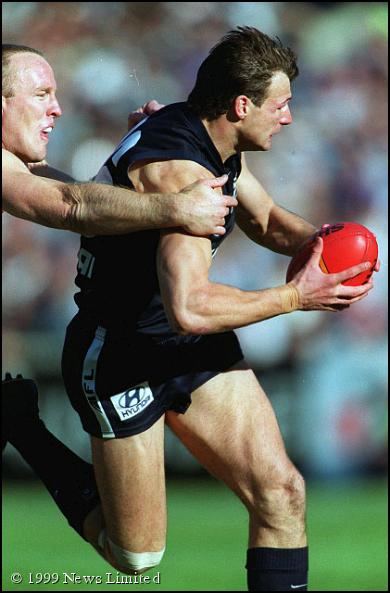
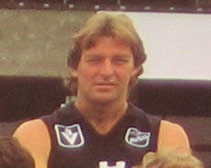
Ken Hunter was already 23 years old when he was recruited to Carlton from Claremont, WA in 1981. A seasoned, two-time All Australian defender, he had finished runner-up to champion ruckman Graham Moss three years in succession as Claremont’s Best and Fairest. Over the same period, he had suffered a broken jaw on three separate occasions, while earning widespread acclaim for his aerial ability and his outstanding bravery in marking contests.

Two other VFL clubs in North Melbourne and Richmond had previously shown interest in Hunter, but both clubs ultimately decided that at 183 cm and only 76 kg, he was just too lightly-framed for the rigours of VFL football. Indeed, Richmond’s President at that time, Ian Wilson – when he heard that Carlton had signed Hunter – was even quoted as saying that Richmond “doesn’t recruit half-back flankers.” That comment was to haunt Wilson for a decade, as Ken went on to forge a magnificent career in Navy Blue.

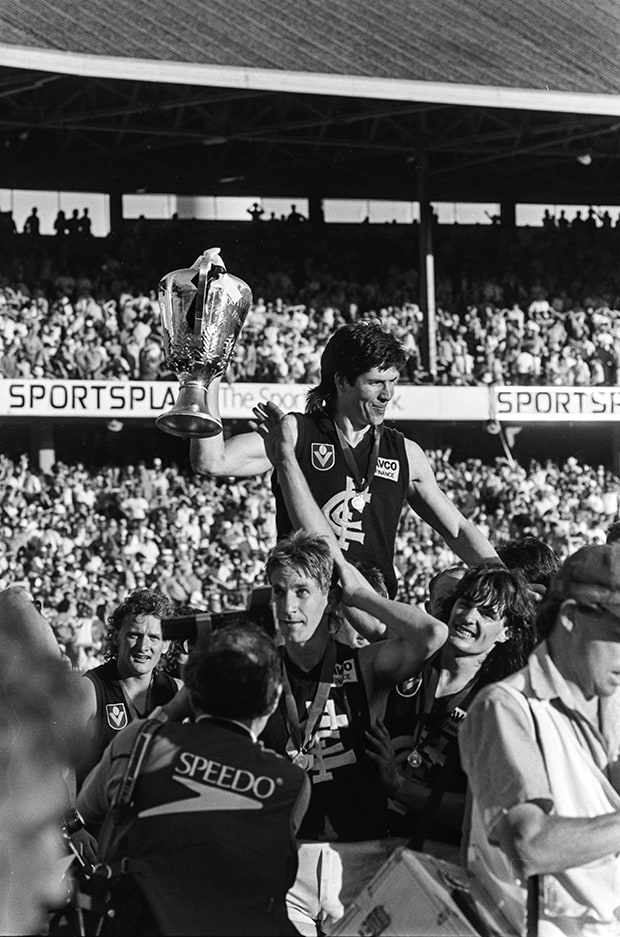
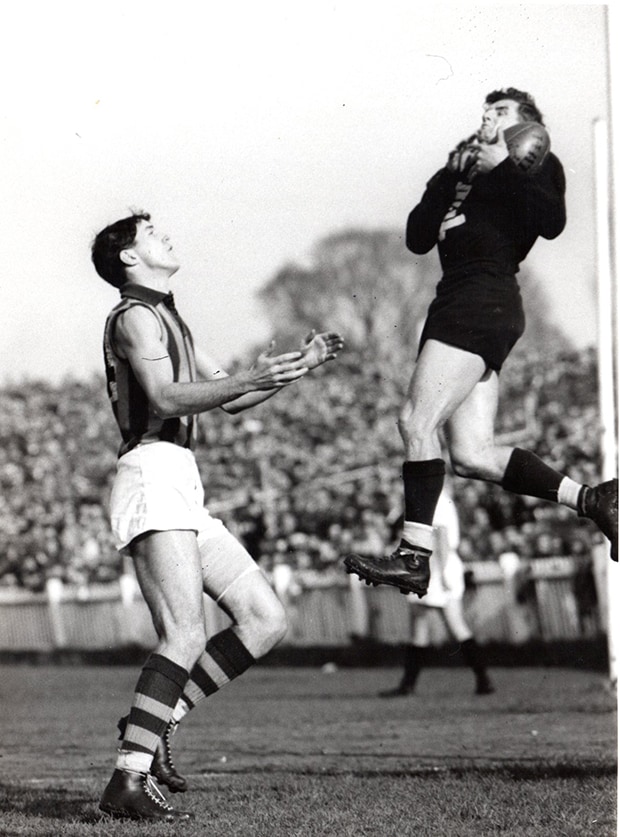
To a whole generation of Carlton supporters, Kenny quickly became a synonym for courage . With his spindly frame, his socks down around his ankles and his trademark mop of unruly hair, Hunter ran into, and flew over packs from all angles to take spectacular marks week after week. Absolutely fearless in his pursuit of the football, he never shirked the fiercest of physical clashes. Fans winced often during games when he launched himself at the ball from impossible angles, only to be sent cart-wheeling to the turf – but like the India rubber man, Kenny always bounced back.

His talent demanded an immediate place in Carlton’s star-studded team, and there have been fewer debuts on a bigger stage than the one that faced him at Waverley Park in the opening round of the 1981 season, when the reigning premiers Richmond faced the 1979 champions Carlton. In guernsey number 9, Hunter lined up in a back pocket, alongside Geoff Southby and Des English to complete an illustrious last line. Three other debutantes in Peter BosustowDenis Lenaghan and Mario Bortolotto also strode the big stage for the first time that afternoon, as the Blues got off to a dream start in smashing the Tigers by 62 points.

By August of that year, Carlton had claimed the minor premiership ahead of Collingwood, Geelong, Essendon and Fitzroy, and the only drawback to the Blues impressive Semi Final win over Geelong was a thigh injury suffered by champion full-back Geoff Southby – a blow that ruled him out of the Grand Final clash against the Magpies, and left a worrying hole in Carlton’s defence.

Scott Howell was chosen to replace Southby for the decider, and covered himself in glory by controlling Collingwood’s Brownlow Medallist Len Thompson; but it was Carlton’s dynamic half-back line of Bruce Doull, Ken Hunter and Wayne Harmes – aided by the inspirational ruck work of skipper Mike Fitzpatrick, that got the Navy Blues home by 20 points in one of the great Grand Finals. After just 23 games for his new club, Hunter topped off a superb debut season by winning Carlton’s Best and Fairest award, and having the honour of seeing his name added to the number 9 locker at Princes Park. Already, he was Carlton’s new folk hero.

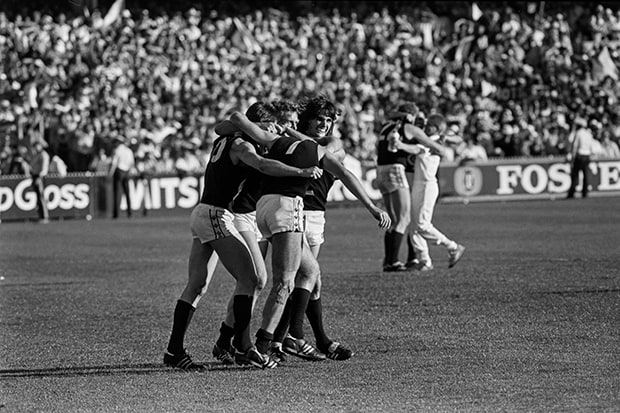
Kenny won his second Premiership medal in 1982 when the Blues’ class, flexibility and superb fitness got them home in another ferocious Grand Final clash against Richmond. Hunter was again a star throughout the finals, although he seemed to be in dire trouble when he was pole-axed by Richmond’s Jim Jess in the opening minutes of the flag decider. All but knocked out cold, he was sent forward to recover, kicked an important pressure goal on the run, then returned to the backline to be one of Carlton’s second-half heroes. The Blues beat the top-heavy Tigers by 18 points, and Hunter’s career reached another level when he was named an All Australian for the third time.

Hunter began 1983 in absolutely spectacular fashion when he took one of the all-time great marks in Carlton’s blockbuster rematch against the Tigers at Princes Park in round one. Running back hard with the ball coming in high over his right shoulder, Kenny must have known that the pack was charging straight at him, and that an horrendous collision was inevitable. But somehow, at the precise moment, he leapt into the air, twisted his body in flight, and plucked the Sherrin out of the sky as bodies tumbled all around him and he miraculously emerged unscathed. It was insanely brave, it was spectacular, and it deservedly won him the Mark of the Year.

Sometime shortly after that brilliant solo effort, Hunter began being troubled by a hip complaint that would plague him for the rest of his career. Consequently, Carlton coach David Parkin released Kenny into a ruck-roving or pinch-hitting forward role, and very soon he was being described as the most valuable and effective utility in the game. Setting a new personal best, he kicked seven goals in Carlton’s big win over North Melbourne in round 21, and five in the Blues’ disappointing loss to Essendon in the Elimination Final. Although a natural defender, he had proved that he was a very reliable set shot for goal, and his 43.17 for the year added Carlton’s Leading Goalkicker award – as well as another All Australian guernsey – to his already crowded trophy cabinet.

In 1984 Kenny was appointed club vice-captain, and served under three captains – Wayne JohnstonMark Maclure and Stephen Kernahan – in successive seasons. In June 1984, with Johnston out injured, Hunter stepped up to lead the Blues, and did superbly – booting eight telling goals against Footscray at Princes Park. Carlton thrashed the Bulldogs by 34 points that afternoon, while another future Premiership star in Peter Dean played the first match of his fine career.

Hunter’s third Grand Final appearance came in 1986, and was a disaster. Having earlier strained a hamstring during Carlton’s gutsy victory over Sydney in the Qualifying Final, Kenny was rushed back into the line up at full-forward for the Grand Final showdown against Hawthorn. But he wasn’t right from the outset, and the Hawks hammered a depleted Carlton by six goals on a bad day for the Blues.

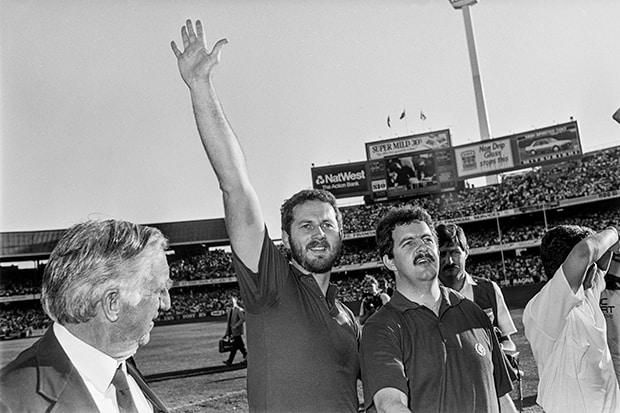
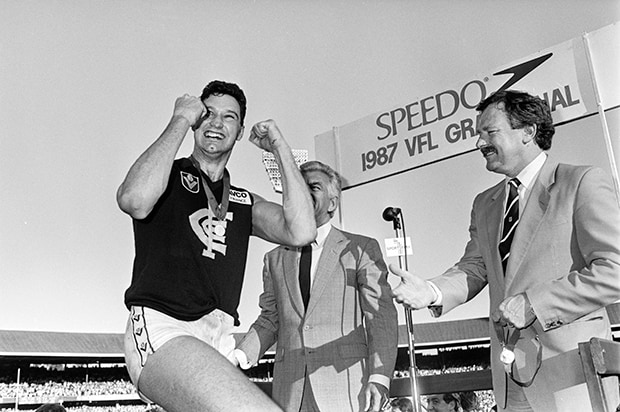
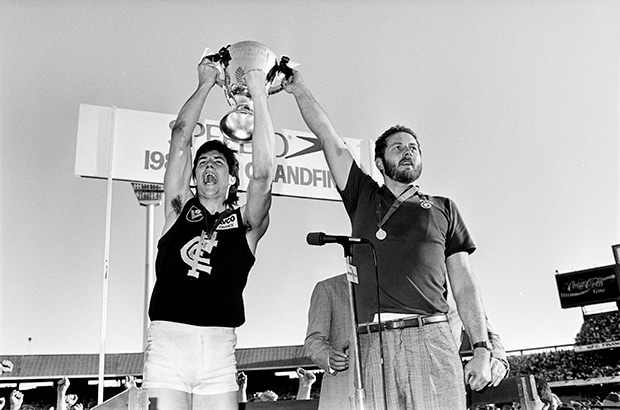
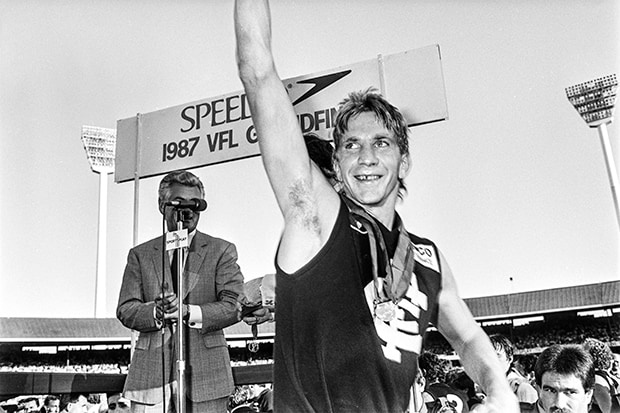
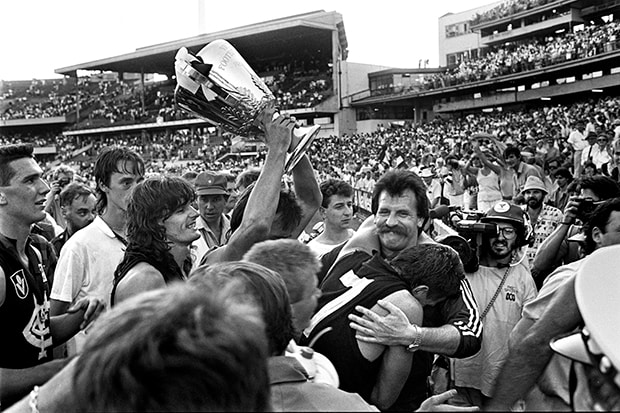
Thankfully, revenge wasn’t long in coming for Hunter, or his wounded club. Precisely twelve months later, when Carlton and Hawthorn faced off in yet another Grand Final, Kenny was fit and the Blues were primed for payback. Hunter began at half-forward, before switching to a sweeping defensive role, and the Blues demolished the Hawks by 33 points on the hottest Grand Final day on record. Kenny’s third flag (and Carlton’s fifteenth) was a victory built on the Blues tight, cohesive defence, led by David Rhys-Jones, Hunter and the magnificent Stephen Silvagni.

Kenny’s eighth VFL season in 1988 began with a bang, when he hosted a forward’s clinic at Princes Park in round 2, and kicked six goals against the hapless Brisbane Bears. By late in that year, Carlton were comfortably on course for another finals campaign until round 19, when injuries to key players – including Hunter – gave the Blues the staggers. Kenny’s hip problem had flared again, and his ankles and calf muscles were increasingly battle-fatigued. He couldn’t play at all throughout September, and although Carlton wound up in a solid third place on the ladder and knocked Collingwood out of the Qualifying Final, successive defeats by Hawthorn and Melbourne destroyed any hopes of back to back flags.

Season 1989 also began poorly for the Navy Blues, while Hunter continued to be frustrated by nagging injury concerns, and the team suffered a string of early defeats. Eventually, after copping a 54-point hiding from Hawthorn at Waverley Park on the day after his 32nd birthday, Ken bowed to the inevitable. He underwent hip surgery with the intention of playing on, but it was soon evident that prolonging his career was out of the question, and he announced his retirement before the year was out.

At the finish, Ken Hunter had played 147 games for Carlton, and kicked 160 goals in nine seasons. Like his former team-mate and co-defender Bruce Doull, he was universally respected by friend and foe alike, and farewelled with genuine affection from all corners of the national game.

In 1991, Ken briefly returned to WA as coach of the Reserves at Perth Football Club, but a family illness cut short his tenure and he was back in Victoria within two years. In 1993 he was appointed to the Board at Carlton, and served the Navy Blues in that capacity for a decade. Meanwhile, his post-career honours kept rolling in. In 1998, Ken was inducted into the Carlton Hall of Fame, and two years later, he was somewhat controversially named on the interchange bench in Carlton’s Team of the Century. Undoubtedly, he would have been in the starting line-up at any other club.

Milestones

50 Games : Round 6, 1983 vs Geelong
100 Games : Round 21, 1985 vs Hawthorn

100 Goals: Round 7, 1985 vs Sydney Swans

Career Highlights

1981 – Robert Reynolds Memorial Trophy: Best & Fairest Award
1981 – Best First Year Player Award
1981 – Premiership Player
1982 – 3rd Best & Fairest
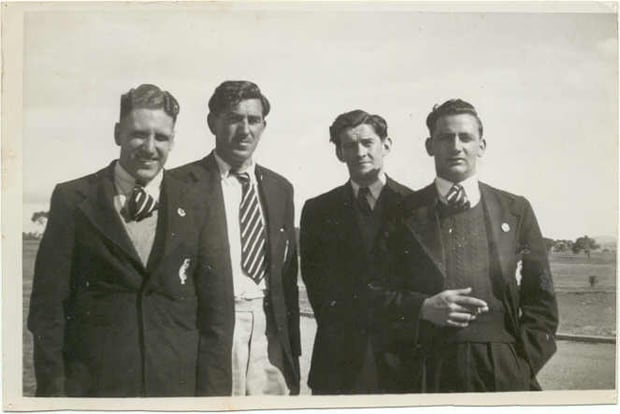
1982 – Premiership Player
1983 – 4th Best & Fairest
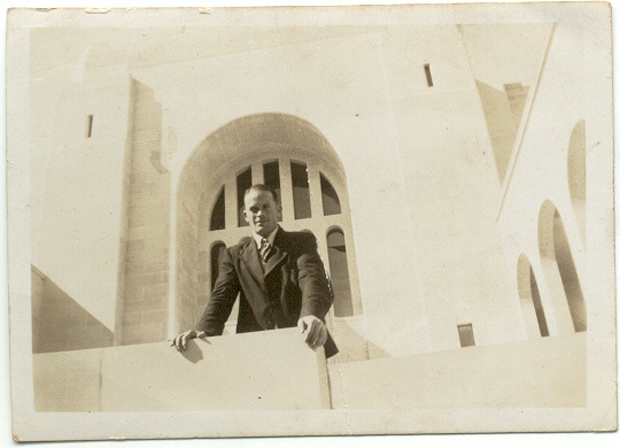
1984 – 7th Best & Fairest
1986 – 7th Best & Fairest
1987 – Premiership Player


Peter Bedford’s 70th

Happy 70th birthday to Peter Bedford.


————-


Peter Bedford


Career: 1977 –78
Debut: Round 7, 1977 vs Melbourne, aged 30 years, 33 days
Carlton Player No. 865
Games: 8
Goals: 4
Last game: Round 5, 1978 v South Melbourne, aged 31 years, 18 days
Guernsey No. 6 (1977), and No. 27 (1978)
Height: 180cm
Weight: 75kg
DOB: 11 April, 1947
Brownlow Medallist (At South Melbourne)

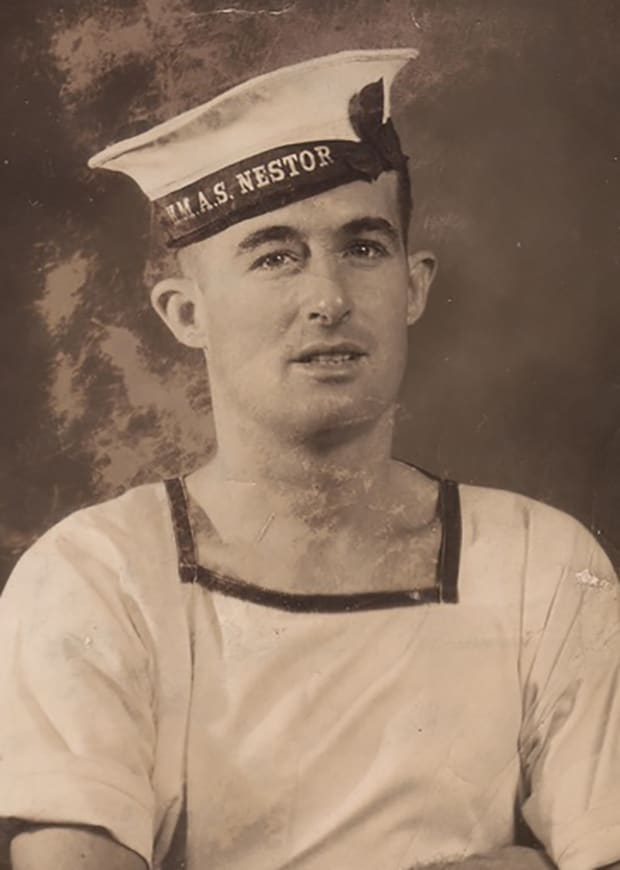
Bedford played 8 games, and kicked 4 goals, for Carlton after debuting in Navy Blue in 1977. Another in a long line of aging champions from weaker clubs seeking to add premiership glory to their long list of individual feats, Bedford was a former Best & Fairest and 1970 Brownlow Medal winner with South Melbourne. In 1978, Bedford headed back to VFA club Port Melbourne.
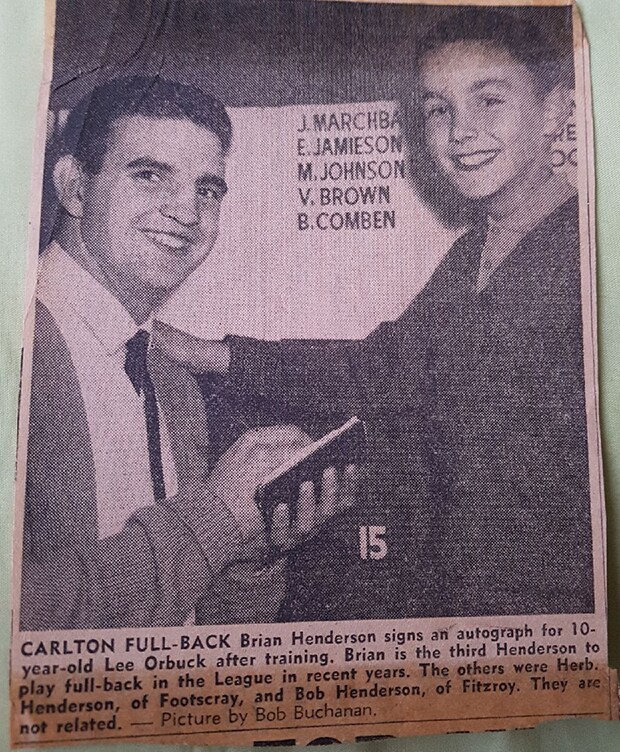
Bedford shared his Carlton debut in Round 7, 1977 with Jim Canfield. Bedford was originally recruited from VFA club Port Melbourne.

Bedford played 178 games and kicked 101 goals for South Melbourne from 1968 to 1976.

Nicknamed Wheels, Bedford was also a state cricketer.


Simon Verbeek’s 50th

Happy 50th birthday to Simon Verbeek.


————-

Simon Verbeek


Career: 1989–1991
Debut: Round 1, 1989 vs Footscray, aged 22 years, 3 days
957th Carlton Player
Games: 38
Goals: 33
Last game: Round 24, 1991 vs Richmond, aged 24 years, 155 days
Guernsey No. 15
Height: 185cm
Weight: 82kg
DOB: 29 March, 1967

Simon Verbeek was a football journeyman. From his hometown at St Arnaud, he played in a Richmond 1985 U/19’s premiership, the next two seasons he played reserve grade football with the Tigers. He was then cut from the final list and then crossed to VFA club Oakleigh, Richmond again invited him to Punt Road for 1988 pre-season, but he was unable to break into the Tigers’ senior team. His coach at Oakleigh, was ex Blues premiership winger, Bryan Quirk, he notified Carlton and the Blues invited Verbeek to Carlton for a tryout.

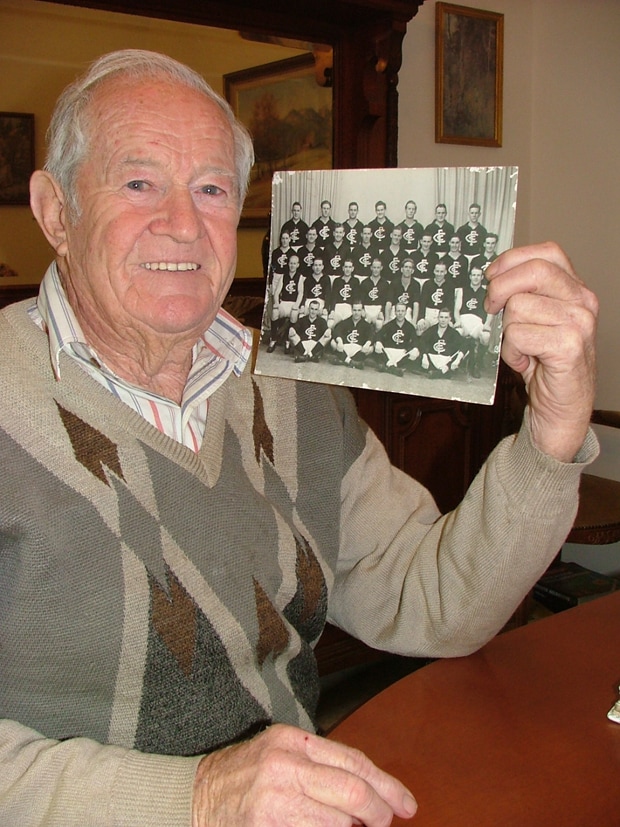
The Blues gave him that opportunity by recruiting him with selection 12 in the 1989 Pre-Season Draft, and Verbeek responded with a solid debut season to win our Best First Year Player award. Verbeek’s strength was he had a good set of hands and was very strong overhead.

From then on, Simon always seemed to be on the verge of a good career, but unfortunately couldn’t take the extra step required to become an established League footballer. He spent three seasons at Princes Park, and despite occasional flashes of brilliance, was delisted in 1991.

Verbeek also played for the Victorian U/17’s team in 1984.

Career Highlights

1989 – 6th Best & Fairest
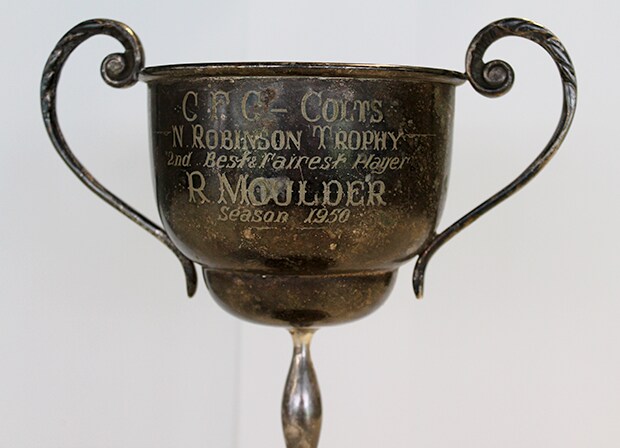
1989 – Best First Year Player Award
1990 – Reserves Premiership Player


Bill Arch’s 80th

Happy 80th Birthday to Bill Arch.

—–

Bill Arch


Career : 1958 – 1962
Debut : Round 2, 1958 vs North Melbourne, aged 21 years, 23 days
Carlton Player No. 711
Games : 38
Goals : 12
Last Game : Round 6, 1962 v Collingwood, aged 25 years, 60 days
Guernsey No. 21
Height : 178 cm (5 ft. 10 in.)
Weight : 71.5 kg ( 11 stone, 4 lbs.)
DOB : 26 March, 1937

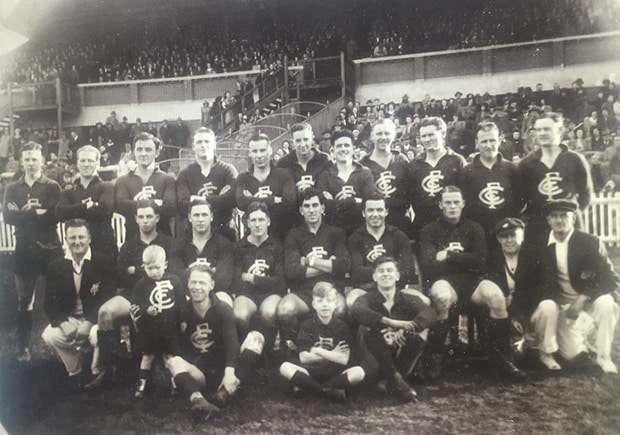
A winger–forward from Kyneton who worked his way through to senior selection from Carlton Under-19’s, Billy Arch was a loyal servant of the Blues for five seasons from 1958 to 1962.

Tall for a winger and strongly-built, Arch loved to run forward and have a ping at the big sticks. He kicked two goals on debut against North Melbourne in round 2, 1958, but from then on, faced daunting opposition from the likes of Laurie KerrJohn ChickGraham Gilchrist and Chris Pavlou for a regular place in the Carlton side.

Although he was never solidly entrenched in the team, Arch regularly stepped up when needed. His best year was 1961, when he wore his number 21 guernsey on to the field in 12 matches, kicked three goals, and forged a good understanding with centreman Berkley Cox.

Arch had his one and only taste of finals football in 1959, playing at half-forward in Carlton’s shattering Semi Final defeat by Melbourne. The Blues dropped out of contention after that, and didn’t return to September action until 1962 – the year that Arch finished up, after a particularly painful defeat by Collingwood at Victoria Park in early May.


Daniel Harford’s 40th

Happy 40th birthday to Daniel Harford.


——————–

Career : 2004
Debut : Round 1, 2004 vs Fremantle, aged 27 years, 8 days
Carlton Player No. 1071
Games : 9 (162 total)
Goals : 2 (69 total)
Last Game : Round 22, 2004 vs Collingwood, aged 27 years, 161 days
Guernsey No. 2
Height : 177cm ( 5 ft. 10 in.)
Weight: 82 kg (12 stone, 13 lbs.)
DOB: 19 March, 1977

Daniel Harford was a popular and classy centreman whose 9-year career with Hawthorn between 1995 and 2003 was something of a roller-coaster ride. He had represented Victoria in 1997, missed months of football in 1999 due to osteitis pubis, and eventually recovered to finish third in Hawthorn’s Best and Fairest award in 2000. Three years later however, Harford had been bumped down the pecking order at Hawthorn by the likes of rising young stars Sam Mitchell and Luke Hodge. Concerned that a well-paid midfielder was spending more and more time in the Reserves, Hawthorn reluctantly put Harford up for trade – knowing that whoever took him would have to honour the terms of his existing contract.
Meanwhile, Carlton was doing all it could to recover from the disaster of 2002, when the club was heavily fined by the AFL and penalised by exclusion from the national draft for breaching the League’s salary cap rules. After some intense negotiation, Harford and his team-mate Brett Johnson (who was probably included as a sweetener, because of Harford’s contract) were secured by the Blues, in a surprisingly generous trade for Carlton’s draft selection number 51.

Consequently, no fewer than seven ‘retreads’ (former players from other AFL clubs) were in Carlton’s squad when the Blues travelled across the continent to meet the Fremantle Dockers at Subiaco Oval in round 1, 2004. Included in the team were Harford (on a forward flank) and Johnson (in the centre) wearing guernsey numbers 2 and 10 respectively. Not surprisingly, the Dockers handed out a 47-point hiding that afternoon, and served warning of another tough season ahead for Carlton.

Harford played eight more senior matches during that turbulent year, none of them in his favourite spot in the pivot – because Johnson seized his chance and proved a real surprise packet. Harford therefore had to be content with a role up forward for the Blues, using his experience and strong tackling to retain the ball in Carlton’s attacking half.

Harford’s best effort for his new club came amidst the wind and rain in round 19, against Essendon at the MCG. He revelled in the conditions, and his tenacity in gathering 17 possessions (and an important goal) were the keys to a surprise win over a team destined for a place in the finals. In the weeks when he wasn’t called up to play for the Blues, Harford was a welcome addition to Carlton’s VFL affiliate, the Northern Bullants. Playing in the centre for the Ants, he had a consistently good season, and was appreciated for the guidance and example he provided to the team’s younger brigade.

Harford’s one season for Carlton culminated in front of 60,000 people on a balmy Friday night at the MCG, when he began from the interchange bench against Collingwood in round 22, 2004. Both sides were out of the running for a finals berth that night, but turned on a typically-intense affair highlighted by the superb skills of Carlton’s Anthony Koutoufides. The Blues led by more than two goals with three minutes left on the clock, and only just survived a late rally by the Magpies to win by a solitary point.

After his retirement from AFL football, Harford took on a role in the football media as a commentator and television host, while continuing to play, and mentor Carlton’s youngsters on their way up through the Bullants. At VFL level he was cut above the rest, as shown when he won the Bullants Best and Fairest award in 2006, and finished third in the voting for the VFL’s highest individual honour, the Liston Trophy.
In 2009 he moved on to coach of Eastern Football League club Balwyn, continuing in that role in 2010.

Prior to be recruited by Hawthorn, Harford had played for the Northern Knights U/18’s, and before that St Mary’s.

Ross Ditchburn’s 60th

Happy 60th birthday to Ross Ditchburn.


——————–

Career: 1982 – 1983
Debut: Round 8, 1982 vs Footscray, aged 25 years, 58 days
Carlton Player No. 902
Games: 28
Goals: 91
Guernsey No. 8
Last Game: Elimination Final, 1983 vs Essendon, aged 26 years, 169 days
Height: 192cm
Weight: 92kg
DOB: 18 March, 1957
Premiership Player: 1982
Leading Goalkicker1982
Best First Year Player1982

Ross “Farmer” Ditchburn was a tall, long-kicking forward from country Western Australia who topped Carlton’s goal-kicking list in 1982, played in a Grand Final, was knocked unconscious – and still picked up a Premiership medal. He spent just two seasons with the Blues, yet left his mark in 28 games that produced 91 goals.

In 1981, Ditchburn was the 24 year-old captain-coach of his hometown football club at Kukerin, in WA’s wheat belt south of Perth. His family were pillars of the local community and ran a large property outside the town. He had played WAFL football at Claremont, but by then Ross was a star of the strong local league; a powerful key forward with vice-like hands and a right foot that could, the locals said; “boot a bag of spuds over a wheat silo”.

One day, the Ditchburns had visitors – all the way from the other side of the country. Carlton coach David Parkin and Recruiting Manager Shane O’Sullivan had come to Kukerin with an offer that the big bloke found tough to resist, and that his parents encouraged him to accept. After tea and scones in the Ditchburn’s kitchen, Parkin and O’Sullivan left with the promise that Ross would be at Princes Park the following year.

The Blues were Premiers of the VFL in 1981, still Parkin was concerned that the team lacked a consistent, reliable full-forward, so he decided to give Ditchburn every encouragement to fill that breach in the ’82 team. Ross was allowed to find his feet in the Reserves for seven games, before making his senior debut – wearing jumper number 8 – against Footscray. Most fans were less than impressed with his early efforts, but Parkin never lost faith in his project player.

Then in round 15 against Melbourne, it all clicked for Ditchburn when he hit form at last. His 6 goals, 3 behinds from a dozen strong marks was a solid indication of his ability – and there was more to come. The following week against St Kilda, Blues’ fans went into raptures as Ditchburn dominated the game with a club record 12.2 from 14 shots in a best on ground performance. Carlton finished the gruelling 22 rounds of the home and away season in third place, then faced up to Hawthorn in the Qualifying Final.

After an even first half, Carlton blitzed the Hawks with 11.2 in the third quarter of that match. Ditchburn finished with six goals. Unfortunately for the Blues, Richmond handed out the same treatment to us the following week in the second-semi-final, kicking 6.6 to 2.0 in the first quarter to eventually win by 23 points. Therefore, in order to make their second successive Grand Final, the Blues had get over Hawthorn yet again in the Preliminary Final. This task was accomplished, but only after a torrid physical battle won by the ruck dominance of Carlton’s Warren ‘Wow’ Jones and captain Mike Fitzpatrick.

Richmond started strong favourites in the ’82 Grand Final, and from the first bounce employed their by then customary tactics of all-out attack on the man and the ball. Ditchburn was one of the early casualties. Late in the first quarter, he was accidently kicked in the back of the head by a Richmond defender, and the rest of the day was a blur as the Blues met fire with fire in one of our most courageous victories. Wayne JohnstonBruce Doull and Fitzpatrick were simply magnificent in Carlton’s gutsy 18 point win. To add to his Premiership medal, Ditchburn also collected the club goal-kicking award with a tally of 61 majors.

Season ’83 proved something of a letdown for both Ditchburn and the club. Late in the year Ross learned that his father had fallen ill and was struggling to cope with the demands of running their property. Coincidentally, his form tapered off and he began spending time back with the Reserves team. After discussions, Carlton agreed to release him at season’s end. His last game was that year’s Elimination Final against Essendon, which Carlton lost by 33 points.

Ross returned to the farm and the Kukerin Football Club, where he went on to play and coach for a number of years. Still running the family farm, he was elected as a Shire Councillor for Kukerin in 2004 (pictured below).

Bill’s ‘I was there the day’ moment

The recent return of the lost 1947 Premiership pennant has elicited a healthy response from a solid cross section of supporters, amongst them the 89 year-old former Carlton footballer Bill Redmond who stood with the team on Princes Park the day the flag was first unfurled.

A resident of the old golf mining town of Bendigo, Redmond couldn’t hide his joy with the flag’s comeback. As he declared: “When I caught up with my friends from Probus on our regular walk, the first thing I said to them was ‘Did you hear the news? We’ve got the 1947 flag back’.

Redmond, an emergency for the ’47 Grand Final against Essendon, was amongst the 20 Carlton players who formed a guard of honour when the wife of then acting President Arthur Reyment completed the unfurling on the afternoon of Saturday, April 24, 1948 – just moments before the round two match with Fitzroy.

Other than Ken Hands, Redmond is the only surviving member who took to the field that day, some 69 years ago. Redmond identified himself as the third Carlton player from the left after the captain Ern Henfry and Bert Deacon in the photograph of the moment the flag was released. Redmond also remembered Frank Curcio and Allan “The Baron” Ruthven amongst the Fitzroy players respectfully observing the ceremony.

1947FlagUnfurling
The first unfurling of Carlton’s 1947 premiership flag. (Photo: Carlton Football Club)

Moments later, Redmond, took his place in a back pocket for the match against the Gorillas, one of his seven senior appearances for Carlton through 1947 and ’48.

Asked what he remembered most of the Fitzroy match, Redmond replied: “We got beat!”.

“I can remember carrying my Gladstone bag to the match, getting changed and being told to run out onto the ground for the unfurling of the pennant,” Redmond said.

“I was the youngest player in that team of course. I stood next to Deacon, who was probably as good a Carlton player as there was in my time there, although ‘Chooka’ Howell was a good player.”

Asked how close he was to getting a call-up for the 1947 Grand Final, famously won with Fred Stafford’s goal seconds before the final siren, Redmond believed he was within a whisker.

“In those days there were 19 home and home games, but prior to the 17th game, and it was recorded in the newspaper, the selectors couldn’t decide on the centre half-forward – Hands or Redmond – as Ken wasn’t playing so well at the time,” Redmond recalled.

“When I arrived at the ground for that game, (Carlton President) Ken Luke came up to me and said: ‘Look Bill, we’re nearing the finals, we’re sticking with Ken . . . ’. I actually appreciated the fact that he told me face to face.

On Grand Final day, Redmond took his place in the grandstand with teammate Ken Hopper, the best man at Redmond’s wedding, to see the Blues prevail by a point in sensational circumstances at the MCG.

The day wasn’t without its drama for Redmond, or, more to the point, his father.

“After I left early to go to the game, my father got a telegram forwarded to me by (Carlton Secretary) Harry Bell stating ‘Bring your bag to the Melbourne ground’,” Redmond said.

“My father grabbed the bag, got on his pushbike and rode from our house in Dawson Street West Brunswick to (teammate) Kenny Baxter’s  grocery in a side street off Sydney Road in East Brunswick – but the first I heard about it was when Ken Hopper and I went into the Carlton rooms after the game and I saw my bag.

“There might have been doubt on one player, and for memory Bert Deacon came off late that game, and though I never got the full story I must have been pretty close. I only wish I’d kept that telegram, but I didn’t think much about it in those days.”

Redmond, who turns 90 in May, is also remembered as Carlton’s inaugural recipient of the under-19 best-and-fairest award, first introduced on the cusp of the 1946 season.
RedmondPic
Former Carlton player Bill Redmond. (Photo: Carlton Football Club)

The 1947 premiership flag was last week returned to Carlton more than 25 years after it went missing. The treasured piece of club history, thought lost to the club since 1990, was handed in by a man known only as ‘Macca’, who had stored it in his shed on a property in the Victorian town of Eddington.

‘Carlton was everything’ to Alec

Alexander (Alec) Spencer, who with his older brother Jack loyally served the Club in a variety of fundraising roles over many years, has died peacefully at the age of 96.

Spencer, just three months shy of his 97th birthday, was true Blue. As his son Michael said: “Carlton was everything to him”.

“I can’t tell you for sure where it all started, but Dad and Uncle Jack both grew up in Carlton because the family home was in Canning Street . . . and they were Carlton fans forever,” Michael said.

“When they grew older, Jack became a publican and moved around a bit, while Dad lived and worked in Fitzroy. He made electrical switch gear for Oliver J Nilsen Ltd, which owned radio station 3UZ, and he worked his way up to production supervisor.”

Jack’s involvement with Carlton can be sourced to the late 1950s and Brian recalled him later joining the newly-formed Carlton Football Club Social Committee – at the time the Club completed the stunning recruiting coup of Ron Barassi as captain-coach on the eve of the 1965 season. The committee comprised 16 members headed by the 1947 Brownlow Medallist Bert Deacon and oversaw the running of many and varied club functions, from dinner dances to pleasant Sunday mornings.

“Jack and my aunt (Joyce) were great fundraisers for the Club, and for years took care of the matchday raffles. Dad joined them not long after and when my uncle and aunt were killed in a car crash in West Brunswick, Alec took over.”

In 1986, Jack was honoured with Life Membership. When news was conveyed in the club’s annual report, the unnamed correspondent noted: “It would be impossible to calculate how much Mr Spencer and his loyal group of workers have raised for the club through many years”.

Just as Jack was honoured, so too was Alec honoured with Life Membership in 2005, again for years of selfless contribution. For the kid from neighbouring Canning Street, this was the pinnacle. As Michael recalled: “One of the greatest thrills of Dad’s life was to become a Life Member”.

In later years, Alec and his cohorts Frank Smith and Peter Sheedy completed many and varied tasks for the club’s merchandise department out of the old Carlton Shop to the rear of the Gardiner Stand. That shop carried Jack Spencer’s name in white letters on dark navy.

AlecSpencerPic
Alec Spencer was a true Blue. (Photo: Carlton Football Club)

Though Alec’s time at Carlton ended with the redevelopment of the Princes Park elite training facility, Michael spoke for all family members when he expressed gratitude to the Club “for keeping Dad going for so long”.

Alec Spencer, whose wife Mary predeceased him 2004, is survived by his children John, Michael and Vicki, granddaughter and three great grandchildren.

His funeral will be held at Ern Jensen Funerals, corner of Bruce and Mary Streets, Preston on Thursday (March 16, 2017) commencing at 11:15 am followed by a private cremation.

Carlton players will wear black armbands in tribute to Alec’s memory when they take to the field for the 2017 season opener with Richmond at the MCG.

Adrian Bassett’s 50th

Happy 50th birthday to Adrian Bassett.


——————-


Career : 1990-1992
Debut : Round 1, 1990 vs Sydney, aged 23 years, 20 days
Carlton Player No. 964
Games : 31
Goals : 12
Last Game : Round 16, 1992 vs Brisbane, aged 25 years, 115 days
Guernsey No. 37 (1990 – 1992).
Height : 186 cm
Weight : 81 kg
DOB : 11 March, 1967

Adrian Bassett was a lightly-built and pacey left-footed defender who was one of two players drafted by Carlton from VFA club Coburg in the 1990 VFL Pre-Season Draft. The other was Tim Rieniets, who like Bassett, had been a dominant force in Coburg’s 1988-89 Premiership double triumph over Williamstown. Bassett was taken at selection 13, and Rieniets at number 27.

When Bassett was drafted by the Carlton, it was his second stint at the Blues. He had previously played with the U/19’s and Reserves but had been delisted, the Blues had drafted him from Castlemaine (he had previously played with Campbell’s Creek). His move to Southport (QLD), and then to the Phil Cleary led Coburg gave him the experience and confidence for another crack with Carlton.

Bassett was assigned guernsey number 37, and made his senior debut for the Blues against Sydney at Princes Park in round one of 1990. Playing at full-back alongside another first-gamer in Stephen Edgar, Bassett was given an early lesson in the pressures of VFL football when Carlton led the Swans by 45 points at half time, only to be over-run in the second half and beaten by five points.

Throughout the rest of a disappointing season, Bassett was shuffled through several positions; from the back pocket, to the wing and ruck-roving. His fourteen matches produced six goals and two or three eye-catching performances – particularly in round nine against Fitzroy at Princes Park. The field umpires awarded him three Brownlow Medal votes that day, for his slashing game across half-forward.

In 1991 the re-appointment of David Parkin as coach of the Blues (after a five-year absence) signalled a renewed commitment by everyone at Carlton. Two seasons of mid-table mediocrity was enough for the Blues – it was time to re-evaluate the playing list and go looking for some quality recruits. Bassett had another consistent year – settling on to a wing next to Craig Bradley, and playing 16 games for 6 goals – but the Blues slipped further down the ladder to wind up eleventh of the 15 teams.

The good news was that Carlton’s scouts and the football department had been active throughout the year, and 1992 would be remembered for the debut at Princes Park of quality recruits like Greg WilliamsAnthony KoutoufidesEarl SpaldingRohan WelshMatthew Hogg and Ron De Iulio.

Unfortunately for Bassett, an influx of players of this standard meant that he was among the casualties. Although he continued to play good football with the Carlton Reserves, from then on, his senior opportunities were severely limited. His only game with the firsts in 1992 came late in the season, when the Blues hammered the Brisbane Bears by 99 points in round 16 at Princes Park.

That turned out to be Adrian’s last match for Carlton, as he was sent back to the seconds the following week, and let go at season’s end. But at least his last game had been a pleasant memory, and he spent it running the wing at Princes Park alongside two of Carlton’s greats in Greg Williams and Fraser Brown.

Bassett wore No.54 in 1986 and 47 in 1987 whilst playing with the Blues reserves team.

Career Highlights

1986 – U/19’s Vice-Captain.
1990 – Best First Year Player Award

Found! ’47 premiership flag surfaces

The original 1947 Carlton premiership flag, whose whereabouts have been unknown for the past quarter of a century, has been returned to the Club in the lead-up to the 70th anniversary of that famous Grand Final victory.

The pennant, hard-earned when Fred Stafford’s last-gasp goal sunk Essendon by a point on that last Saturday in September at the MCG – has been handed in by a lifelong Carlton supporter called ‘Macka’ for the purposes of this story.

Macka’s tale of how he came to be in possession of the treasured ensign is as follows;

“My daughter was going to University, so I took out a 50-year lease on this old two-storey stable next to Ronald McDonald House at 34 Gatehouse Street. It was a place where one of the famous artists used to work during the war,” Macka said.

“I used to walk the dog every morning and night along there, and you’d always find stuff dumped in the laneways, like bikes and flags. I used to pick the stuff up and take it home.

“It would have been in the early 90s, maybe 1990, that I found a hessian bag with what turned out to be the flag and a few other things in it. I thought ‘That looks interesting’, so I grabbed it, threw it into the back of the ute and took it to my farm up the bush.”

According to Macka, the bagged flag sat in his shed gathering dust at Eddington on the Loddon River for the best part of 25 years, and why? Because he never cast his gaze into the bag.

“I never looked at it, nor thought about it,” Macka said.

“Why would you? Not for a minute would you think it’s a Carlton premiership flag.”

Only recently, after conducting a long overdue cleanout of the shed, did Macka realise what he’d actually turned up. As he said: “I rolled it out on the ground and said to myself, ‘That’s interesting. It couldn’t be, could it?’.”

1947FlagPic
Macka returns Carlton’s 1947 premiership flag to Ikon Park. (Photo: Carlton Media)

Macka then confided in a Carlton mate Gary that he’d inadvertently souvenired the ’47 premiership flag, to which his mate replied: “Bulls..t”.

“So I took it over to Gary’s place and we laid it out, photographed it and forwarded the pic to the club,” Macka said.

What intrigued Macka was the piece of chord still encased in the lining of the pennant. Could it be the original chord pulled by the wife of the club’s then acting President Arthur Reyment when the flag was unfurled in front of the Alf. Gardiner Stand on Saturday, April 24, 1948?

1947FlagUnfurling
The unfurling of Carlton’s 1947 premiership flag at Princes Park. (Photo: Carlton Football Club)

As to how the pennant first ended up in a laneway in Parkville, well, that’s anyone’s guess. One theory is that a patron from nearby Naughtin’s Hotel souvenired it from the club and later dumped the item after downing a few ales.

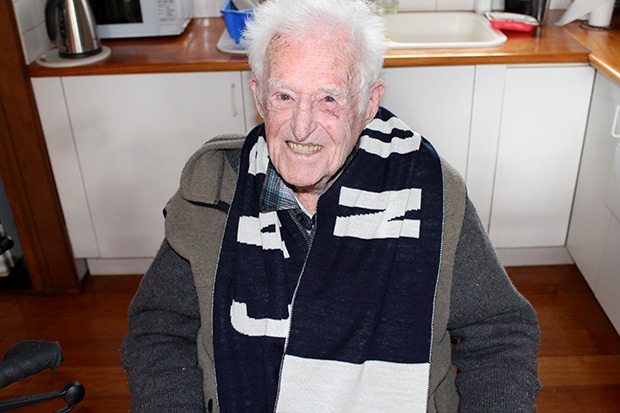
Whatever the case, Macka was only too happy to return the weathered flag, with its blue dye blotches, to the club, amongst whose ranks is the only surviving premiership player of 1947, the 90 year-old Ken Hands.

As Macka said: “What am I going to do with it?”.

“I’ve barracked for Carlton all my bloody life and Carlton is where the flag belongs,” Macka said.

Ross Ousley’s 80th

Happy 80th Birthday to Ross Ousley


————

 
Career : 1956 – 1958
Debut : Round 6, 1956 vs Richmond, aged 19 years, 77 days
Carlton Player No. 704
Games : 23 
Goals : 15
Last Game : Round 14, 1958 vs Geelong, aged 21 years, 144 days
Guernsey No. 33
Height : 183 cm (6 ft. 0 in.)
Weight : 80.8 kg (12 stone, 10 lbs.)
DOB : 3 March, 1937

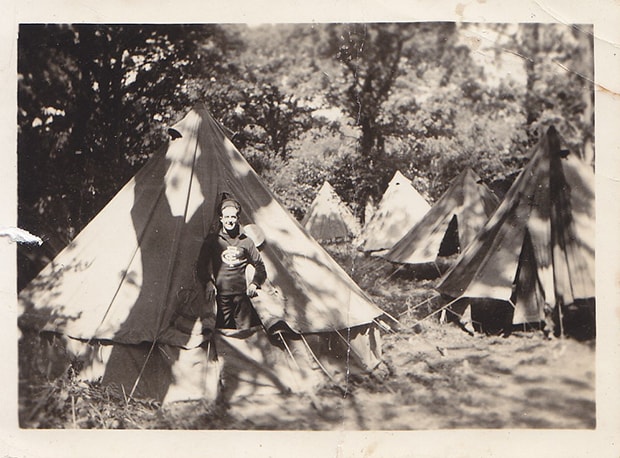
A versatile footballer from Bendigo League club Golden Square, Ross Ousley was still a teenager when he played his first senior match for the Blues in 1956. Over the next three seasons, he racked up 23 games and 15 goals, before crossing to the VFA and becoming one of the stars of the competition – at first with Port Melbourne, then later with Northcote.

Carlton’s recruiters were drawn to Ousley throughout the youngster’s fine season for Golden Square in 1955. Equipped with pace, courage and sure hands, he had emerged as a rangy ruck-rover for the Bulldogs, who surprisingly didn’t stand in his way when his clearance to Carlton was negotiated. By the start of the 1956 pre-season practice matches, Ross was at Princes Park – wearing guernsey number 33, and showing real aptitude as a fast-leading forward with Carlton Reserves.

Although the Blues began the year with two heavy losses, the team recovered to post six wins in succession, and by mid-season the boys from Princes Park were definite finals contenders. In round 6, Ousley was promoted to the seniors for the first time, warming the bench at Punt Road as 19th man until late in the last quarter against Richmond, and enjoying a six-goal win.

It was a similar scenario the following round. The Blues got home by one point over Footscray at the Western Oval, while Ross sat wrapped in a dressing gown until deep into the last term. Returned to the Reserves for a month after that, he didn’t make the senior team again until round 12, when Carlton played host to Essendon at Princes Park, and Ousley was named in the starting line-up at full-forward. In the first few minutes of that match, Ross kicked his first career goal off the ground in Carlton’s goal-square, and followed up with a second later in proceedings. After his team won by 40 points, coach Jim Francis singled out his young spearhead for particular praise, noting his tireless leading and good aerial skills.

Consequently, Ousley stayed at full-forward for six successive weeks – booting 10 goals, 18 behinds – and therein lay a problem. Although his all-round ability was certainly adequate, the length and accuracy of his set-shot kicking for goal was not. In the return match against Richmond at Princes Park in round 17, Ousley was held scoreless and a woefully inaccurate Carlton side scored 7.24 (66) to the Tigers’ 10.11 (71) – bringing to and end Ross’s tenure at full-forward.

Despite that set-back, Ousley persisted, and over 1957-58 elbowed his way back into the senior side to play a further 15 games. Most effective in the centre, he was also a capable stand-in key forward or flanker, and a popular clubman. He wore the white CFC monogram on his chest for the last time in round 14, 1958, when Carlton travelled to Geelong and handed the Cats a 16-point defeat at Kardinia Park; winding up his VFL career having played in 15 wins during his 23 matches.

In 1959 Ousley transferred to VFA front-runners Port Melbourne, where he was asked to shore up their defence at full-back and was something of a revelation. But the Borough were in the midst of a form slump, and after just two seasons, Ross headed back across town and signed to play with Northcote.

Languishing in 2nd Division, the Brickfielders were hell-bent on promotion and saw Ousley’s versatility as a crucial factor in their resurgence. And that is exactly how things panned out. Playing mainly in the centre, but influential anywhere on the field, Ross had a stellar year for the Green and Gold. They lost only twice in a season that culminated in a famous 15-point Grand Final victory over Dandenong, and heralded Northcote’s return to the top echelon of the Association.

In 1962, Ousley was appointed captain of Northcote, and led them through their first two seasons back in First Division.

Footnote

Ross had his mum to thank for his swift clearance to Carlton in 1956.
Golden Square had a ruling that Melbourne clubs had to pay for clearances.
Mrs. Ousley fronted Golden Square’s committee and told them, “My son is better off in Melbourne.” “He has a good job in Melbourne – and nothing here.” Golden Square then relented.
A relieved Carlton secretary Colin Prosser said “Mrs. Ousley certainly came to the rescue for us. Young Ross is a definite prospect. He starred at centre half forward in the last practice game, kicking well with both feet.”